SHUUTO ENOMOTO HUMANIZES THE MONSTER
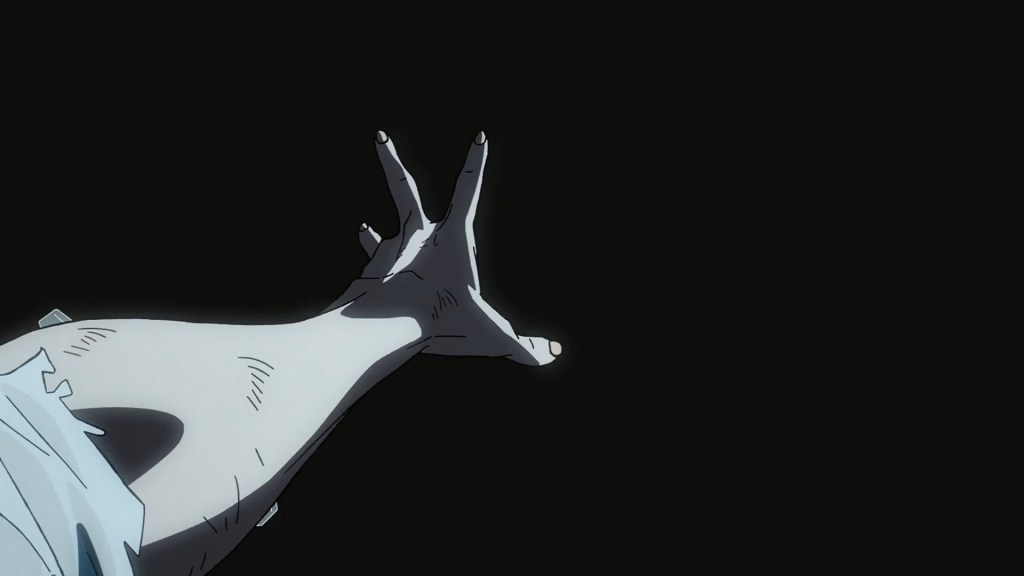
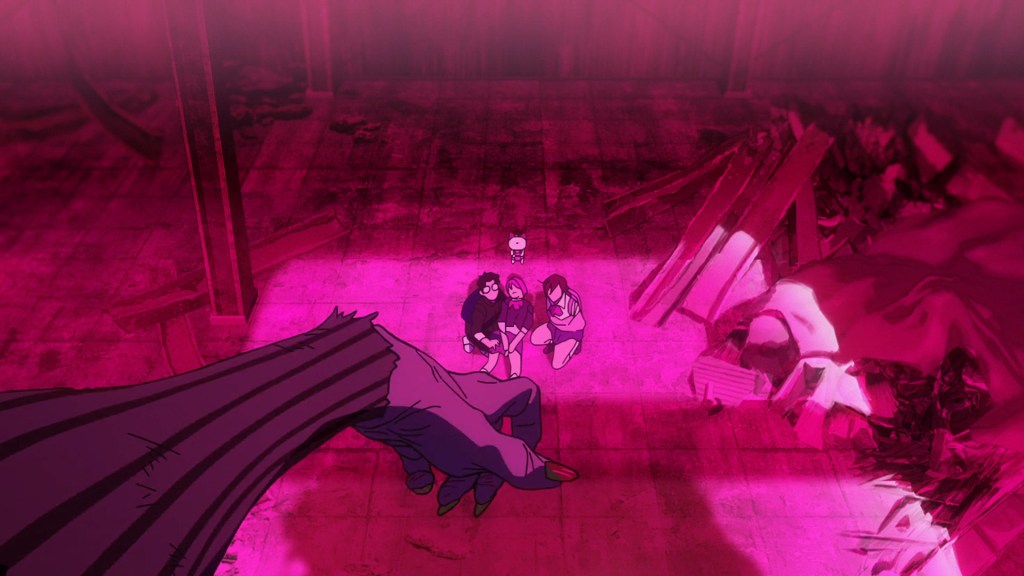
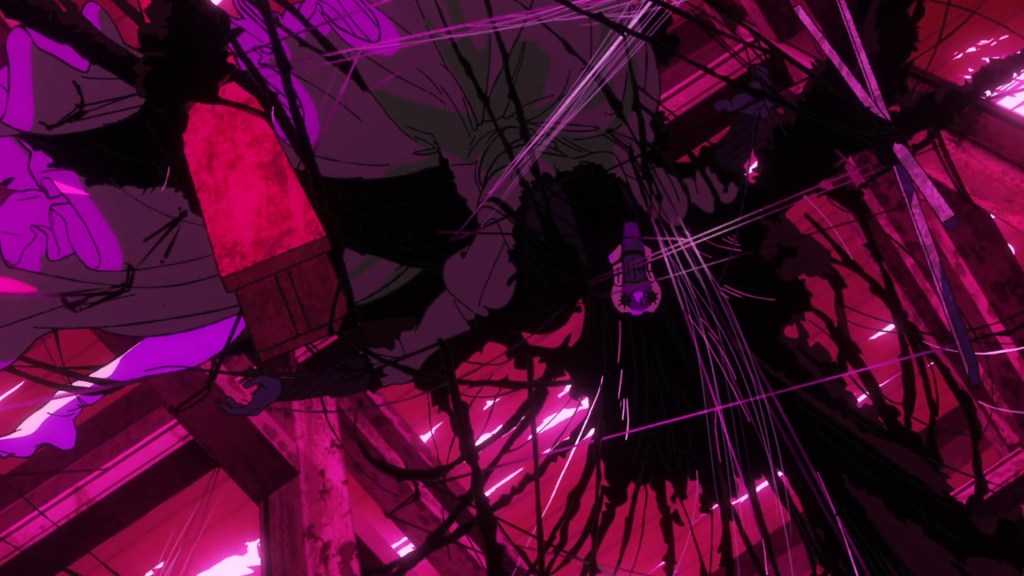
You sit before a blacked out screen, peering into this void your ears pick it up first, the sound of a women in distress reaching you. Her exhaustive screams and whimpers suddenly take visual form when a eerily empty city neighbourhood comes into view, her view. This POV cut continues as she runs through the city, searching for something that with reckless abandoned before she catches sight of a car. Her scream of recognition is cut short when she slips, hard, and the screen goes black once more. Than a grasping hand reaches out across the blackness and finds something before another cut brings back visuals. We recognize what we’re seeing, the teenagers who kneel protectively far beneath us are characters that we’re very familiar with as is the pink toned world. The realisation is quick and effective, we’re Afro Silky, what we just saw was her past, and this episode fully intends to destroy our preconceptions about this otherwise monstrous being. Welcome to Dandadan Episode 7, you’re gonna want tissues.
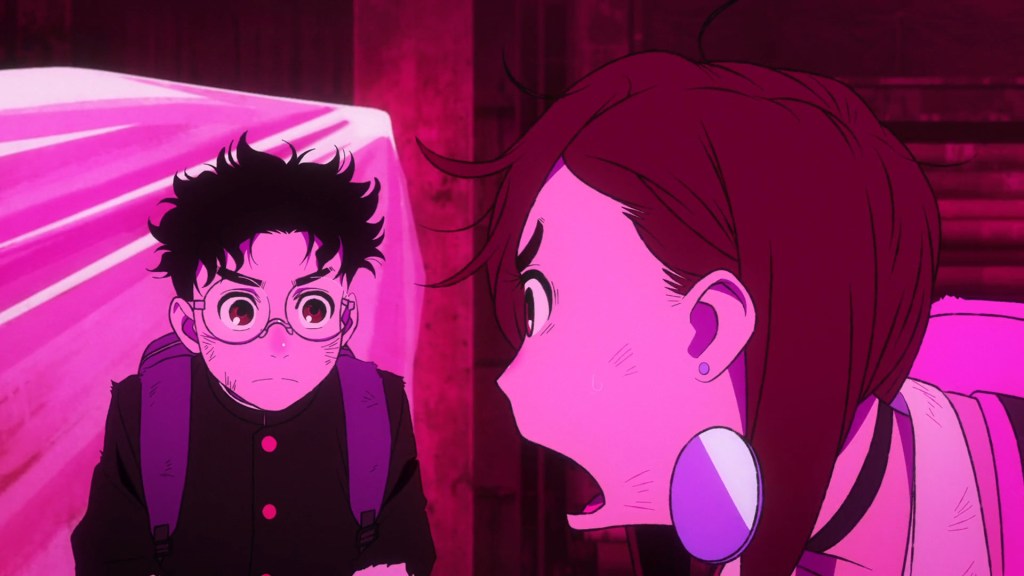
Dandadan’s anime adaptation at Science Saru led by director Fuuga Yamashiro has been the gift that keeps on giving, a bombastic barrage of spectacular animation and inspired color design in service of a story that basically does whatever it thinks would be the coolest/funniest thing possible and so far the effect hasn’t worn off whatsoever. It’s a comprehensively joyous experience, with the dynamic duo of Momo and Okarun leading the charge as just the darndest things ever. That’s not to say original creator Yukinobu Tatsu is all laughs though, there’s definitely some effectively dramatic writing chops underlying the chaos but it’s not steeped in it, until now. The ballad of Afro Silky is a complete tonal change, a tale of loss told with an abrupt brutality that I just assumed this series wasn’t going for. It’s a masterclass in episodic animated storytelling, lets get into it further shall we.
This episode, titled To a Kinder World, was directed by Koutarou Matsunaga whose credits show a career mainly centered in the world of musical anime like Love Live Superstar which I haven’t seen so whoopsie can’t comment. It’s not a very extensive resume and not one I have a confidence to pull from so while I have the utmost respect for him I gotta say it’s looking like the true superstar(hehe) of this episodes production lies elsewhere. Where you might ask, well I say it’s probably one Shuuto Enomoto who did the storyboards, the animation direction, key animation, clothing design, and sub character design. Ok so clearly his hands are all over this thing but it’s his past credits where I find what I conjecture as the inspiration for this episodes vast swing as a piece of visual storytelling. See this episode doesn’t look like a episode of Dandadan as we’ve known it, it’s got a grittier hyper realized style that grounds it firmly in weighty reality, a style that I recognize as the Nakayama Chainsaw Man school of anime design. Enomoto… didn’t work on Chainsaw Man if you’re asking but there is another series that’s an even more accurate reference and hey look at that he worked on it.
Hirotaka Mori‘s adaptation of Heavenly Delusion stands as one of the greatest anime productions I’ve ever witnessed, with an artstyle reminiscent of the aforementioned Chainsaw Man but with a much more free approach to style and animation technique. He let his staff go hog wild and while yes the art direction was always hyper realized the animation was more free form and bouncy, with different artstyles and directorial intentions giving each episode a true life of their own. Enomoto was there as an animation director for Episodes 3 and 12 while providing a lavish amount of key animation on top and it just makes sense to me. Especially knowing he worked heavily on the high intensity Episode 12 makes the storyboards he would end up doing for Dandadan make so much sense and stylisticly this episodes DNA are firmly in the hyperviolent world of Heavenly Delusion. But it takes a minute to get there so we get to enjoy typical Dandadan nonsense until the credits.
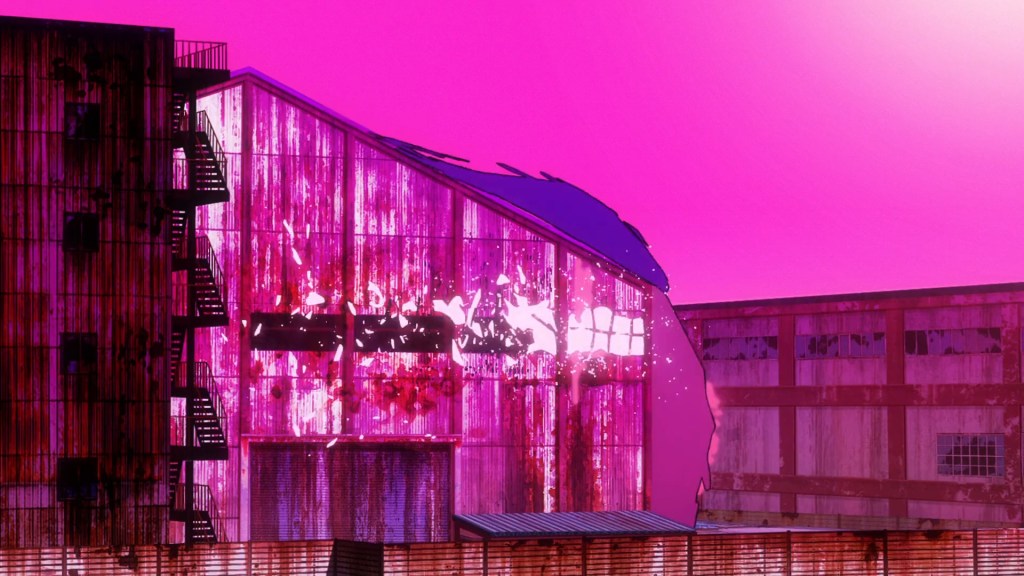
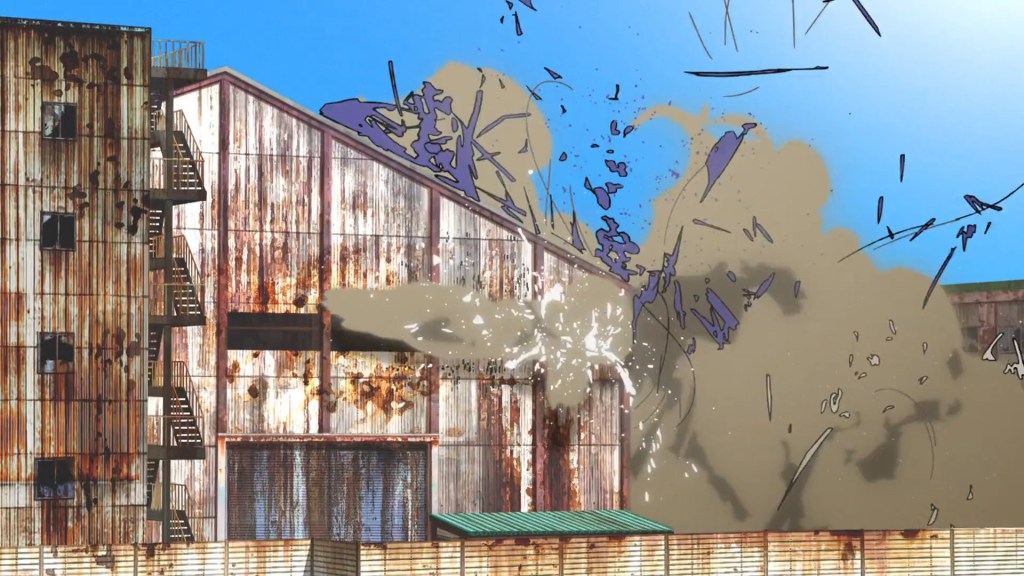
After the glorious hook that was the POV opener things seem business as usual for a while as Afro Silky chases after the dynamic duo but that’s not to say things are 100% the same. Off the top the attention to detail is heightened, our protagonists designs are bruised and battered while Silky is just a mass of constantly shifting tendrils. It’s the fast paced dance of color and movement that marks most action sequences of this show and like always it dazzles. Of note is the way she lands on the ground after finally throwing Aira out of Okarun’s protective grasp, her toes hitting the ground first in the practiced routine of a ballerina. Okarun finally knocks her flat and with it the sickly purple and pink color palette but before celebration can ensue Turbo Granny informs them that Aira is pretty dead. Cue the OP, this is the last bit of happiness we’re gonna get for a while.

Things are about as desperate as Dandadan has ever been as the realisation that the main character is well and truly dead sinks in but that’s just what happens when a mortal human gets gobbled up by a ghost. Paired with the anticipation for that opener to get paid off the tone is truly bleak, the dirtier aesthetic and despair leaking in from the voice acting setting a very heavy mood thay only get’s worse as Afro Silky stands up once again. The giant lumbers over but this time she comes to bargin, she see’s that the girl she calls her daughter is dead and is willing to sacrifice her own life to revert that. As Momo blurts out a distrustful response Silky violently rips apart her own jaw in a shocking promise of peace, she’s desperate and won’t waste any more time arguing. The agreement is reached and Momo reaches out a spiritual hand to connect the two souls and as she touches Silky’s the screen flashes brilliantly before coming back into view, but this time somethings different, no everythings different.
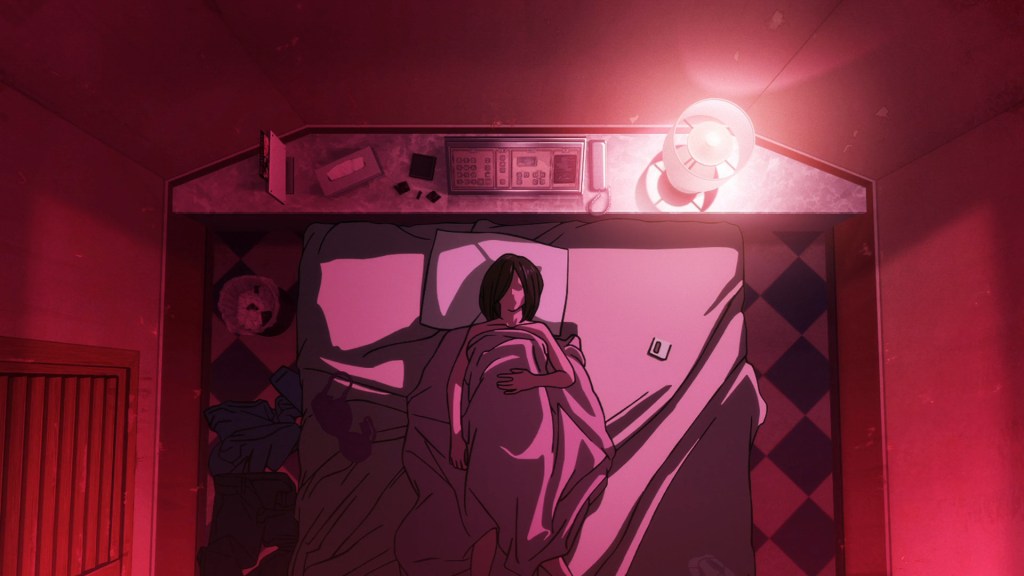
The transition to flashback mode is wordless but nothing had to be said anyway, we know who the naked women is and so we can just let the visuals speak for themselves. The storyboards thus far have been delightfully energetic but in this back half they transcend into a composed melancholy, the confidence of the visual storytelling so complete that dialogue is simply unnecessary. We follow this women who is obviously a sex worker through a dreary night, our first proper glimpse of her face seen in the reflection of a window as she stares longingly at a pretty dress but one obviously meant for a child. As the recognition clicks in alongside her housekey we find what we were expecting, a daughter eagerly waiting for her mothers return. The natural light of a well lit home and the beaming smile of the small girl effectively hit home that this is her reason to live, that this small happiness is worth selling her body and time for. Composer Kensuke Ushio carries the mood with a light piece that goes for the entirety of the sequence, slowly but surely building as the storyboards begin to fly in a breathless rush. We see everything we need to and nothing more, as the sequence reaches a climactic high a simple cut is all that was needed to tear this momentary happiness apart.
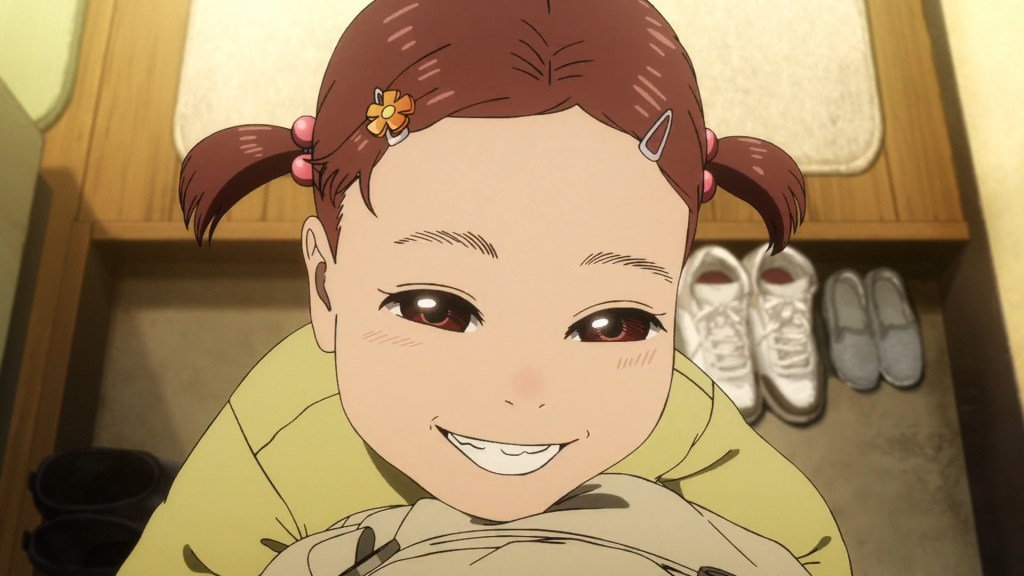
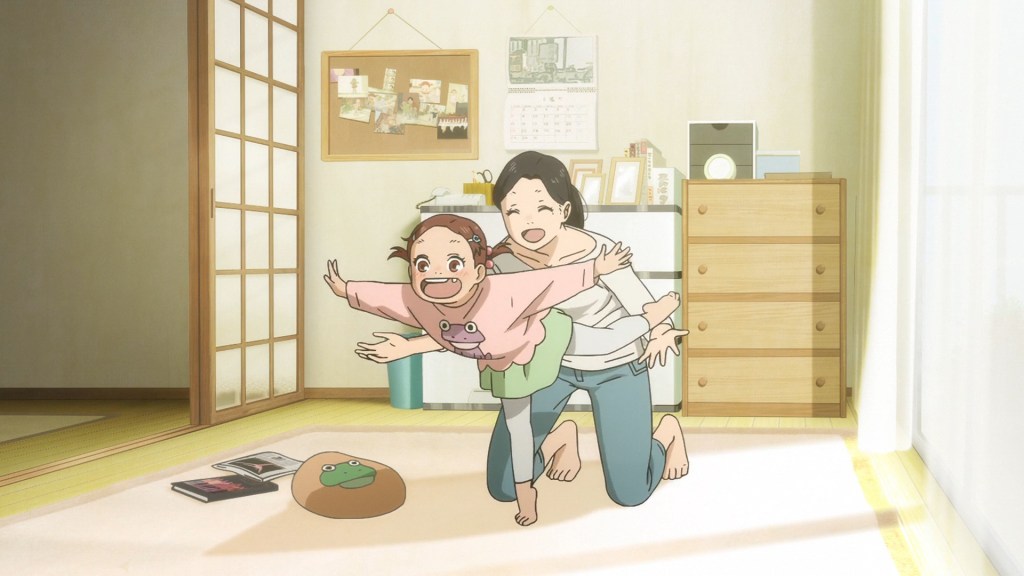
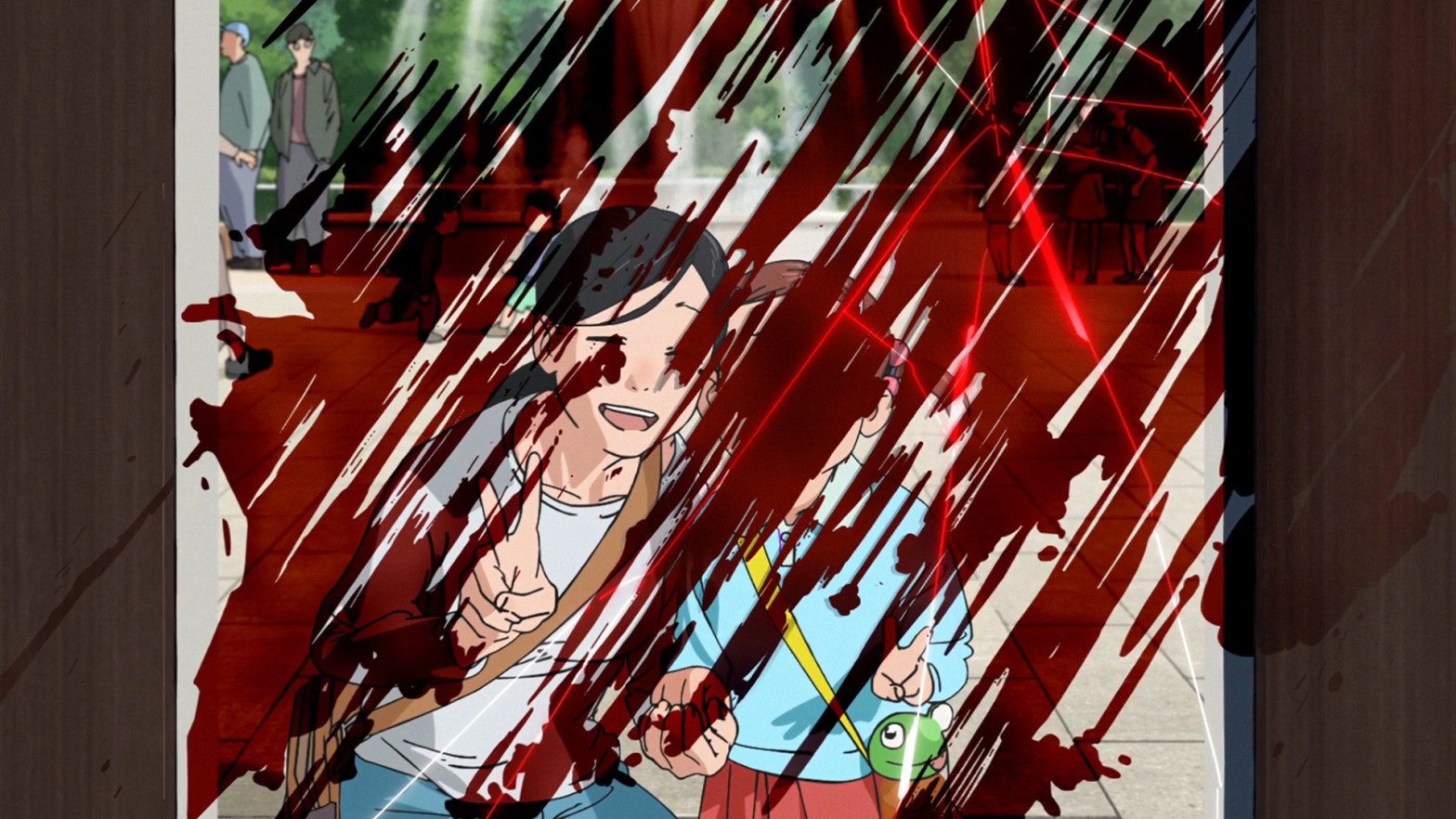
The scream of a distressed child is enough to put anyone on high alert and our recognition of this child as Silky’s daughter, alongside the real time context of her chasing Aira who is most certainly not this person is enough to make this a truly hard to watch scene. Some thugs have broken into the home and are savagely beating Silky for the unforgivable sin of taking a few extra bucks. The violence is savage as glass shatters before finding itself embeded in the embattled women. For a battle shonen full of superpowered fight scenes seeing a clash so thoroughly mortal is uncomfortable and shocking, the graphic violence standing out and hitting way harder than it otherwise would. It’s profoundly hard to watch and when the daughter gets grabbed Silky’s animalistic lunge gets effortlessly swatted away, her powerlessness even in this most dire of situations being heart rending. She lay alone on the floor of a home utterly torn apart. All is lost but her life but her eye’s blink open once again and we return to the scene that started it all.
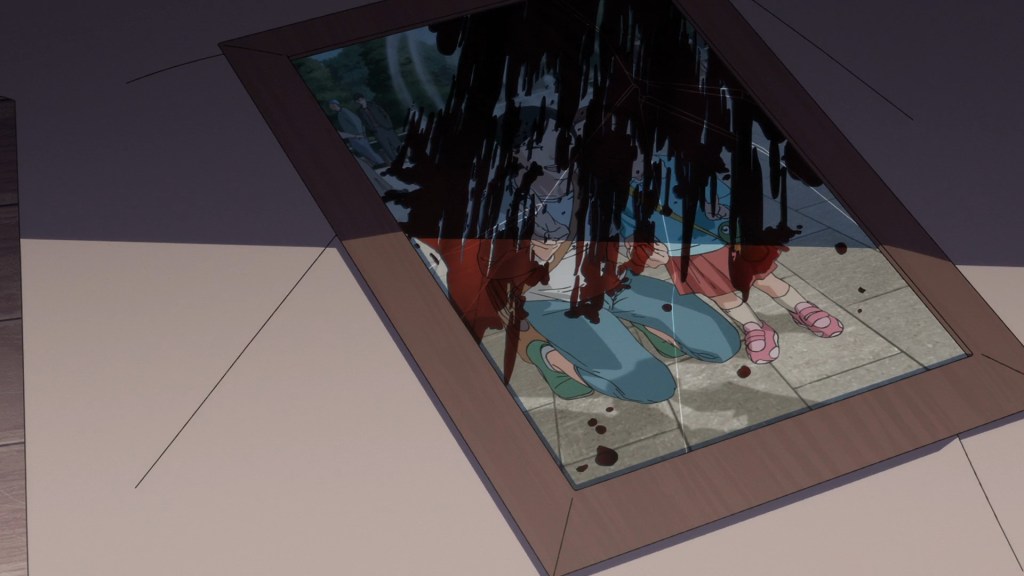
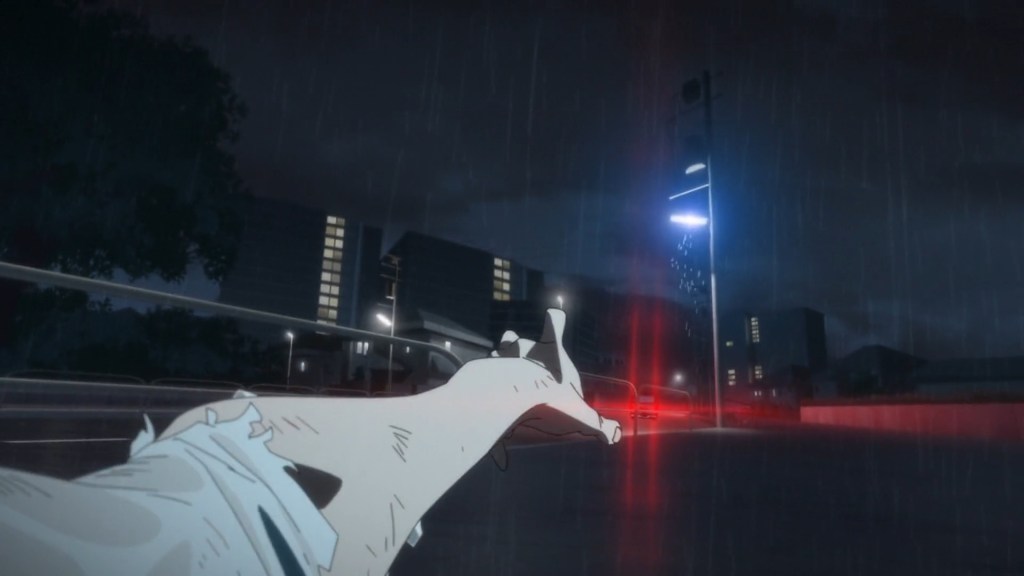
The opening sequence is shown again but context brings new life to it, literally coloring the scene which was once a monotone gray. It’s a strikingly unique sequence because aside from her reaching desperate hands it’s a wholly 3D environment, the glossy emptiness and different artistic medium complimenting the total isolation of this poor womens final dash. In a final twist of the knife she does catch sight of the car as it races away but slips in the rain and this time she doesn’t get back up. She reaches out one last time before succumbing to her wounds. Her dying mind returns to an image we’ve also scene before, a brilliant blue starry sky that she proceeds to dance in. The imagery of her last dance in the stars is about as awe inspiring as anime can get and while I don’t know who animated this scene I offer an awestruck thanks.
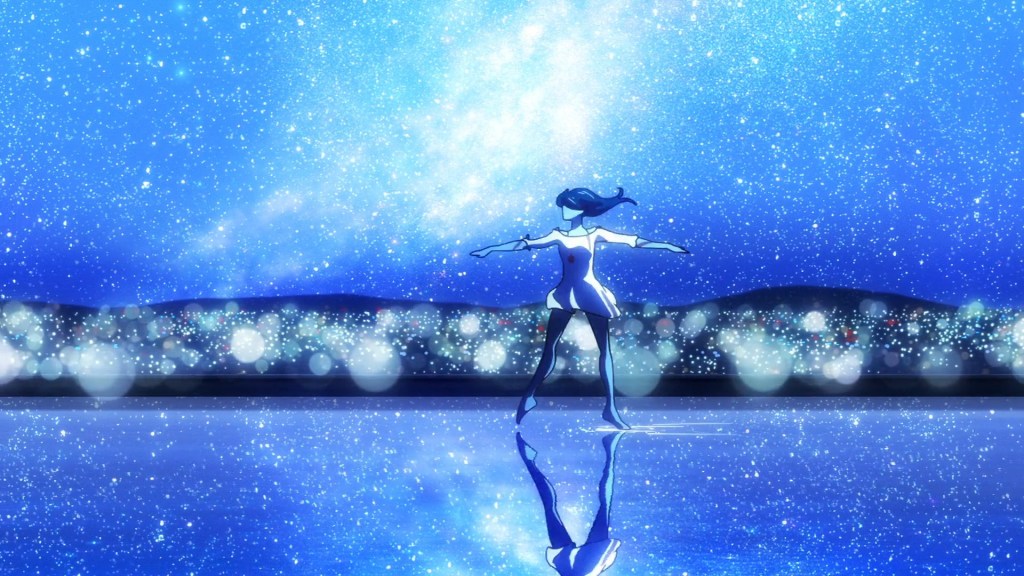
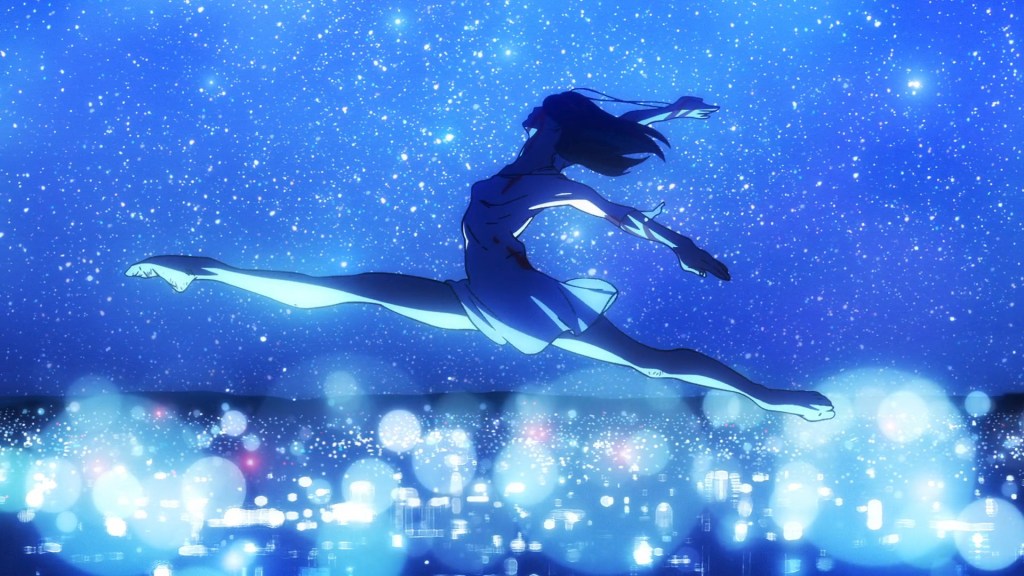
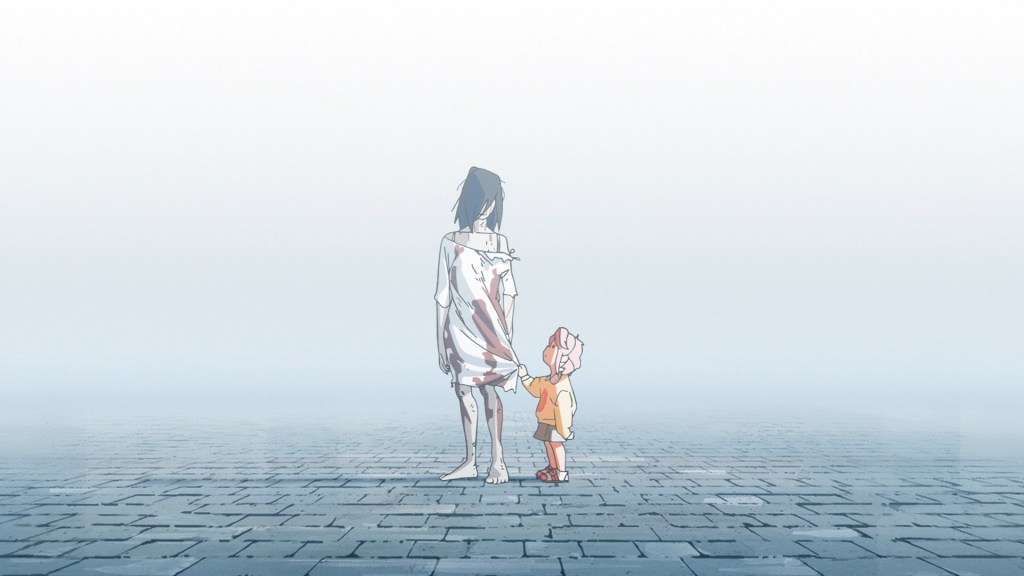
We get one last moment in the head of Afro Silky in a place I can only interpret as purgatory. In a washed out world we see her standing alone, every cut and bruise catching the eye painfully. If there was an image to define a broken women it’s this one and it cuts like glass. But than, in this empty world where there should be noone a hand reaches out and grasps her skirt. It’s the hand of a child, not hers but a recognizable one nonetheless because main character Aira stands out even as a toddler. She’s reaching for her mother and mistakenly grabs for a women that doesn’t exist before her father picks her back up. As she departs Silky reaches back, the name Aira begins to dance in her head and starts to transform her as the color pink begins to bleed the scene. The unknown women is gone now, in her place the monstrous Afro Silky begins her unending pursuit of Aira.
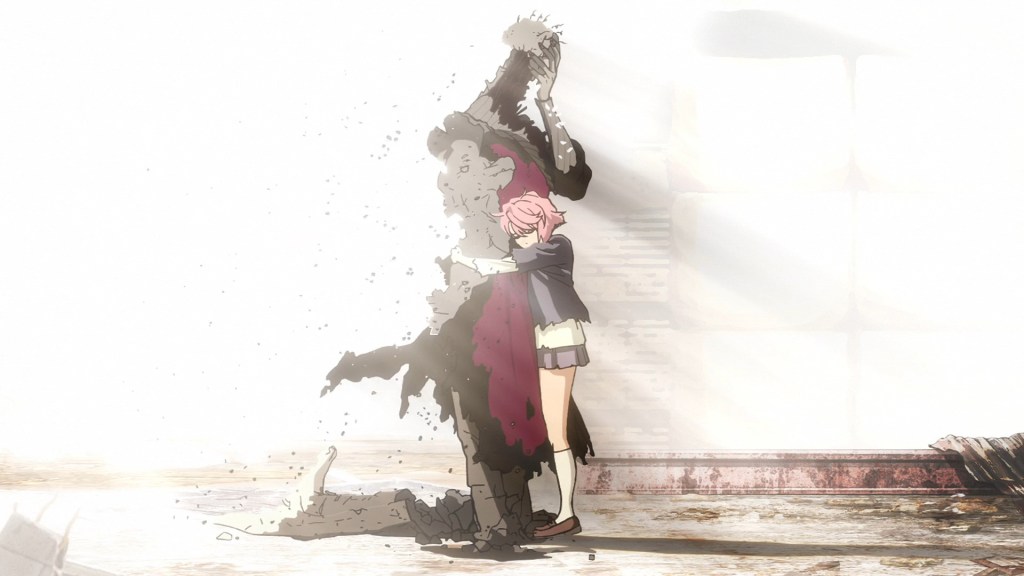
The soul destroying backstory now complete we return to a reality shaped by it with Aira back to life. The form of Afro Silky begins to disintegrate but no celebrations are held, only tears. Aira sits alive but shaken by everything she’s learned as she too was connected to that life story we all just saw and when Turbo Granny says that Silky shall die in the worst way possible, returning to the abyss completely unfulfilled the sheer tragedy of this whole ordeal comes into sharp focus. This women wasn’t a monster, her current form just a product of twisted love and Aira understands that to her core. So she reaches out again, meaningfully this time and before Silky dissapears completely they share a hug that is both too short but long enough. The tortured soul of Afro Silky returns to the abyss but with the warm embrace of her “daughter” is her farewell and that’s just the most beautiful thing you could’ve wished for.
Episode 7 of Dandadan is a shock to the system, a declaration by Tatsu that his story doesn’t pull it’s punches but simultaneously will always beat to the rhythm of a sacherine heart and Shuuto Enomoto saw right through it all. This is a masterful storyboard that carries itself with purpose and weight, refusing to look away from the darkest moments but fully committed to the beautiful point of it all. Alongside director Koutarou Matsunaga this vision was carried through with stunning finesse and stands tall as the greatest episode of anime since…well One Piece Fan Letter was pretty damn recent so welp but both episodes stand tall as the greatest pieces of cinema you can find on the small screen this year. Take a bow, and thank you for everything team!

Dandadan can currently be streamed on Crunchyroll and Netflix.
 The Manga Meets Moron Blog
One thought on “Dandadan Episode 7- Cinema for the Small Screen”