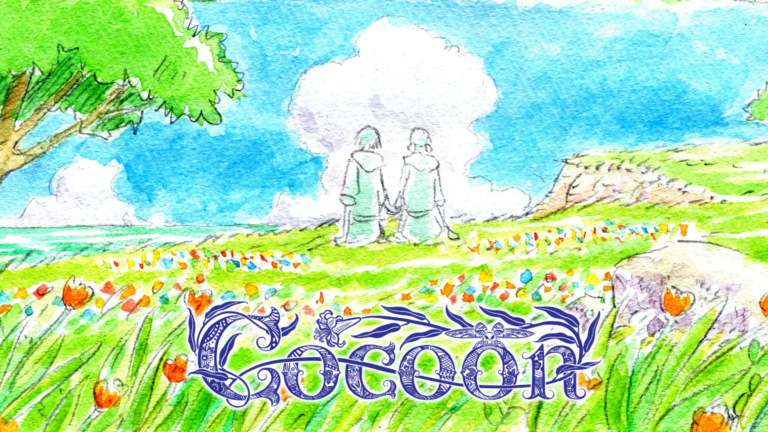
THE ART OF WAR, THE ART OF ADAPTATION!

This anime adaptation of Machiko Kyo’s 2008 manga was directed by Yukumitsu Ina based off a screenplay by him and Taku Kishimoto at Sasayuri and was released in 2025.
THE TRAGEDIES WE MADE
Cocoon is not a story you ever want to see, especially not again. But that is what has happened, someone somewhere has decided to take on the task of adapting Machiko Kyo’s brutal tale of the Okinawan innocents of 1945, stuck on an island that’s become the most brutal battleground of the greatest or should I say worst war in human history. You don’t want to be here, you don’t want to see what this story shows, but maybe if you can tell yourself it’s a fantasy, it’s fiction, it can’t hurt you. So you wrap yourself in that little cocoon, safe behind a screen, maybe even snuggled up and warm and than BAM the first bombs drop and with it the bodies and suddenly you don’t feel safe, can’t feel safe, and won’t be safe until the screen turns black and the sights and sounds wash away. It’s a story, it can end, you can escape. But main character San can’t, she may dream of fantasy and cocoons and for people she loves to stop dying and for it all to just end but it doesn’t. She’s stuck in the machinations of one of the most brutal wars ever waged. In history, real history, our own story.
NOT FICTION
Okinawa ablaze in 1945 isn’t a fiction concocted by a storyteller but America and Japan’s last and greatest battle, one which would leave over 200,000 people dead, the vast majority being Imperial soldiers or Okinawan innocents. It’s an incomprehensible tragedy, a true horror from the past whose comprehensive barbarity beggars the mind of any and all who try and quantify it. It’s not just the numbers that numb, casualty figures that put every previous battle of the American Pacific war to shame and than some but the conditions of the battle, the laborious 2 month campaign across jungles and villages that sapped everything from everyone. The Imperial army doesn’t surrender, they fight to the death and not in the hoorah turn of phrase typa way, they die to a man and they take as many as they can with them. The Americans don’t surrender and do eventually win but they also don’t die on the same level as the Japanese, their soldiers instead falling out of the frontlines do to incapacitating trauma that renders them shells of men, a piece of them left on this island forever, a missing piece few recover from. Than there’s the natives, the Okinawans who call this island home before it became the last battle of a war they never asked for.
These natives aren’t really touched on much in the Western recollections and analyses of this battle that made it embody the war is hell idea in my young mind like no other but what is known is that they died. Innocents always die in war, moreso than combatants but what happened to the Okinawans was more insidious and more tragic than usual, as the Imperial army who brought this war to them gave them one very important directive. Die, die before the Americans get their hands on you because those outsiders are animals who’ll do much worse to you and everyone you love. So they did, individual and in droves mass suicides took place on this island as civilians listened to that directive and ended their lives as battle lines closed in on them and they felt they had no other choice. The harsh truth though was that the Imperial army lied, the Americans while no saints followed up their violence with liberation, they tried their hardest to save and spare the civilians caught in the grasp of an empire that can truly be called evil and so the death take on an even more haunting edge as imminent salvation is met with suicide on a societal level.
THE TRAGEDIES WE MADE
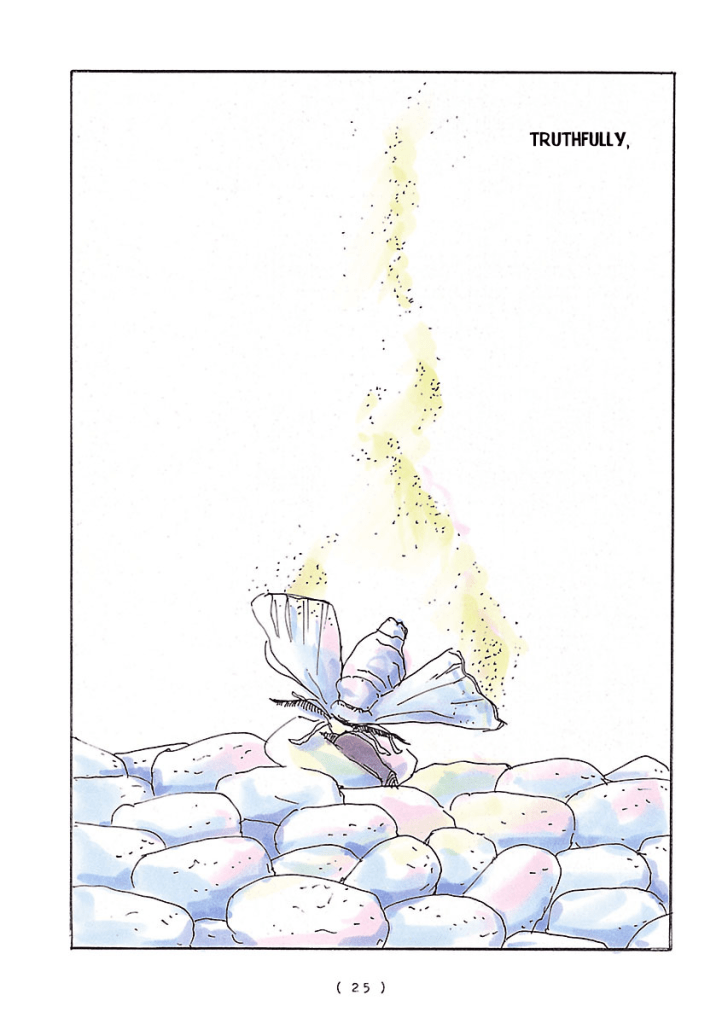
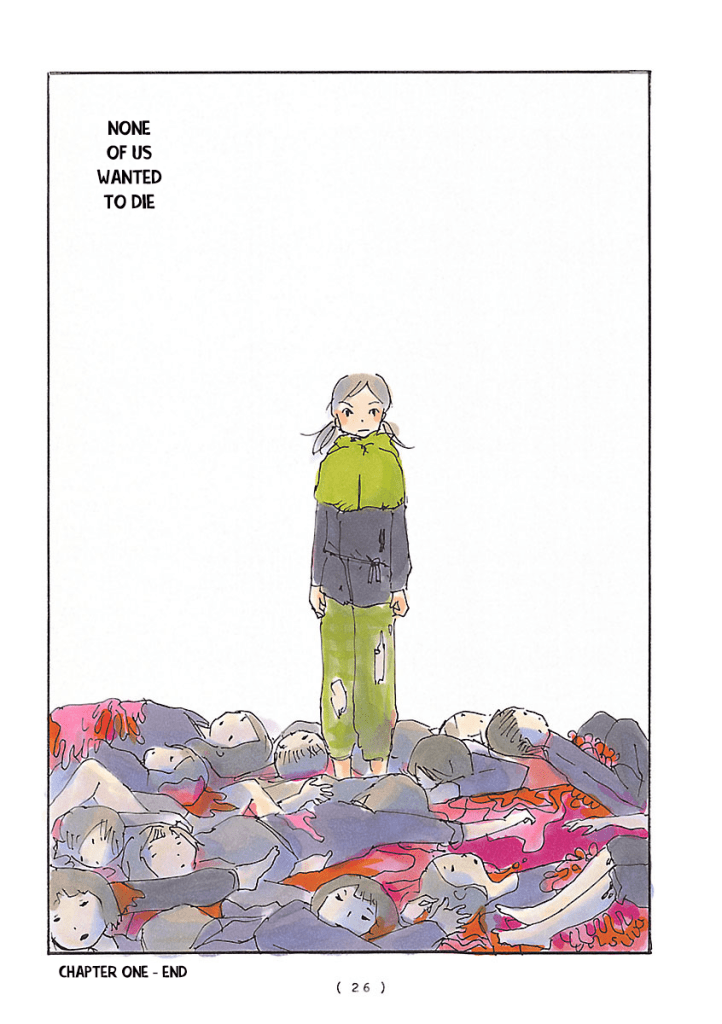
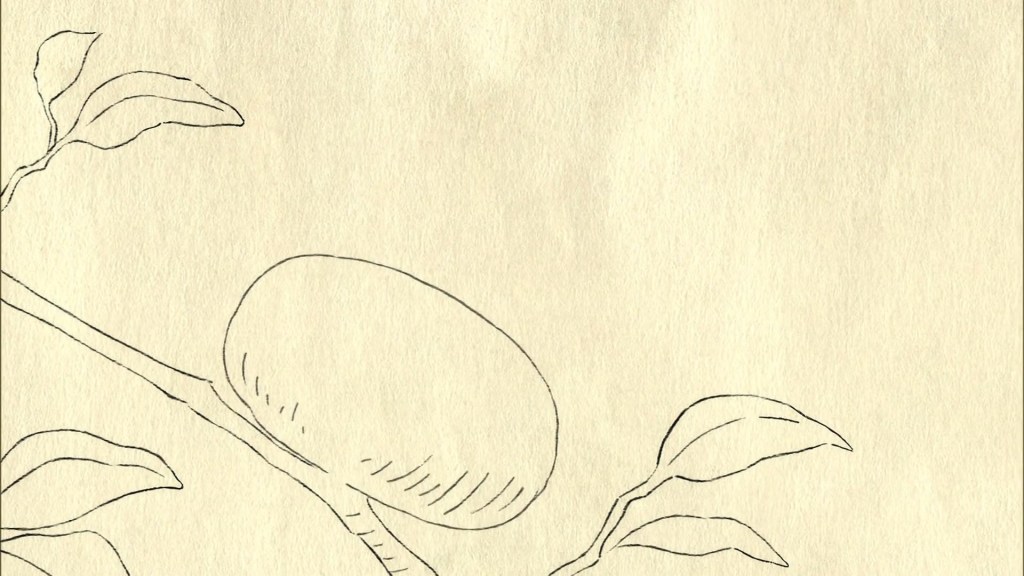
That is the history of Okinawa in 1945 and that is what Machiko Kyo sought to explore. Her manga, a single volume drafted with a hasty scratchy pen is a uniquely devastating work as it portrays the most innocent perspective of them all, the children. Cocoon is historical fiction as far as I know, it’s characters and scenarios Kyo’s own imaginings staged within a world that is real and authentic and totally unvarnished. Her someone cute character designs, while rough around the edges, do a great job of making you feel like this is a manga that doesn’t do unsightly things and maybe would shy away from the vilest aspects of war and than BAM they come apart, very graphically the girls we’ve come to know suddenly stop being cute and instead become meat, parts of them you should never see suddenly exposed and the effect is truly horrifying. Her art isn’t hyper realistic whatsoever so the graphic nature of the violence feels somewhat lessened but honestly that’s a good thing, what we see is too much and unfortunately what we see is too real. A single volume isn’t alot of time to tell a deep reaching character exploration driven drama so this manga is more of a mood piece, a series of vignettes that steadily ratchet up the hopelessness before suddenly it’s all over and the tension dies away. The final say is hopefully, passionately screaming for life but it’s the end of the first chapter that’s struck with me, 2 parallel color pages, one a silkworm escaping a cocoon surrounded by many, the other of main character San, bodies at her feet. And you know what she says as she hauntingly stares into your soul, she says “Truthfully, none of us wanted to die”. Cocoon is short and about as opposite of sweet as is possible but it’s a visceral, unforgettable experience. And also one that would be very hard to adapt, a fact that really resonated in my head when I finished it because the only reason I read it in the first place was that an adaptation was coming.
NOT SUITABLE FOR TELEVISION
A TV adaptation at that, not one on some streaming service like Netflix or a film that could hypothetically avoid the censorship required to air so immediately I knew I’d have to expect something different and have an open mind. I don’t like censorship and war being as sanitised as it often is is why something so harsh and unforgiving as the Cocoon manga works, it’s a rare honest depiction of war that doesn’t hide the all encompassing ugliness of it and with that brutal honesty as the core of its storytelling any tv adaptation would have to be either sanitized to the point of well missing the point or be of a superb alternative vision that still manages to convey the horror without the horrific imagery. Cocoon, the anime that is, is that superb alternative vision, a fresh take of the original narrative that even with imagery censored still cuts deeper than most stories in this medium subject matter be damned. In two words this anime is artistic interpretation at the highest level, it’s every choice as interpretive of the original manga as it is artistically focused to give you a devilishly tense experience that makes you feel not see the horrors of war.

SICKENINGLY SWEET STYLE
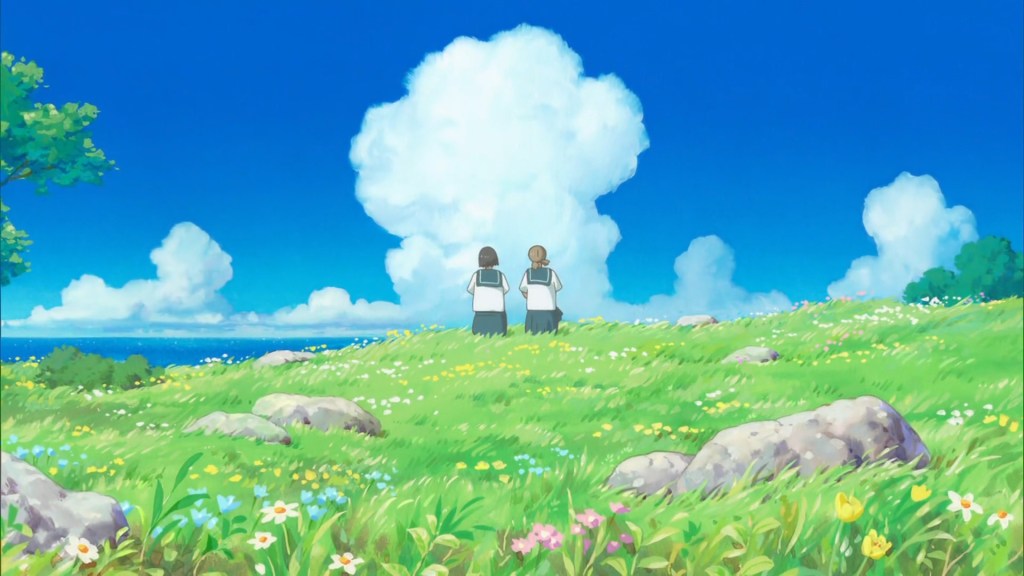
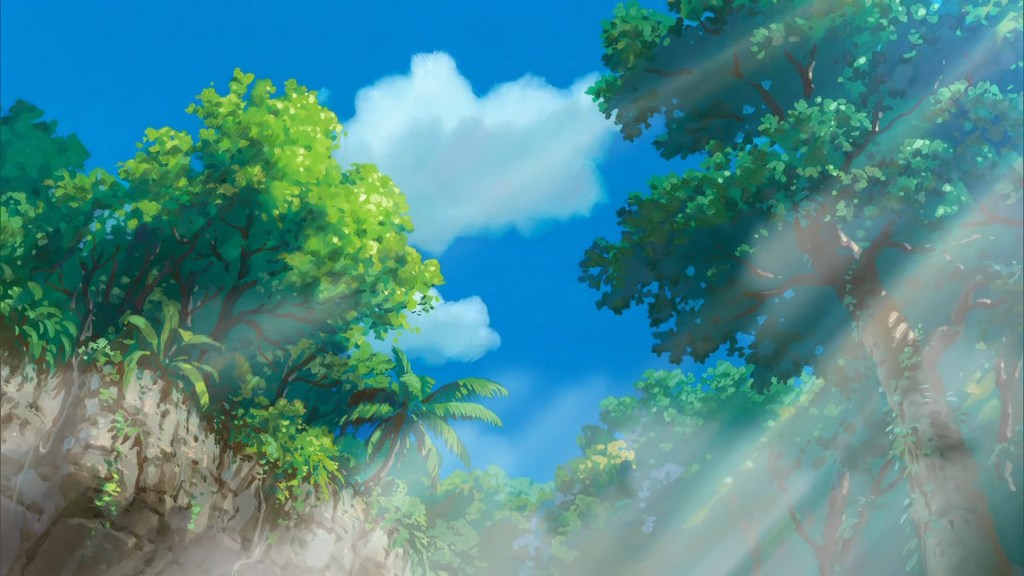
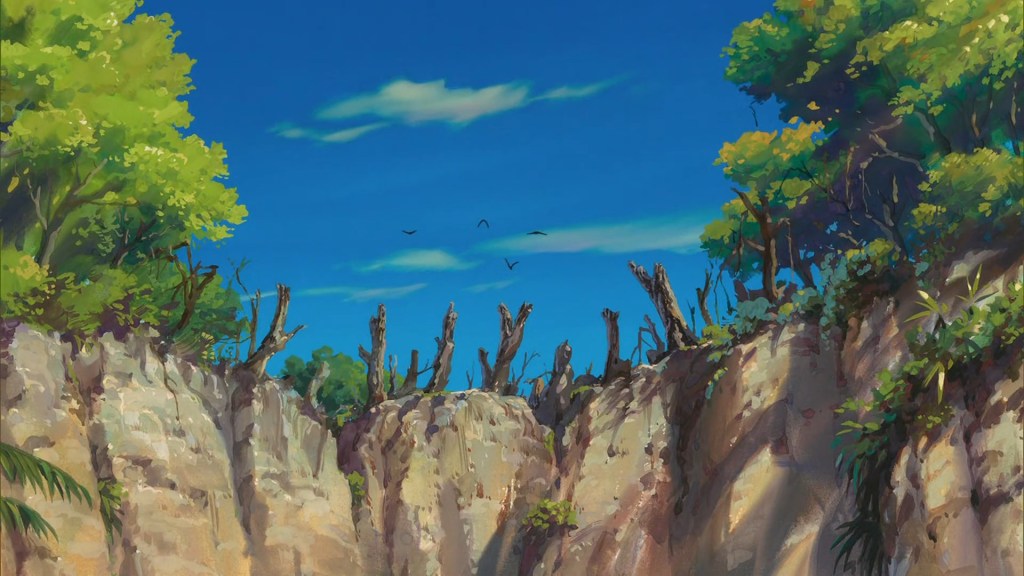
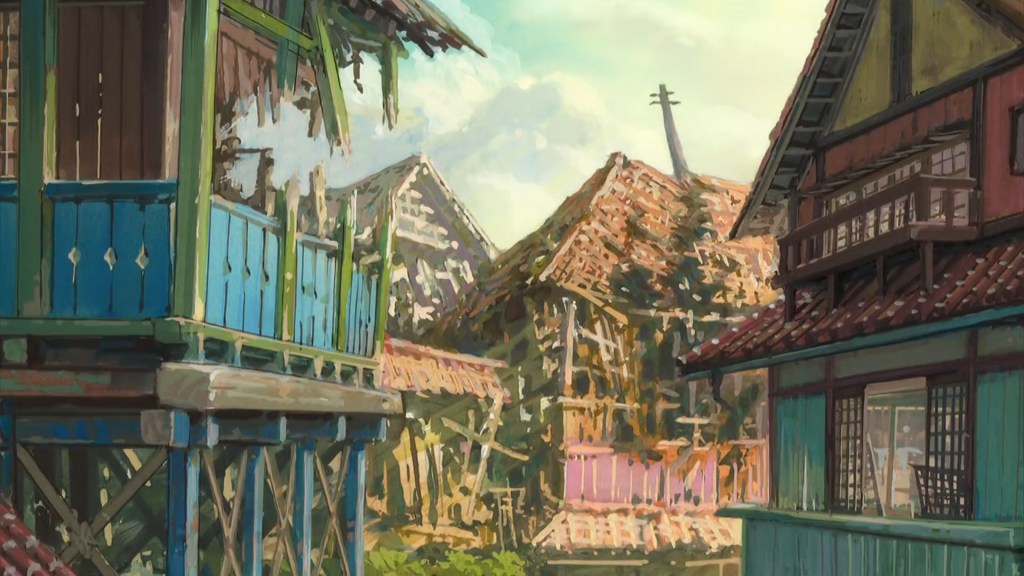
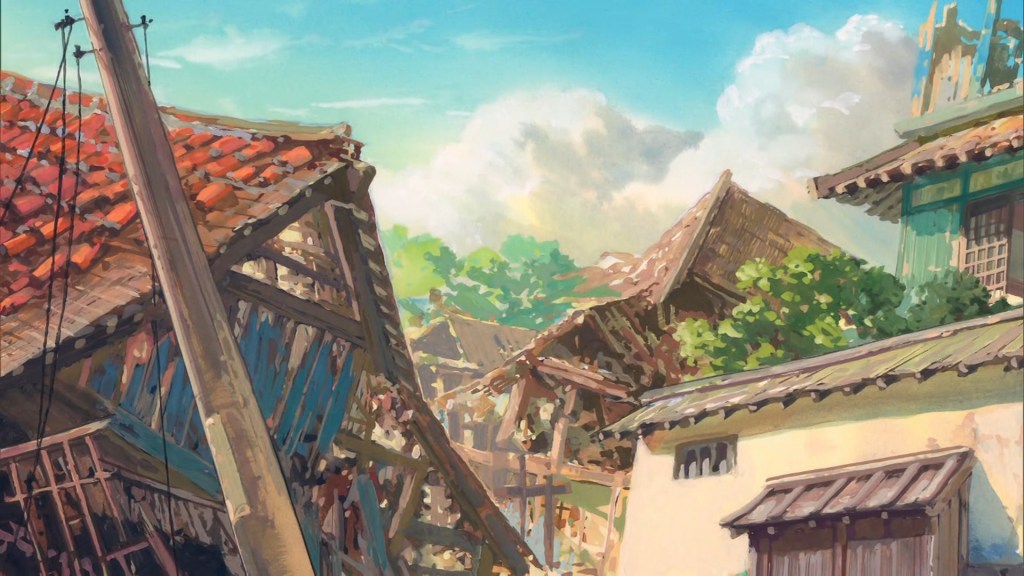
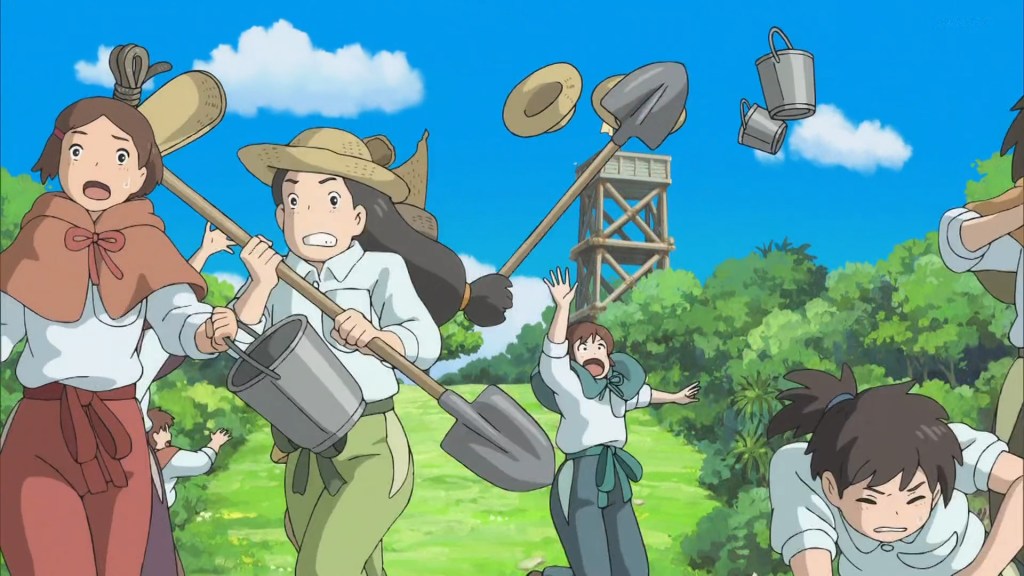
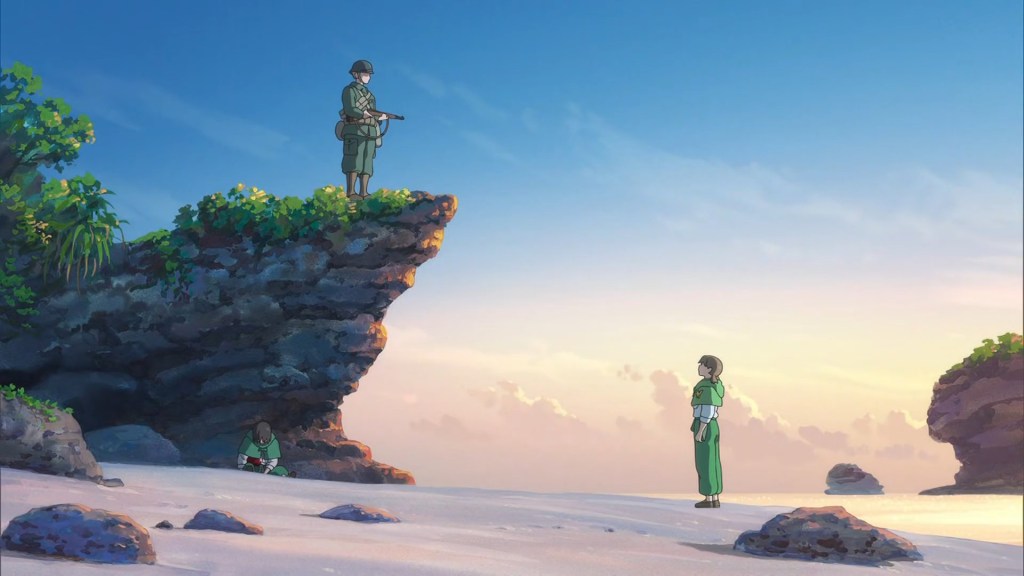
The first choice is the least surprising but maybe most affecting, it’s Ghibliesque artstyle. Back when it was first announced all we learned was the year it would release(uh now), studio(Sasayuri, an assistant studio) and animation producer Hitomi Tateno. Ever heard of em well congratulations neither have I but one check of their credits makes you realise oh boy this is a goshdarn Ghibli artist whose been involved their since Totoro which last I checked is older than me, I think this anime’s gonna be Ghibliesque huh. On paper that’s the opposite of Machiko Kyo’s rough and tumble linework but for an anime what’s an aesthetic as comfortable as Ghibli… well there isn’t which makes it the most perfect and insidious choice. Immediately upon starting this short film you’re hit with the beautiful Okinawan coast, the rolling fields and endless skies brilliantly colored in deep welcoming greens and blues. It’s an stunning anime that just bursts at the seams with dense painterly backgrounds and strong but natural color choices. It’s an island paradise for all of ten minutes before the wail of airplanes in the sky announce that this is in fact an island at war, and its coming. But not fast, those planes fly harmlessly overhead after the group of kids who form the cast whimsically but maybe a bit stressfully camouflage their dwellings, rendering them invisible to the sky. This sequence further ingrains the Ghibli DNA as the animation while sometimes a bit too floaty has that same bouncy weight to it, lively character animation and momentum driven movements making you just as aware of the fantasy that you’re witnessing as you are charmed into safety by it.
KENSUKE USHIOOOOOO!
Underlying the potent visuals is the greatest technical superpower this or any anime could have, the compositional genius himself Kensuke my man Ushio! This score gets to me and that’s also as expected but not any less potent because of it because this man’s music always does that, he’s the master of pointed compositions that stab right through to my soul in a way no other artist can. My knowledge of this plot made me tense from the outset but Ushio dictates the intensity of the moment to moment actions, his early tracks just as bouncy and fun as the visuals while his later ones became painful tense pieces that slowly but surely ratchet up until unbelievably in the climax he very literally snaps said tension. I’ve never seen a musical score build to a literal snap before but the effect was perfection, the scene that decided whether our protagonist will live or die, the moment the tension would literally have to reach an endpoint, being accomplished on a visual and auditory sting leaves you empty in the best of ways.
FLOWERS OF EVIL
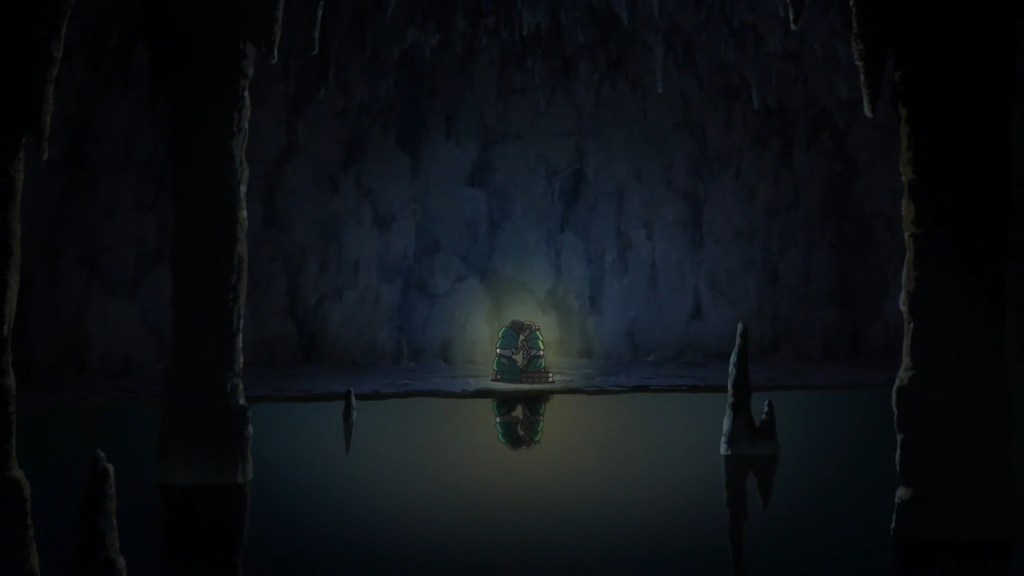
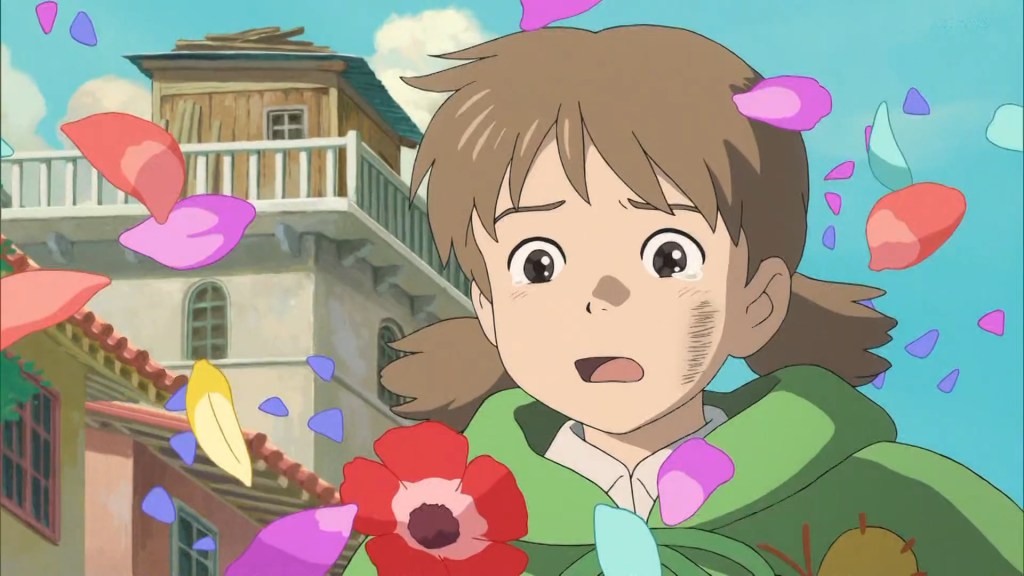
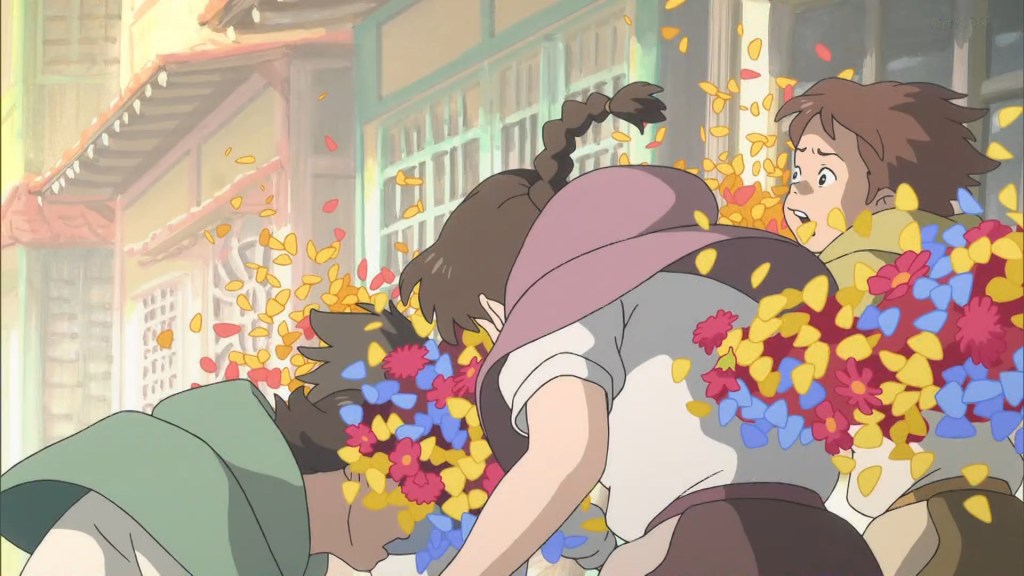
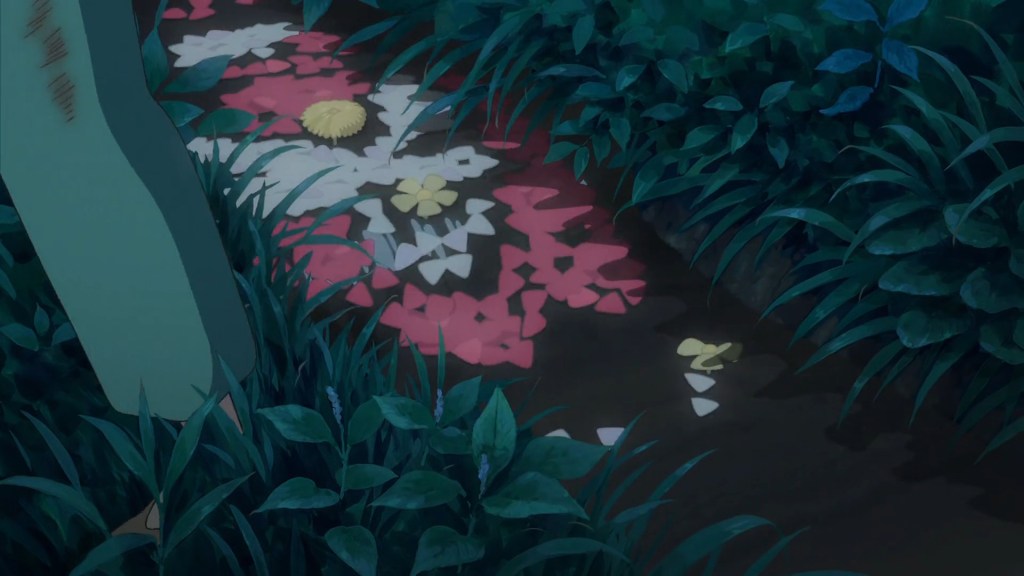
But holdup go back, how’d we get here and more importantly how did this anime adapt the violence? Well again, artistic interpretation are the key words as instead of blood and guts we get the censor and aesthetically friendly choice of flowers. As in humans don’t bleed crimson from gushing wounds but die with a rainbow of flowerpetals exploding out of their bodies from wounds that don’t gush but almost float off and out of them. The extremely stylized flower blood is a choice that only works because literally everything else is harshly realistic, gunfire roaring in the characters ears as it tears humongous chunks into the world around them. You see and hear the full power of violence on Okinawa itself as it burns and breaks but almost like our child main character can’t come to terms with human bodies breaking we see hem reinterpreted before our eyes as beautiful but fleeting sights. Fighting censorship with artistic purpose is the vibe and oh boy is it beautiful. Special note to the tiny scene of a creek that we see slowly fill with floating petals, I don’t think real blood would’ve made it anywhere near as memorable or effective. Speaking of real blood, we do get that at the very end in a scene San can’t look away from or turn into fantasy and the usage of lifeblood, so common in the manga but so rare here, to give the final horror it’s full inescapable pain got me good, I don’t like censorship but this was genius. I really could just go one and one, like how this being from an Okinawans perspective makes you understand why they believed the American demon lie because that war machine when unleashed seemingly without distinction upon combatant and not is truly one of the scariest and inescapable feeling fates imaginable.

TIS THE END!
Cocoon is a triumph, not only as a simple piece of animated storytelling but as a measured adaptation that had to evolve its visual language to artistic interpretation from an extremely literal and graphic source without losing the power vested by the previous and unconstrained vision. It’s beautiful and heartbreaking, fast paced and nail biting, fantastical and historical all in one. It’s a anime you shouldn’t look away from and a story you won’t forget, because it’s history and its forever.
FINAL RATING: 9/10
Cocoon can’t currently be streamed anywhere legally in the west so you’ll have to join the Straw Hat Pirates for this one, I’ll update this when the official channels are found.
 The Manga Meets Moron Blog