A AKANE-BANASHI RETROSPECTIVE
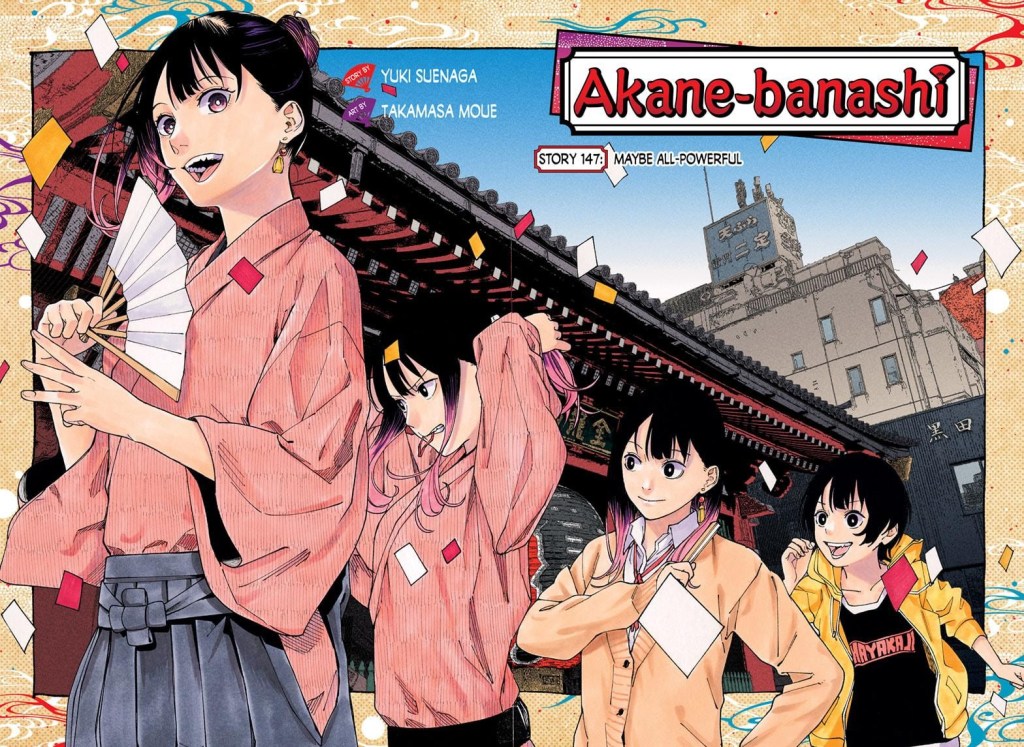
Akane-banashi is written by Yuki Suenaga with art by Takamasa Moue and began publishing in Weekly Shonen Jump in 2022. The anime adaptation directed by Ayumu Watanabe at studio Zexcs began in 2026.
SHONEN WITH A VENGEANCE
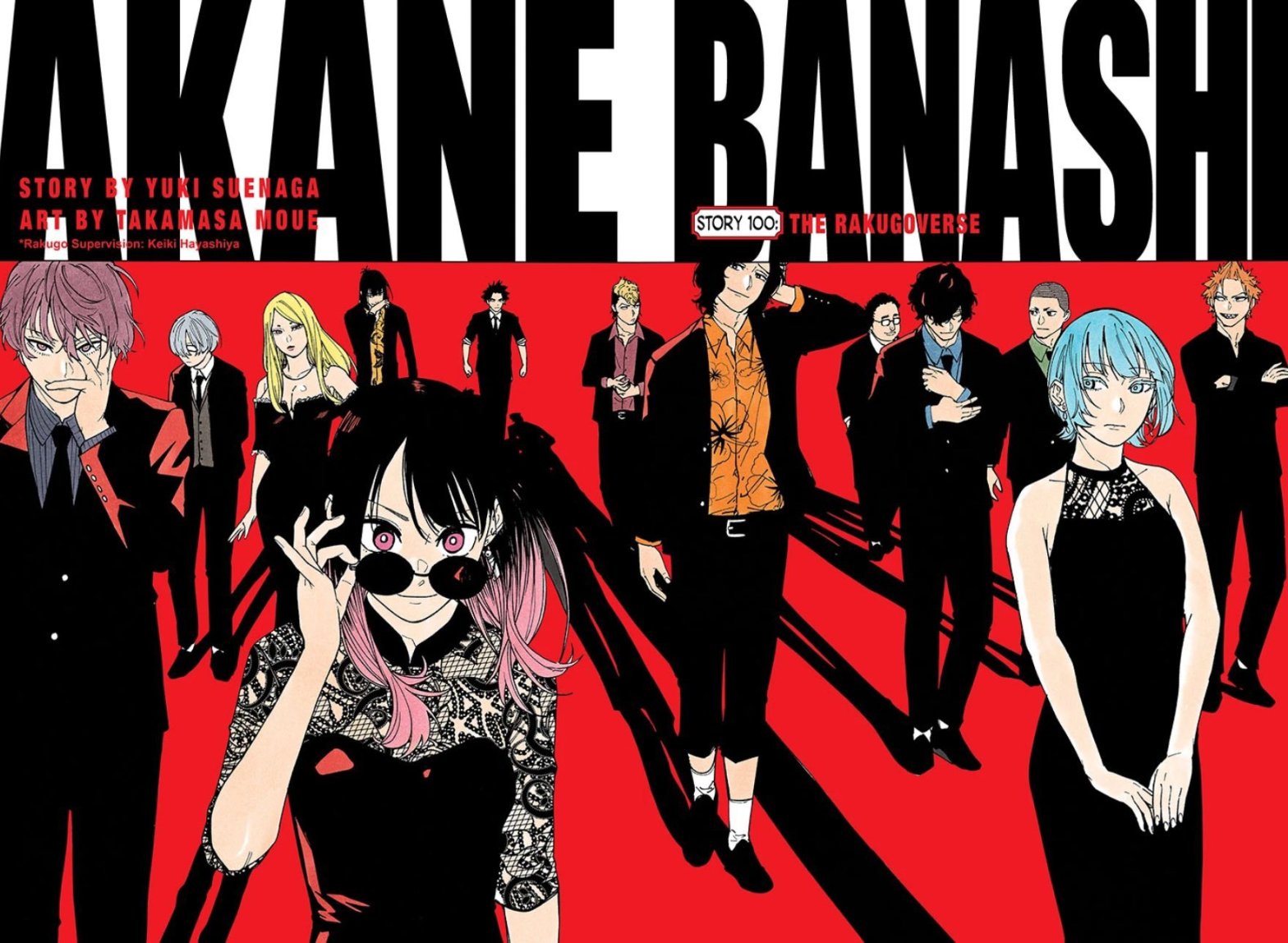
The greatest manga I’ve ever followed in the hallowed pages of Weekly Shonen Jump is a currently running revenge manga, one where our protagonist was forced at a young age to take up their fathers tools to exact revenge on the forces that ended his career abruptly and tragically. It is the most intense manga in the magazine by a fair margin, you could even say it oozes aura from its stylishly drafted pages that puts every other artist to shame. I am of course not talking about Kagurabachi, the well earned face of the magazine, but its heart instead, the little manga that could Akane-banashi. Right now this series stands at its own peak thus far, the anime adaptation just finishing the Karaku cup while the manga has handed the stage over to Akane’s arch-rival as he faces her down in a battle to the “Death” like nothing I’ve ever seen. I’m taking this moment now because I am simply overwhelmed by what this series has become in the past 2 years, a true monster that now stands as the single greatest serialised manga experience I’ve ever had. It is simply that good and somehow it will most likely continue getting better as the upward trend that began at chapter 100 has become a force of pure artistic inertia for author Yuki Suenaga and artist Takamasa Moue that goes against every expectation for serialised works I’ve built over the years.
THE TRAGEDY OF WEEKLY MANGA
Weekly serializations are a crippling blow this industry has suffered from the beginning, being simultaneously the most efficient way of building a relationship between a mangaka’s work and their audience and the worst possible position to be in for said artist labour wise. They are slaves to a schedule that unflinchingly demands every spare second of time these creators have, one that sets a hard limit on how ambitious they can be creatively that somehow still finds a way to close tightly around even the most modest attempts. Every artist, be it the true masters or the lowliest hacks finds themselves equally at the mercy of this inhuman industry and it’s left countless victims in its wake. Today we have Takeru Hokazono and Eiichiro Oda, the very faces of WSJ being forced to drop unfinished chapters a couple times a year while Yuto Suzuki‘s Sakamoto Days has had such a drastic drop in quality across the board it’s scarcely comparable to the industry leading action he produced out the gate. Gege Akutami survived his record shattering success story of Jujutsu Kaisen with a whole 2 years of painfully obvious artistic and health decline, quickly following up with a spinoff most notably not drawn by him.
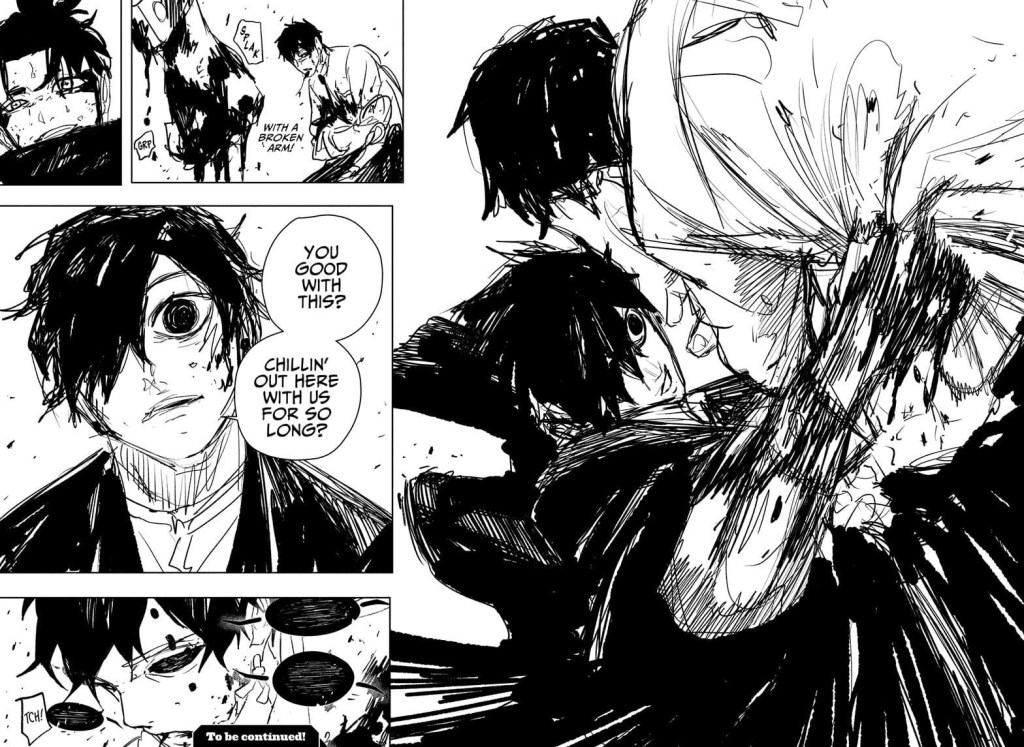
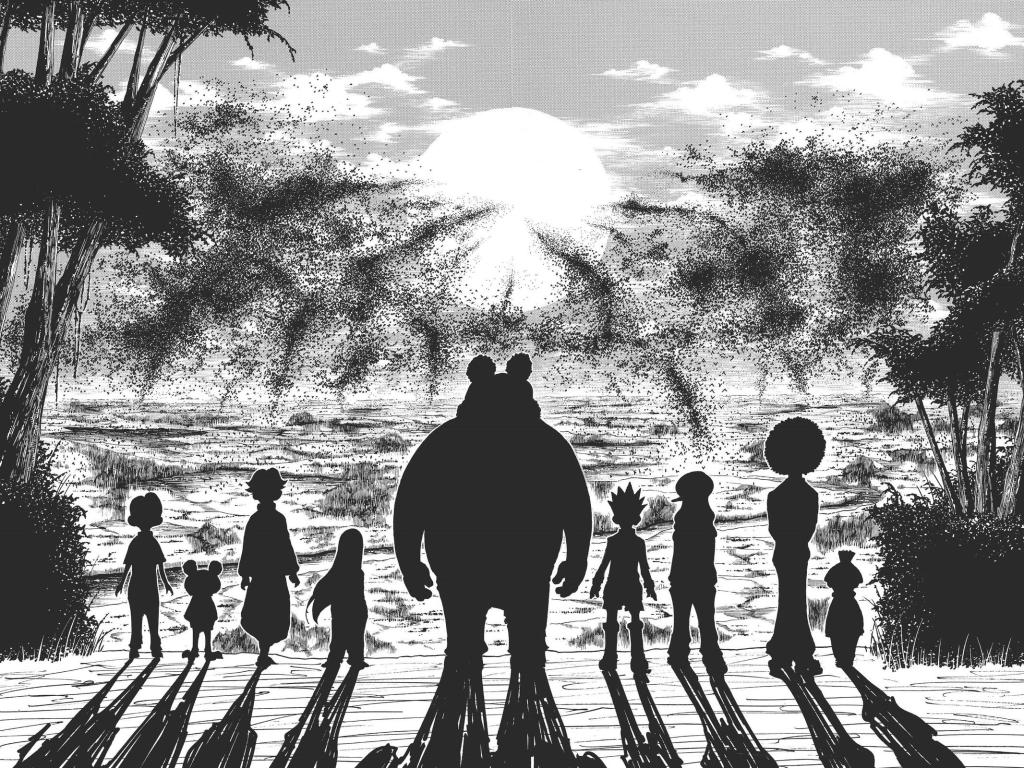
Last but not least is one of the single most important mangaka in the history of Jump, the man, the myth, the legend Yoshihiro Togashi whose own troubles are about as infamous as his successes. YuYu Hakusho redefined battle shonen of its era before Togashi’s health woes led to the single most rushed ending I’ve experienced in a proper serialization, a manga massively dialed back at its very pinnacle. Then there’s Hunter x Hunter, oh boy HxH amiright. He technically finished YYH which is a blessing but HxH is his magnum opus, his greatest story not just in quality but also quantity and that scope would break the camel’s back properly, forcing it’s medium defining author into a state of semi retirement that he stays in to this day. Nobody on earth wants to finish HxH more than this man and so he still struggles but the weekly serializations he pushed through for decades have broken his body in such a way that it feels painful to even pray for more of one of my favourite manga ever.
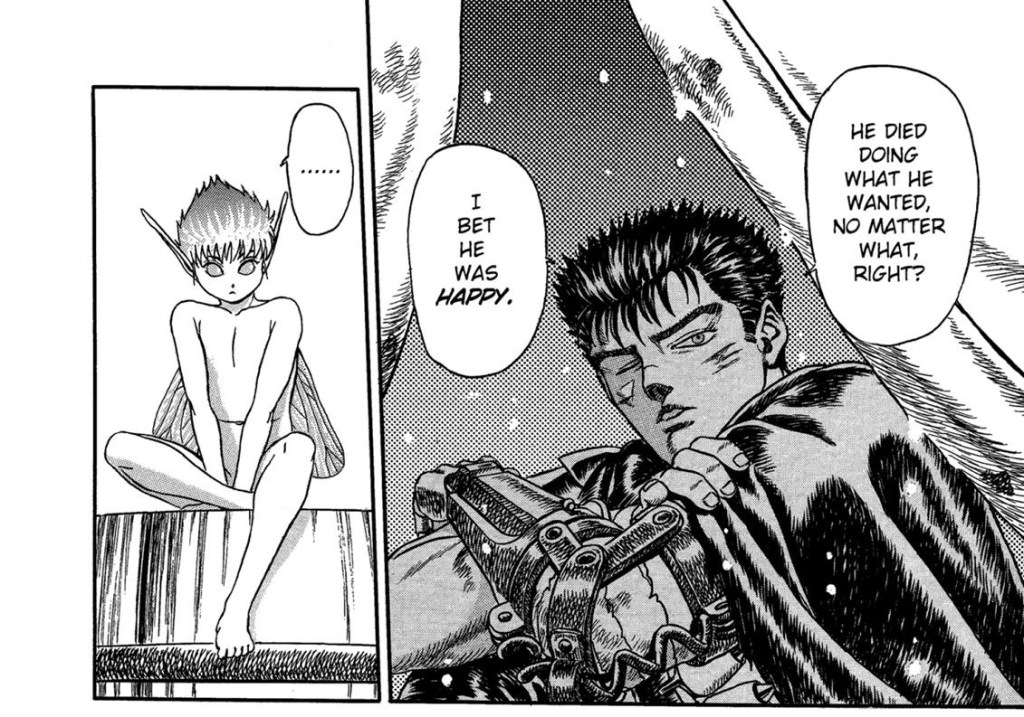
And of course, these are the lucky ones. The monstrous Berserk volumes that line my shelf attest to the tragically inevitable seeming end of artists who fully devote their life to manga, these strugglers who fall decades before their peers in the otherwise famously known for their longevity nation of Japan.
THE RULE…
Weekly manga does not work, my personal experience following serialised manga for almost 10 years points to declines as the norm for long in the tooth weekly serializations where monthly manga tells the different story of inspiring displays of artistic evolution and improvement as one of their most satisfying traits. Monthly manga also suck ass to keep up with and after my long four years apiece with the likes of AoT and Vinland I have no desire to follow them ever again. Which wraps back around to the point of weekly manga, they are actually a constant stream of storytelling that at their best can find a little place in your heart and grow up with you. Blue Box is not the best romance manga ever written but it is the only one aside from Takagi san that I have genuinely grown up alongside and unlike Takagi this manga actually changed, matured, and earned a place deep in my heart. But admittedly it has been a shallow gradient, more beloved for its warm familiarity than its own inherent creativity. It is not one of the greatest manga of all time and so finally this meandering manifesto returns to its message, that you should be reading and watching Akane-banashi.
AND THE EXCEPTION
Why, well because it breaks every rule in the WSJ serialization game that I just tediously laid out. Best in class art, bursting with creativity matched only by its concrete quality that has never, ever produced an off chapter. Storytelling that has gained an airtight quality, always keeping the audience exactly where it wants them for maximum emotional effectiveness. Well written characters, palpable pacing, a respect for the audience when it comes to developing the rakugo performances, it’s all here and it all works a treat. Most importantly it works as a weekly experience, something not many manga actually benefit from. Akane-banashi has been a work that has built its own legend before me the past 3 years I’ve followed it and that’s the feeling I want to get across.
OPTIONS FOR ANIME ONLIES
You need to read Akane-banashi but it is actually airing an adaptation right now, a very strong one at that. Not without some compositing flubs, the anime could be the ideal way to experience the rakugo performances as they’re inherently meant to be heard, something Anna Nagase‘s Akane really proves as she’s nailed down the specific craft masterfully, true voice acting wonders in my eyes. To me though the rougher edges push the anime into sub manga material (though I am most certainly biased) but I have had great joy reexperiencing the series’s groundwork and realized hey, Akane-banashi has always had that dog in it writing wise. Some moments have worked better because of the auditory nuance like Tohru’s unsteady Shin’uchi performance coming through as a obligatory attempt instead of a passionate, well crafted artistic endeavor to the point where yes, Issho’s criticisms are completely justified, the Shin’uchi substance was not in the room that day. Aside from that moment though I’d steer new fans to the manga because that’s where things get real.
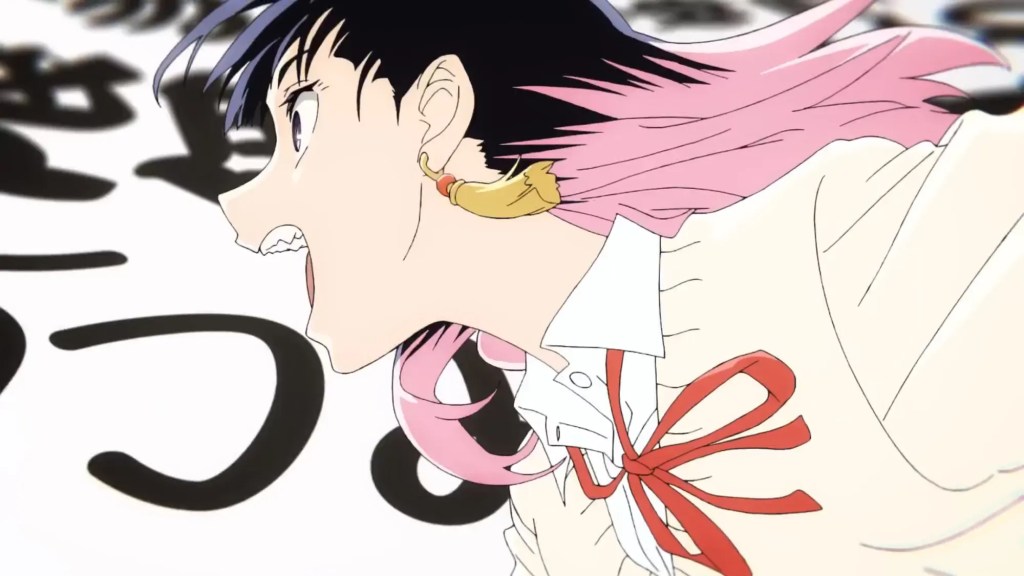
MOMENTUM SHIFT
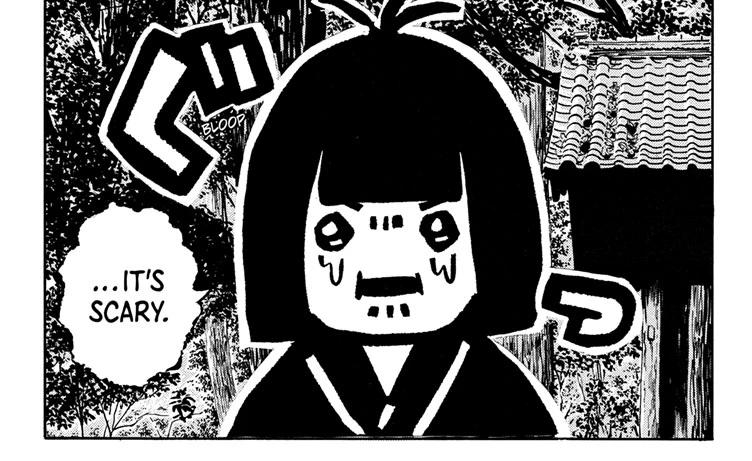
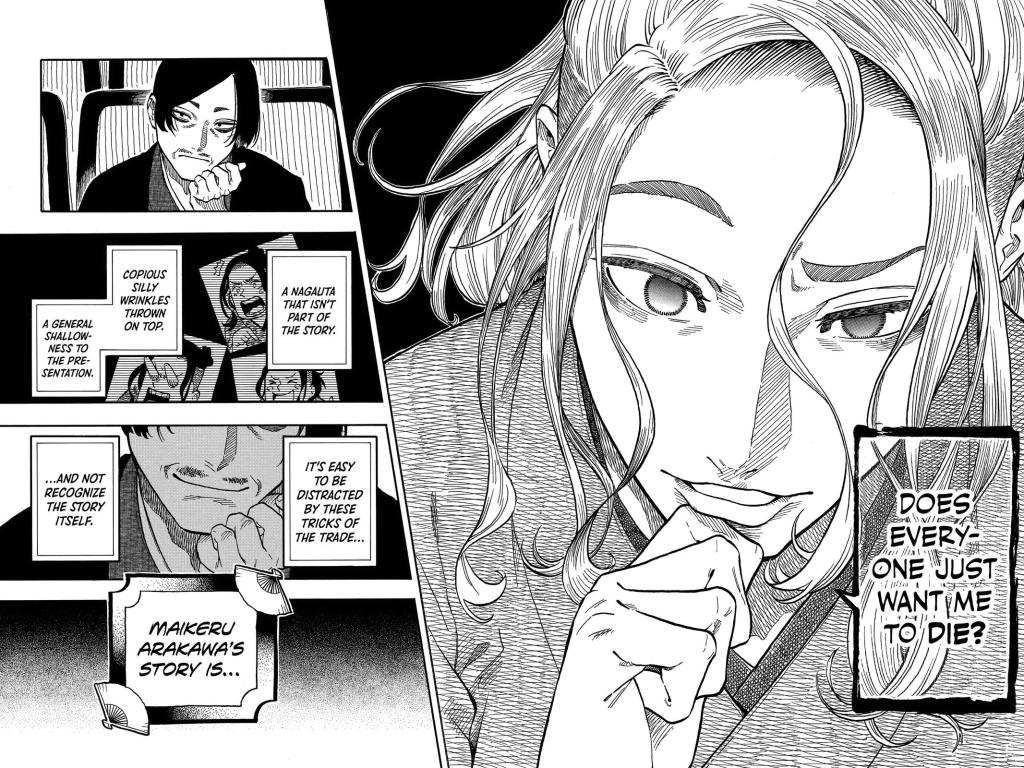
Akane-banashi is a cute, charismatic and compelling manga for its first 100 chapters, a highlight of that era of Jump but not one deserving of the spotlight. Then everything changed. Both the manga and my perception of it dramatically shifted in the course of 2 months when one Maikeru Arakawa decided to shake the rakugo world out of its post-expulsion stupor and face Issho’s tyranny to earn the title of Shin’uchi. A character who existed but never really stuck out to me, Maikeru was an underdog in the truest sense of the word. Challenging the status quo, audience expectations and both primary antagonists so far Issho and Zensho, Maikeru’s exam was the first time Akane-banashi grabbed me by the throat and held me there week to week. His early antics met an unmoved crowd whose silence felt like a judgement had already been decided, like this attempt would me smothered before it ever started. Then he stared directly at that audience, at us the reader and said “Does everyone just want me to DIE?”
STEALING THE SPOTLIGHT
The primary benefit of Akane-banashi running for a long time is that as the reader gains familiarity with rakugo the stories can get more complex, more dramatic and in the hands of a skilled writer more potent in their multifaceted storytelling. Yuki Suenaga ran with the idea that the stories within this series can be used to say a lot about the rakugoka who perform them, pushing forward character development through the actual performances by making every story resonate in some way with the wider plot, reinforcing ideas through doublespeak. Is it subtle, no, not generally but I think that’s why this series works so well as a weekly experience. You’ll never find yourself lost in the meaning of a given scene due to poor memory because with bombast and class Suenaga wraps you back in so that everything hits exactly as intended. What Maikeru did with that line, suddenly flipping the script back onto the audience and addressing through the story the murderous tension in the air had the effect of resetting the mood, locking everyone in, forcing the audience to take him seriously. With the roiling desire to honour Tohru who came and went before with a dash of his signature egotism the usually jokey Maikeru transformed into a precision blade, harnessing the heavy atmosphere with an emotional play that choked the life outta his doubters, me included. He used the raw wound of the expulsion incident and every complicated expectation put upon him before ever entering the room to tell a story the likes of which had never appeared in Akane-banashi before and when the dust settled the series was forever changed. It wasn’t just a cute happy go lucky romp into becoming a rakugoka but the leanest and meanest drama in the entire magazine.
THE GOD OF DEATH
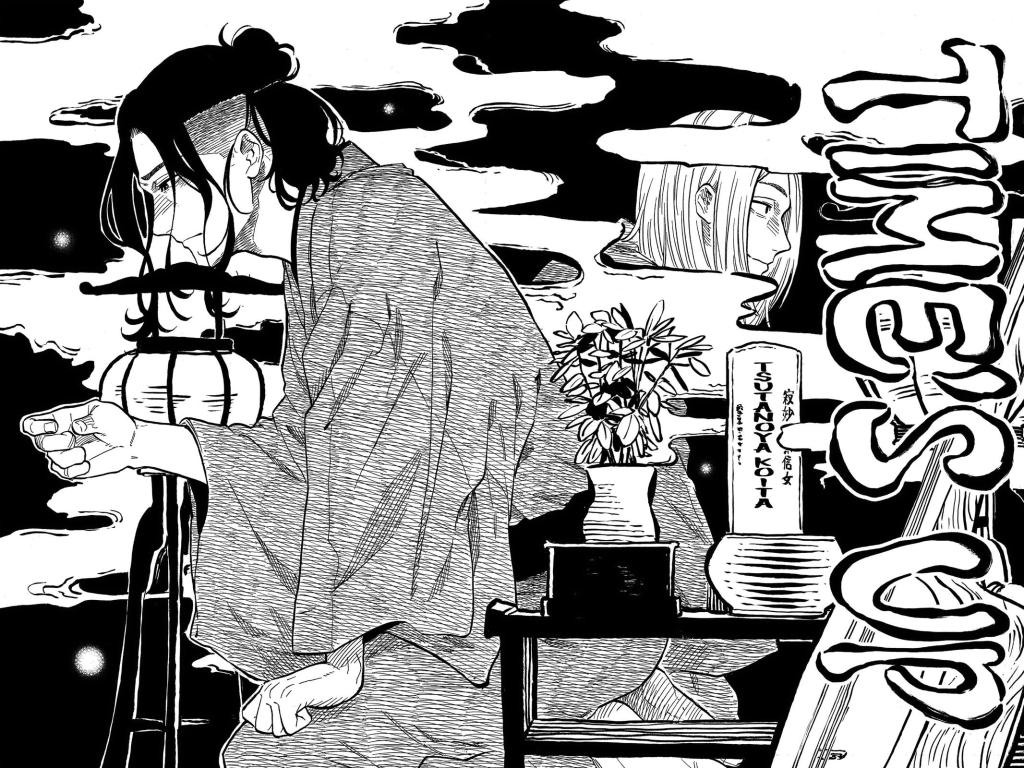
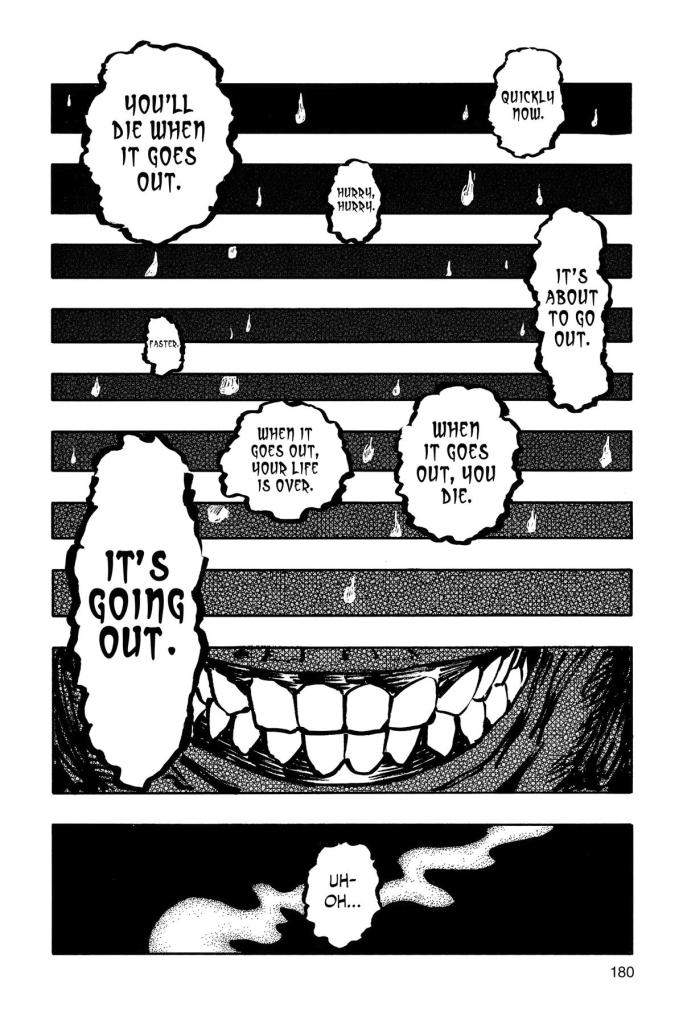
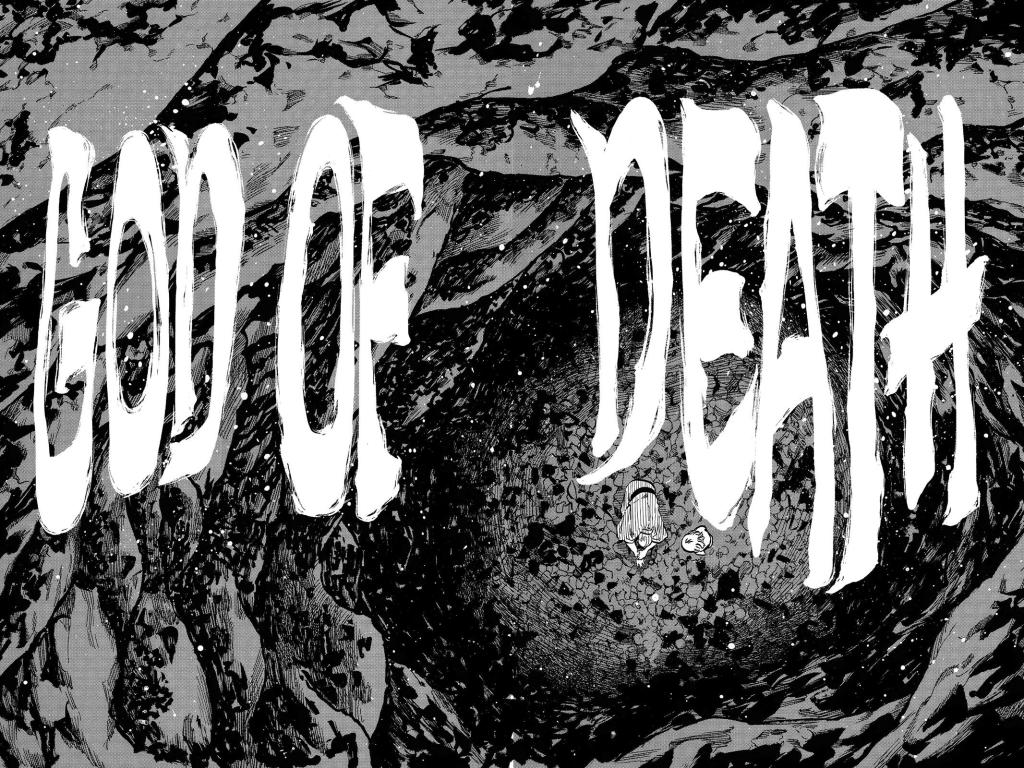
In the very next volume Akane-banashi proved the Maikeru exam arc wasn’t a fluke but the new norm as Akane found herself opening for her own master Shiguma Arakawa and we get to witness what rakugo on his level looks like. That performance would not be as dense or lengthy as Maikeru’s but to me the story he would tell would not just stand taller than what just came before but would become this series’s defining tale. That story is GOD OF DEATH. Its very name signals its majesty, what does a human have to do to perform as a god of death itself, what can they pull from personally to give truth to the great leveler of mankind, what can a story like that do to its audience? Its structure is straightforward, helping it stick in the mind of a goldfish brained reader such as myself while it’s telling individually have moved with a gravitas even the endgame prospect of Shiguma’s Art hasn’t conveyed. In the hands of a skilled rakugoka it is a story that can kill, a long time ago Shiguma held an audience in a trance through one telling as a fire alarm blared and with Takamasa Moue’s pen you believe it, his art similarly rising in power at this stage in the game. Page 10, Chapter 125, a series of 10 panels that provoke more choking suspense and visual genius than anything Junji Ito ever wrote not named Amigara for an example. Shiguma’s performance implanted this story into our collective imaginations forever and set up the showdown that goes down on this very day.
Having made his mark in our memory and taught Akane everything she needed to know his own God of Death came for him, the man surviving his heart attack but the performer being lost to the throat cancer they discovered. His school was mercilessly shut down and his pupils spread out across the other schools with his most promising, most precious one sent to the tiger’s den. Akane Arakawa was now a pupil to her own arch nemesis Issho Arakawa, vowing vengeance for not just her father but her first master too.
THE DEVIL OF RAKUGO
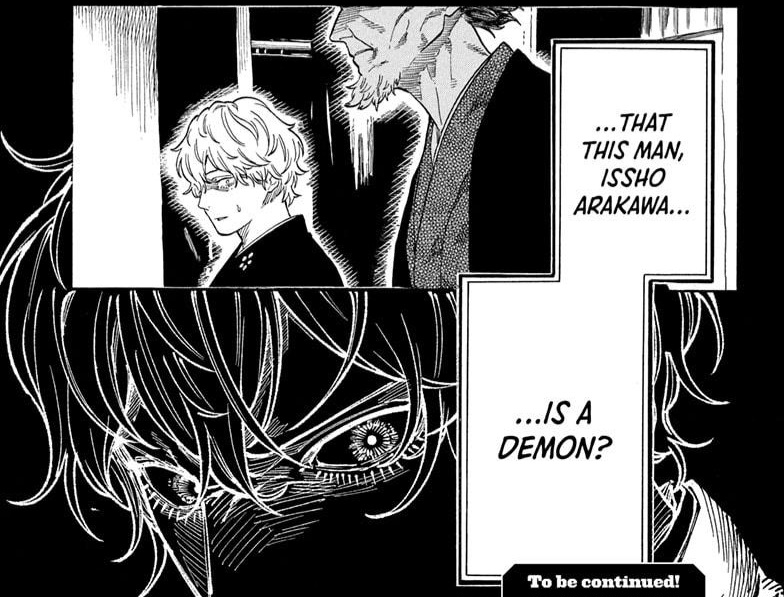
Issho is the best antagonist jump has seen since Makima and for similar reasons too. He is a figure inextricably tied to Akane, her greatest motivator and maybe even her greatest teacher since he is the greatest rakugoka of his day. His aura is overwhelming, not appearing in a page if he isn’t allowed to descend into the inky devil of rakugo with his trademark smirk and ruthless appreciation of the art. It is his life, his sole purpose and in the modern age where its own importance fades from the culture he is the last man with the power to define it for an unknowledgeable audience. He didn’t disbar Tohru out of malice for his fellow man but out of love for his life work, refusing to let its legacy be carried on by lesser artists. His dynamic with Akane is similarly fascinating, accepting her hatred for him and even fanning the flames because he sees in her a potential for greatness far beyond her father, playing the villain to push her towards that best version of herself. Under his tutelage she grows up into a young woman capable of overcoming every challenge, from surviving abroad in Paris(oof) to putting her childhood rivals to bed with a performance where she is not allowed to even exist.
THE PINNACLE OF RAKUGO
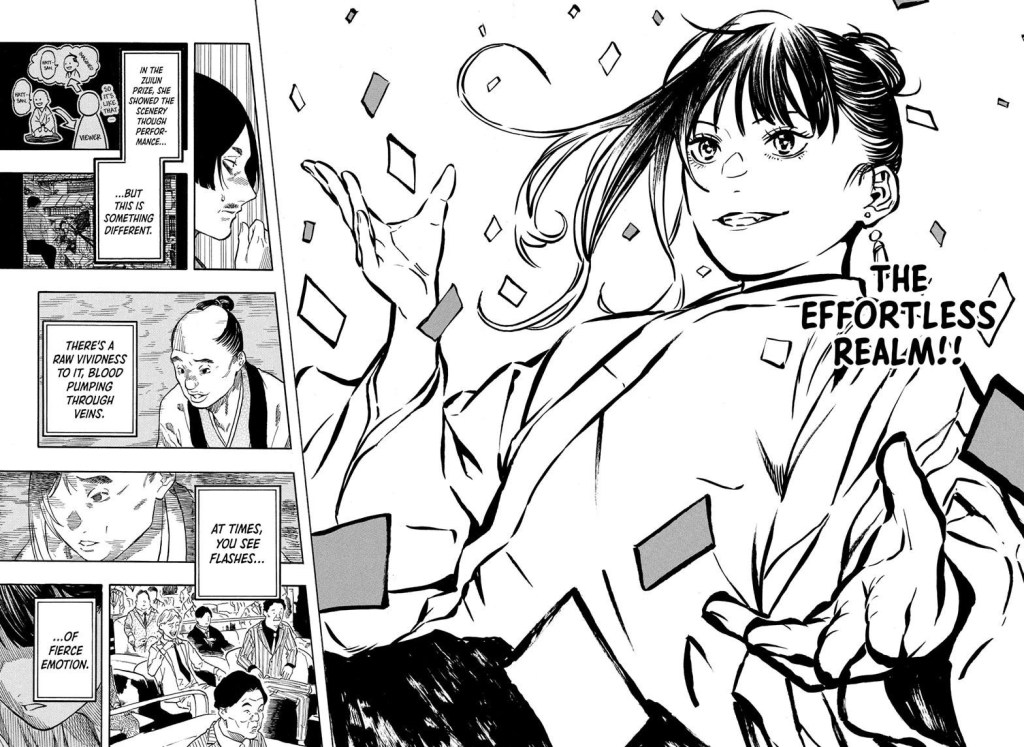
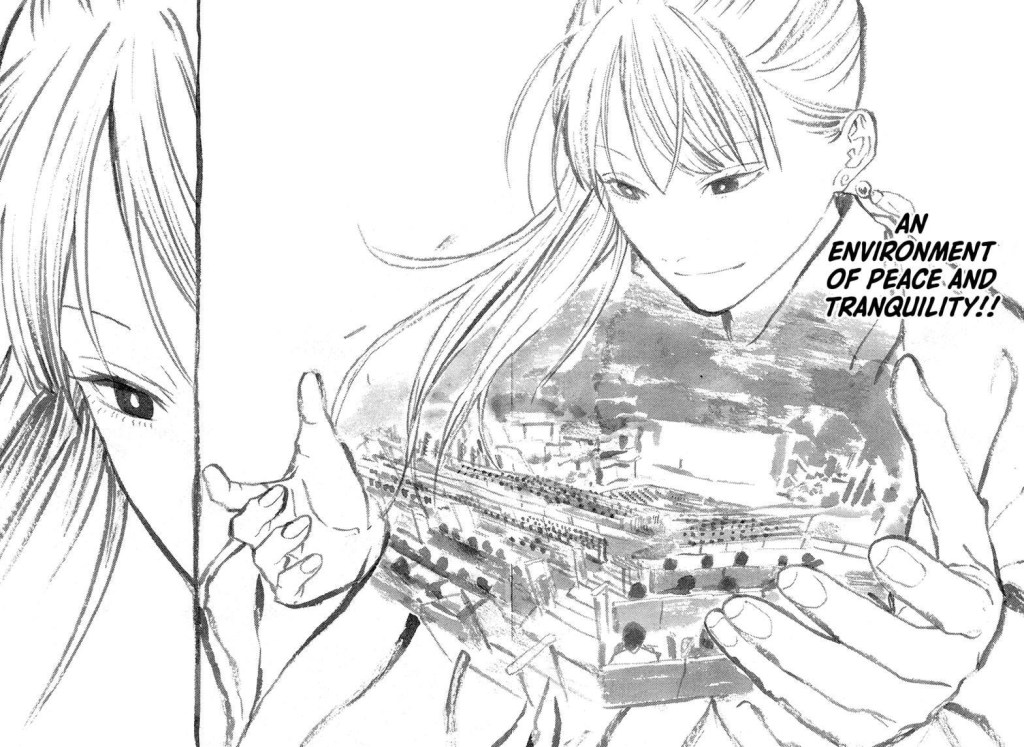
In a three-way gauntlet reminiscent of the Karaku cup Akane pushed beyond herself and becomes rakugo, not allowed to personally elicit laughter from her audience Akane instead becomes an observer of her own art. With breathtakingly evocative art like the round panels and the watercolor looking two page spread Akane transcended herself and her peers, becoming an observer of both the audience and herself to disappear into her craft. With that final challenge overcome Akane is ready to take on the greatest performer of her generation Kaisei, protege of Issho. A protege who just failed his own Shin’uchi exam in the cruelest way possible as his God of Death won him the promotion only for Issho to immediately perform the exact story, retracting his title with a demonstration of the gulf between his and Kaisei’s skills. To perform a story immediately after someone else did so is an unspoken taboo, a truly shocking display of fangs from the master to his apprentice in what should be his moment of triumph. Nevertheless it is the Issho way, a vicious application of his art as a means to protect and preserve its truest potential and with that setback as motivation Kaisei is now a raw and ravenous artist. With these pieces on the board it is at last time for Akane Arakawa to take on God of Death in a head to head with Kaisei and unlike her usual training challenges she faces him with nothing holding her back.
AKANE-BANASHI: GREATEST OF ALL TIME
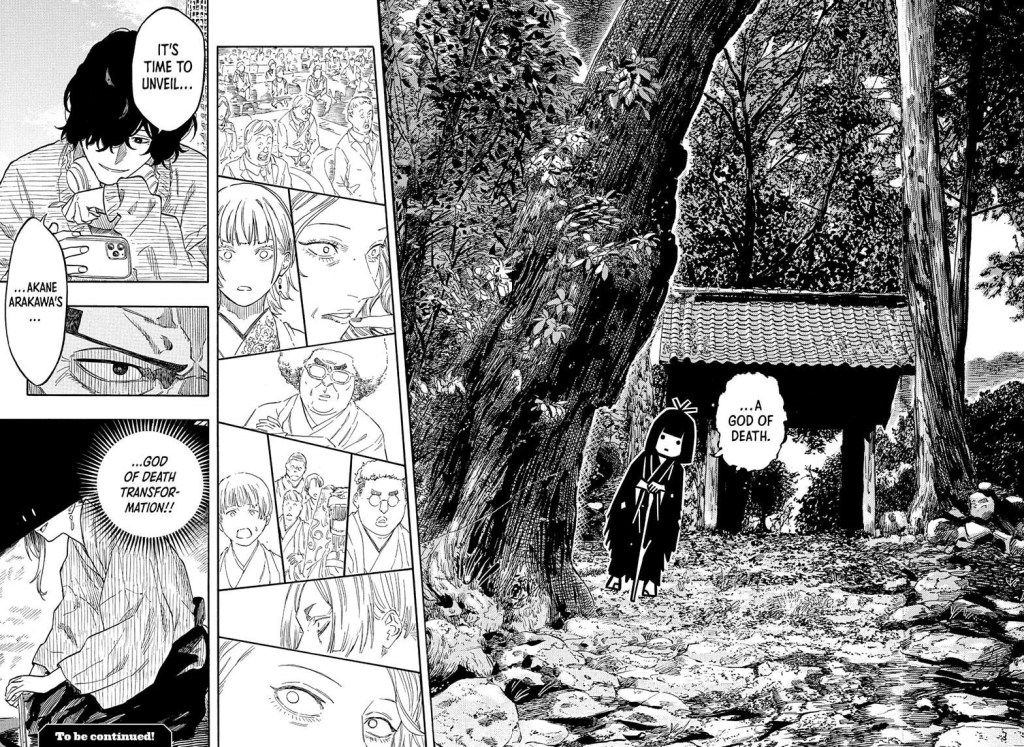
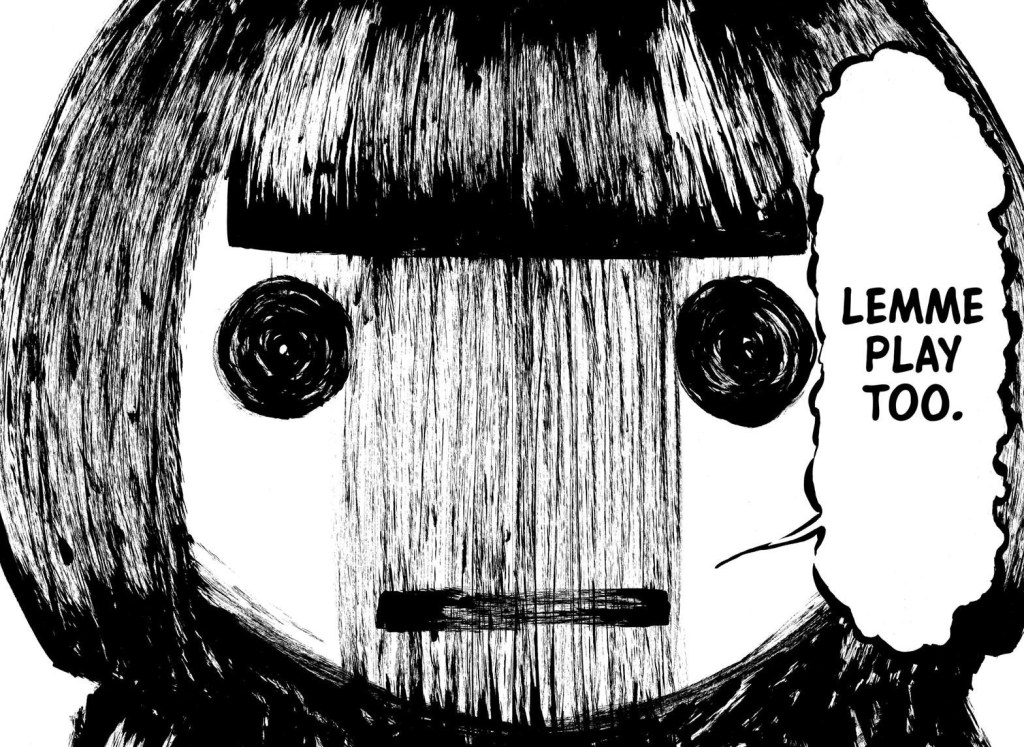
At the Isshokai we will see Akane at her peak and now with the dust of said performance settled the fact stands that Akane-banashi just had its greatest performance ever. It has built this specific performance up since Shiguma first performed it 2 years ago, weaponizing the familiarity the audience has with its story and teller, utilizing the drama of Shiguma’s fall and the series main plot of Akane’s rise to give us the most meaningful, most dense, and most captivating material Shonen Jump has seen since Shibuya. First Akane sheds the stress of an audience disturbed from an unplanned provocation by the ever annoying Zensho, through the story yapping all the noise away before promising a death to remember. She fulfilled that promise immediately with 2 two page spreads to unveil her god of death which is… an adorable widdle mascot. Akane loves mascots, she’s a cutie who loves her tanuki’s so this pathetic critter, this joke of a god is just so her, the chibi style drawing standing in abrupt dissonance with the detailed background. I freaking adore this creature, it’s such a ridiculous drawing and it was exactly what I needed to get even more excited for her performance. Of course what she’s really going for is the delicious drama of a tonal switch when the teensy little crying god bears its fangs in a horrific two page promise of doom.
THE NEW HEIGHTS
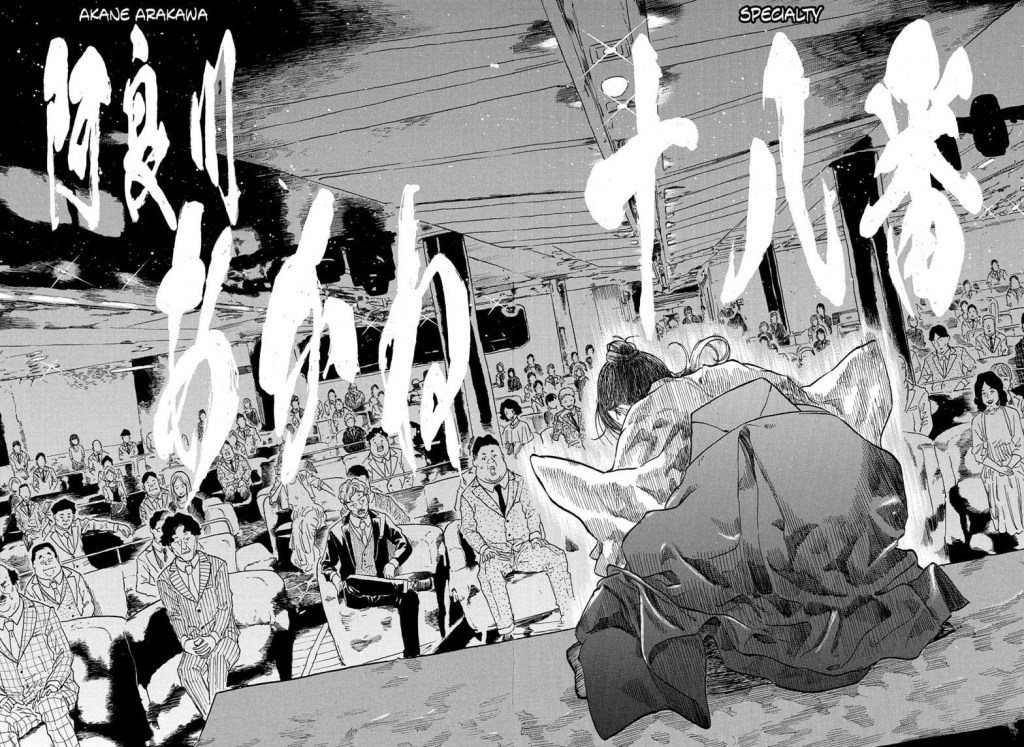
Yet still some in the audience laughed, not because she fumbled in her execution but because her execution was so rich and nuanced that an individual could interpret it in their own way, a constant truth of art that rakugo thus far hasn’t often demonstrated. While as a reader I can only see the imagery that Moue conjures with its often crystal clear intentions the point of that comment was to declare that Akane truly was operating as a master rakugoka for the audience seated before her, adding more texture to the way we readers interpret her work as it happens before our eyes. What wasn’t said but was demonstrated by Moue is the artstyle that develops alongside the performance. Rakugo performances are mostly drawn with thick inky brush strokes reminiscent of classic Japanese art(though I don’t know the specific style) as opposed to the clean, very typical general art. It’s Moue’s way of differentiating the performance from the performer, the “real” from the imaginary and while he follows no rules with said stylistic changes it’s a pretty consistent trait. Which is why Akane’s God of Death performance visually says more about her maturation as an artist than anything else because at her zenith of the story she glares into the world she’s conjured…and someone more real than her stares back. Stylistically her performance is drawn with so much more realistic detail than the usual art, the people and places much more textured than what Moue’s work has ever been. Akane herself begins to look like the drawing, she looks less tangible than her art and in doing so Moue is saying that the performance itself has become the real world, Akane has transcended roughly drawn stories with singular intentions to a living breathing world. A doomed world, one that’s dangerous to fall into.
AKANE ARAKAWA: GODDESS OF RAKUGO
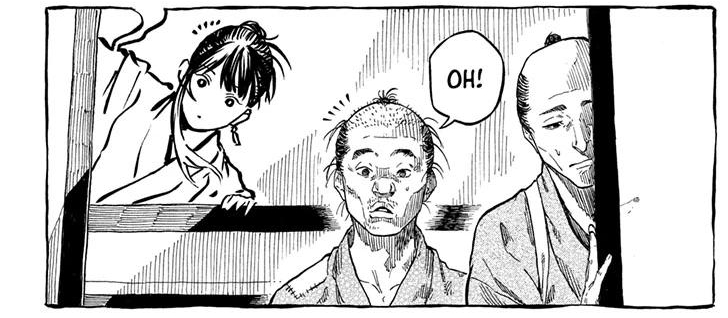
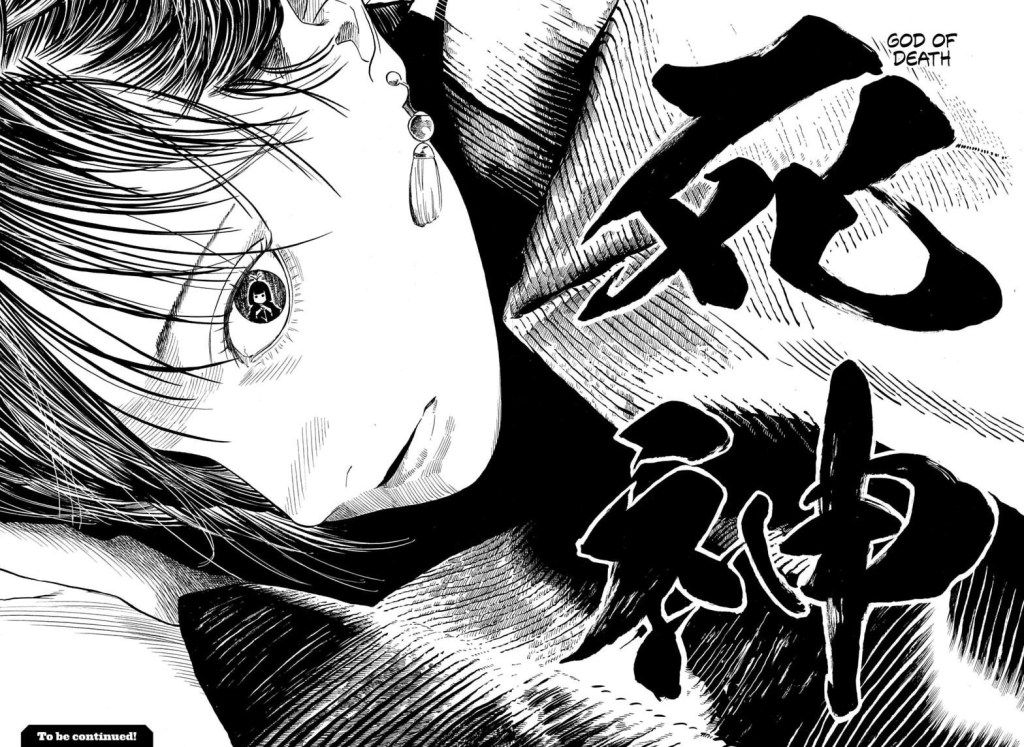
The God of Death that can kill was once Shiguma’s legend, a testament to his art and the nefarious power of his signature story. That legacy lives on, albeit less terrifyingly in the Akane of today whose own richer than life performance causes very few people in the room to budge when the ship’s captain(yeah they on a ship) blares over the intercom that they’ll be facing turbulence. Far from life or death stakes yes but still a powerful echo of her master and an effective demonstration of her own growing legend. That legend begins truly as she ends her own take on God of Death with a characteristic mix of the suspense the story desires and the playfulness she embodies with a sneeze being what kills her character. She falls to the floor, everyone’s eye’s on her and we get the brilliant final two page spread of her enrapturing gaze and the twinkle of her god of death in her eye.
TIS THE END!
We have just witnessed Akane Arakawa unchained for the first time ever, a true monster of rakugo, our own adorable main character. That’s what Akane-banashi the series has done before my eye’s, the cute little story that could has grown up into the all consuming all powerful dream come true of a weekly manga experience, one that I’ve been on the ride for all that has mattered. It’s not too late for the rest of y’all to jump on, in fact it’s the best time in its entire run so join me and witness one of the greatest manga ever published in Jump run to its end.
But you probably shouldn’t have read a lot of this if you’re not caught up, shame:(
FINAL RATING: 9/10
Akane-banashi can currently be streamed on YouTube(no joke) or purchased as single volumes from Viz.