THE GALAXY FAR FAR AWAY, REBORN
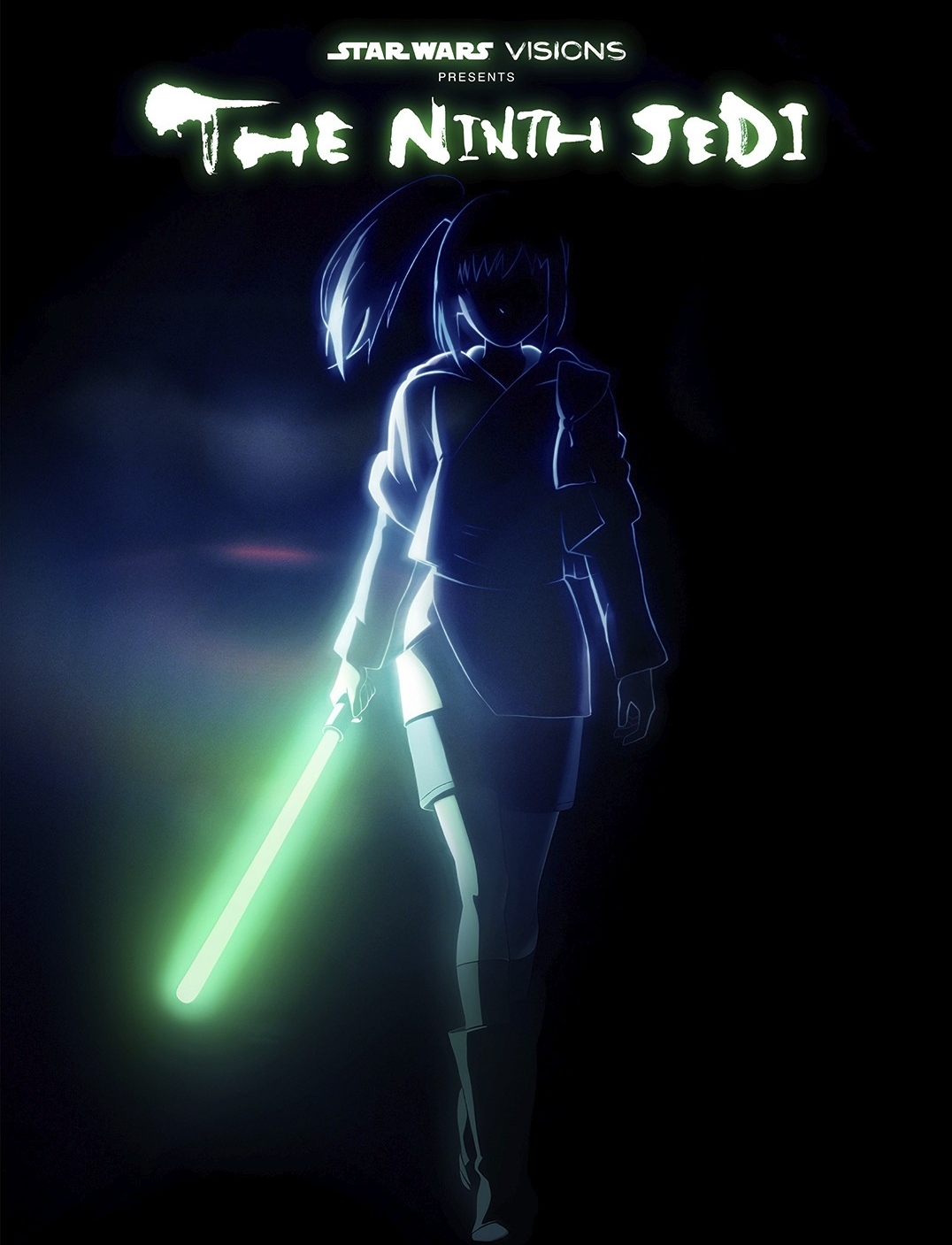
This anime original take on George Lucas’s famed Star Wars franchise was directed by Kenji Kamiyama and Shunsuke Tada off of scripts by Mitsuyasu Sakai, animated by Production I.G and premiered in 2026.
A LONG, LONG TIME AGO
Animation, the greatest art form humanity has ever conceived. Blending the craft of painting emotive pictures that predates civilization with the act of verbal storytelling that probably came along with the evolution of high intelligence itself. Animation can do literally everything and anything more beautifully than mere words and more believably than manipulated photography could ever capture. These days, especially if you’re reading this, the unquestionable masters of the medium find themselves in the Japanese anime industry, a collection lead mostly by the native Japanese but one who’s untold (and underpaid) laborers come from every corner of the globe in a herculean feat of artistic output. While manga is my personal favorite medium as a reader at heart, I consume more anime than any other form of media these days, it’s kinda my whole personality. My current personality is built on the bridge Attack on Titan gave me to this side of the world but before I found that I spent the earlier portion of my youth firmly stuck in not a medium but a franchise itself, Star Wars. From the age of 4 I was a Star Wars fan first and a big brother second, plus of course having exactly like 3 friend’s total. Star Wars is in my very blood which is 100% my dad’s fault thanks for everything and as such it can easily be called the most formative franchise of all time for me, I exist permanently in context with that universe. That context has diminished in importance as my new love of animanga has risen and that franchise has unquestionably fallen from grace but that does mean that hypothetically the me-centric media any entertainment giant could produce these days is Star Wars but make it anime. A grand idea I daresay, crazy even I mean a Star Wars anime would never happen amiright and hey why are the saxophones getting louder.
THE STARS ALIGN
Star Wars Visions Season 1 premiered in 2021 at the perfect possible time as Star Wars was finally receding from my life following the end of Mando S2 and its replacement, anime, had successfully taken root as my de facto thing. It was an anthology that was freed from the chains of canonicity so as to let the individual directors and studio’s have their personalities just as front and center as the franchise that inspired them. Hiroyuki Imaishi and Studio Trigger did just that with their Gainax born goodness in The Twins. Takanobu Mizuno and Kamikaze Douga made the literal coolest 3D anime episode ever with their B&W samurai showdown, but with lightsabers! Made in Abyss assistant director Hitoshi Haga and Kinema Citrus made something more thoughtful with The Village Bride though not thoughtful enough to overcome the godlike presence of composer Kevin Penkin and his better than Sequel Williams don’t kill me for this opinion score. The true best episode though was unquestionably Lop and Ocho, Yuki Igarashi and Geno Studio‘s jaw-dropping showcase of a richly detailed and spectacularly animated Star Wars tale that above all options was just beginning for a full series conclusion, the ultimate dream of this new venture. More recently Vol. 3 dropped and while I haven’t watched it in full, I simply had to indulge the nigh incomparable animation feast of avant garde animator extraordinaire Shinya Ohira and the single most stacked KA list of any anime episode last year with Star Wars Black. Backed by a raucous jazz track this heady delve into a Storm Troopers demise aboard a Death Star is visually dense, experimental, unfathomably detailed and basically the platonic ideal of a megacorp like Disney patronizing the arts. Alongside that season was the quiet announcement of Star Wars’s first full-length anime series, an expansion of The Ninth Jedi… wait The Ninth Jedi!?
FROM THE MIND OF KENJI KAMIYAMA
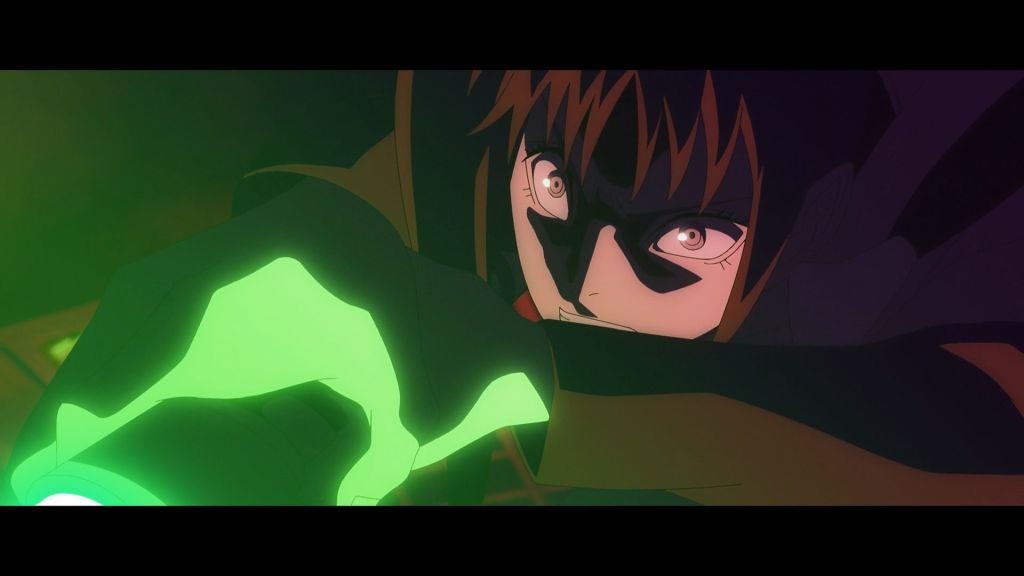
Kenji Kamiyama’s The Ninth Jedi and Naoyoshi Shiotani’s Child of Hope follow-up are not the worst entries in the Visions canon but they’re not in the notable tier either, firmly the safest episodes of the bunch they inspired very little excitement in me. The cynical view is that as the most familiar feeling Star Wars adventure the property was picked because it wouldn’t ruffle the fandom’s famously fickle feathers but there’s also the fact that Kamiyama is a known figure even in Hollywood. With his career effectively made the moment Ghost in the Shell Stand Alone Complex became the de facto universe for the franchise most popular for Mamoru Oshii’s classic Kamiyama would then follow it up with the anime original hit Eden of the East. His career would than evolve in a interesting direction as he continued to push himself into major franchises like Cyborg 009 and Ultraman before suddenly non-Japanese properties became available to him. Blade Runner: Black Lotus is a relatively obscure 3D show that is nevertheless still freaking Blade Runner and that was just the table setting for his real big ticket, I’m talking of course about Lord of the Rings: The War of Rohirrim. LOTR is a big deal multibillion dollar franchise, and he got $30 million of that pie to make a mainstream animated film with nigh universal appeal in the world of cinema. He fumbled it, big time. The $20 million gross already put it firmly into the red but it was the lackluster story and production that really sunk it in the collective memory, coming across as a stale retread of the Battle of Helms Deep without a shred of charisma or medium specific flair. It exists was my main take way after shrugging out of the theater in disappointment and it’s that experience his The Ninth Jedi short most resembles.
COMES…THE NINTH JEDI
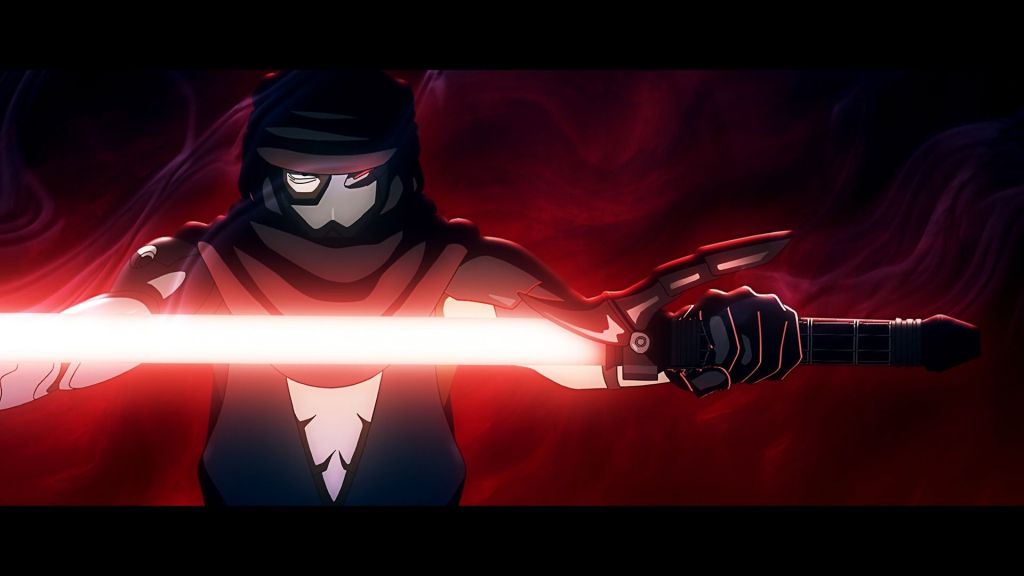
Star Wars can be anything from a gritty political drama like Andor to a Shakespearean farce like the Prequel Trilogy or heck, even a holiday flick oh wait we don’t talk about that but at its core it’s an adventure to a galaxy far far away with all the wonder and thrills that entails. It is at its stalest when the adventure simply through the motions, just look at the downward opinion on The Force Awakens once everyone realized it was a shameless New Hope clone. The Ninth Jedi simply does nothing exciting as a story; it provides the lightsaber fights everyone loves without providing a reason to care for the characters and the vague worldbuilding just kills curiosity outright. It has the big brassy score, a wonderfully droll droid, and great fight choreography but without the memorable cast it feels like it’s playing Star Wars instead of embodying it. The sequel short Child of Hope comes across even stranger as while Production IG continues animating the work Kamiyama has handed it off to their Psycho Pass team lead by Shiotani and to make a long story short they’ve been washed since 2015’s The Movie entry. Child of Hope does not look like The Ninth Jedi, the basic art direction and distinct Tetsuya Nishio designs replaced by Shiotani’s stockier forms and maximalist 3D backgrounds. Through abysmal animation direction and the absurdly rendered backgrounds the entire visual language of this short is nothing short of disastrous, it can look good in isolated shots but as a whole it’s distractingly un-cohesive even with itself. I honestly can’t tell you a single thing about the plot because after Mrs. Main Character Kara got blasted outta her space bound spaceship (totally unharmed) my suspension of disbelief was lost, this entire short is an annoying headache that is thankfully not necessary to understand the actual series that followed right after it. Unfortunately, I must also add that after hard carrying the latter Psycho Pass entries singlehandedly Yugo Kanno finally phoned it in here, nobody was trying man the Psycho Pass team is a joke.
A DISTURBANCE IN THE FORCE
With the table set most unremarkably excitement levels were not high for the conceptual slam dunk of a Star Wars anime series and I went in expecting nothing. Then Star Wars The Ninth Jedi turned around and was good. Let me rephrase that, Star Wars The Ninth Jedi is a good anime and a even better Star Wars experience.
THE NINTH JEDI: GOOD STAR WARS!?
The Ninth Jedi is undeniably safe, critically shaky and unquestionably not for everyone but for those of us that love Star Wars, warts and midichlorians and all, I think this anime succeeds in hitting that je ne sais quoi of Star Wars in delightful fashion. The rule of cool is knocked outta the park with a set of truly spectacular lightsaber fights, the idea’s underpinning this universe give it a distinctly intriguing flavor and above all it just hits its marks with a confidence the shorts that it was born from never had. I watched The Ninth Jedi on Cloud City, a permeant smile etched on my face, a itch firmly scratched.
REMAKING THE UNIVERSE
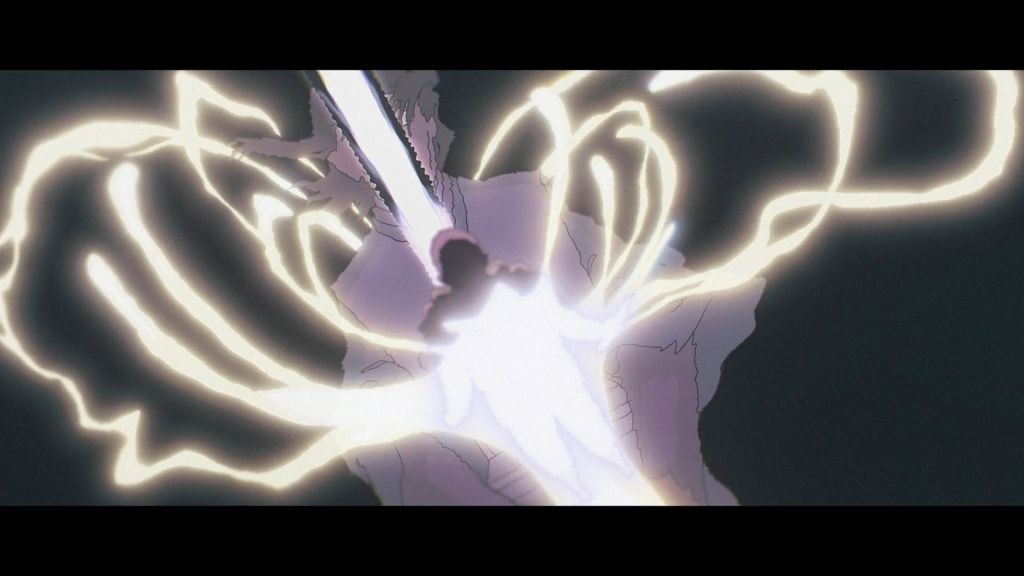
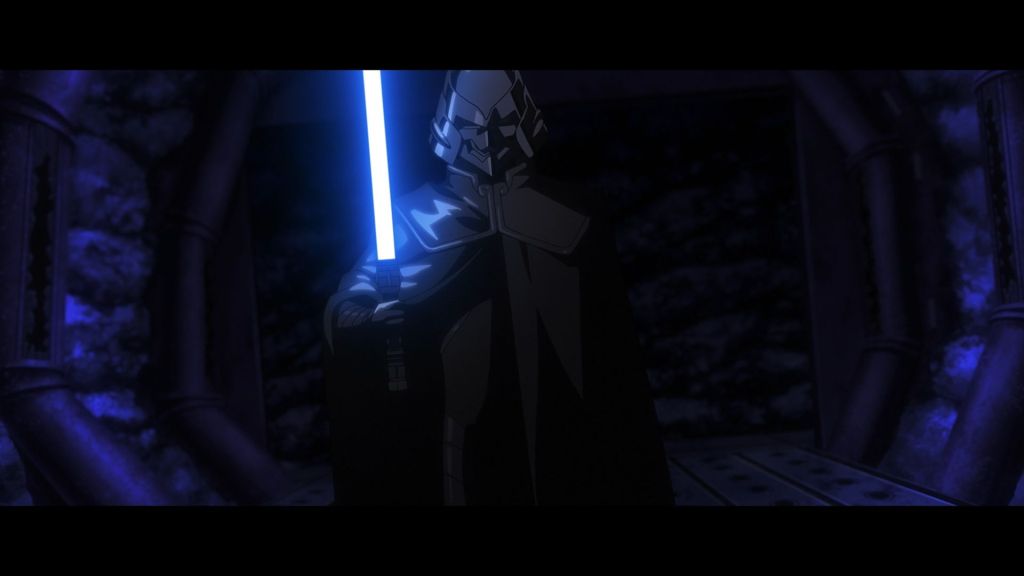
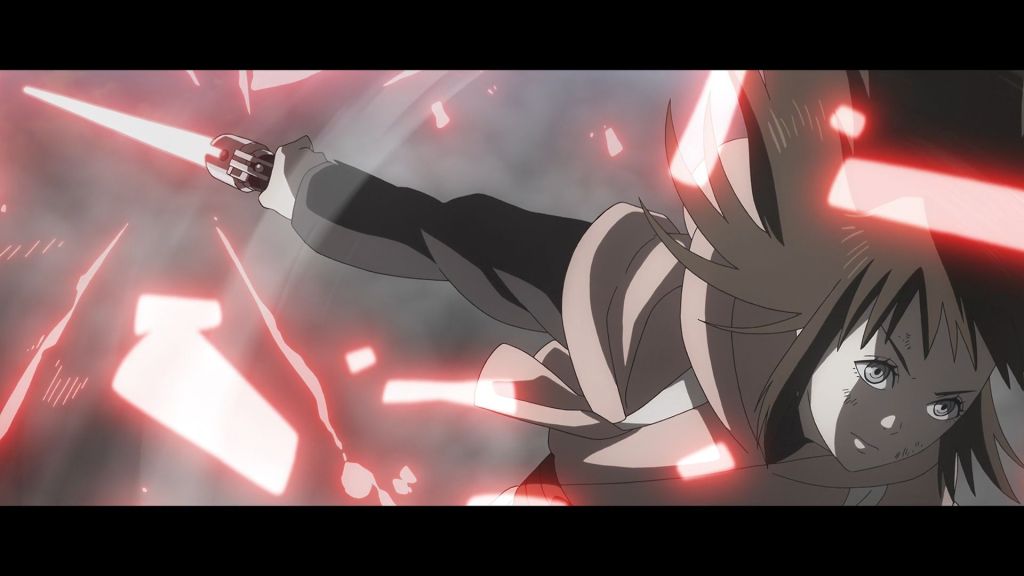
The galaxy far far away has become a scattered frontier, home to no galactic empire or republic, its planets stand alone in the vastness of space as individual fiefdoms with only trade connecting them to powers beyond their solar systems. Jedi and Sith are outdated concepts with no centralized leadership, no hold on the galaxy at large, more mythic than anything else. Our small band of Jedi do wish to change that status quo and the galaxies at large as they go about recruiting new members to oppose the growing strength of warlord Nawaam and his Sith affiliated army. The twist that makes this dynamic fresh is that Nawaam himself is no Sith, in fact he wields a honorably blue lightsaber even when he actively slays Jedi who he sees as an outdated concept. He was once a Jedi disciple to none other than MC Kara’s father whose been given a bit more grey in his concept as it is revealed he killed his own master. Lightsabers are more actively rooted in this story’s telling, the bleeding concept of the EU taking root here to signify how characters channel the Force, letting the clear minded Nawaam slay traditional light side users with bright blue purpose whilst our high-minded protagonist memorable slips into crimson glow when her actions speak in the language of hate. Colored sabers themselves are seen as a remnant of that outdated galaxy and it’s shallow morals, Nawaam, his master and even Kara herself all reaching for the true signifier of inner peace, the silver blade.
IN THE GREY
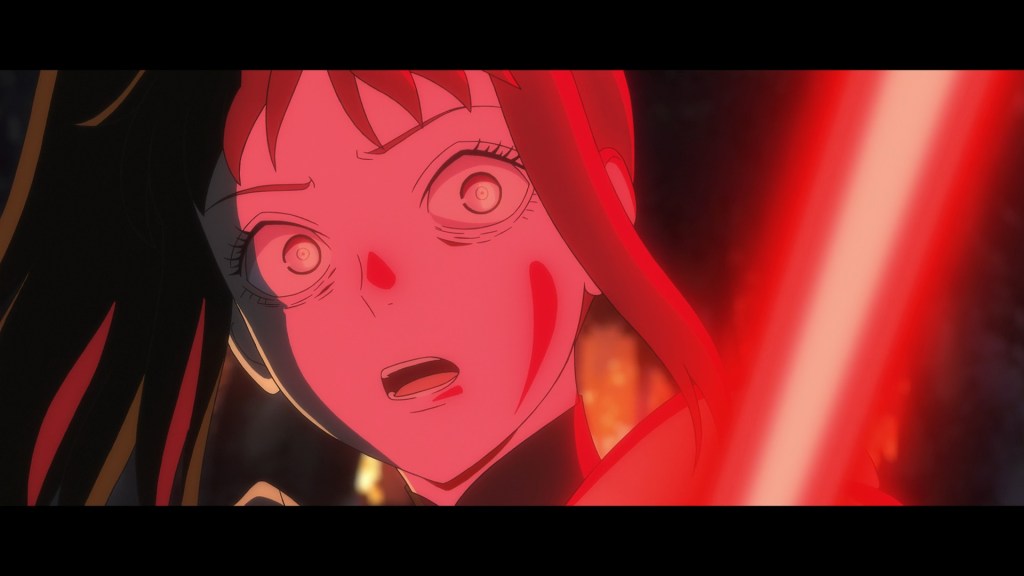
Subtle The Ninth Jedi is not but that’s not a trait Star Wars has ever been accused of having so it’s no dealbreaker, I find the attempt itself to explore this universe in a more explicitly grey fashion a highlight as that sets it apart from the other youth orientated works in this franchise. Is it saying anything as complex about the politics of power and the decay of the true virtue of the Jedi like the prequals clunkily but earnestly did, no. It bears very none of that trilogy’s hard baked cynicism which I think is purposeful, it’s leaning much harder into the OG tone but with a bit of the Sequel’s attempted nuance on that framework, letting the Jedi remain hero’s whilst letting the antagonist lay open, and making him choose the path of darkness instead of directly embodying it like Darth Vader once did. This series feels tropey to Star Wars with believe it or not another “Death Star” and Kara’s master (not her father) dying in similarly contrived fashion as Qui Gon and Old Ben but the repetition echoes the stories of old more than if forces this series into directly embodying them. My main criticism of the plot is how it flattens its own conceptual grey areas with direct answers, choosing the easy way out with characters like Kara’s father then letting them stay mysteriously flawed. Nawaam himself is flattened by the revelations about the master he thought he was following faithfully and he does more or less become a Kylo Ren archetype by the end. Kara’s straightforward journey hits its snag when she slaughters the entire crew of a warring battleship after it firebombs her discount Ewok allies, her vicious smile signposting her lightsabers condemnatory turn to a dark side hue but this intriguing snag lasts about 1 episode before she’s all green once more.
Time is the greatest villain of this series, with only 8 episodes of runtime most of which don’t make it to the 30-minute mark it feels like it’s playing too fast and loose with its ideas, a longer runtime more open to stew in the grey zone for its cast would’ve been ideal. That said the rapid pace and clean 2-part structure make it a permanently exciting watch with zero downtime, it whips by so enjoyably that the moments of questionable writing and the terminally underdeveloped side cast have no space to occupy and thus don’t harm like a thorn. What most of the runtime is spent on is the active actions of characters and that action is a thing of absolute perfection.
BUILDING A NEW UNIVERSE
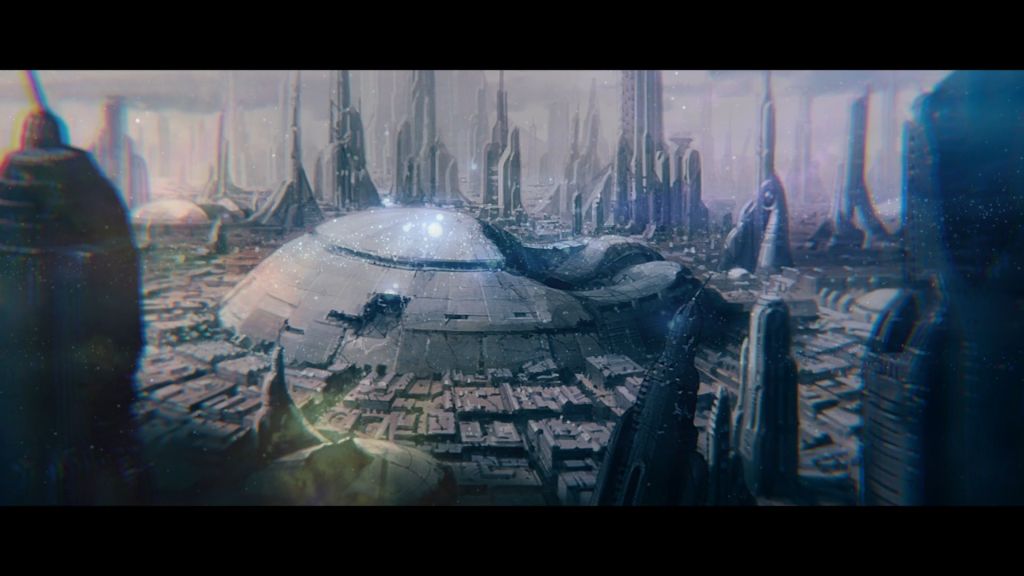
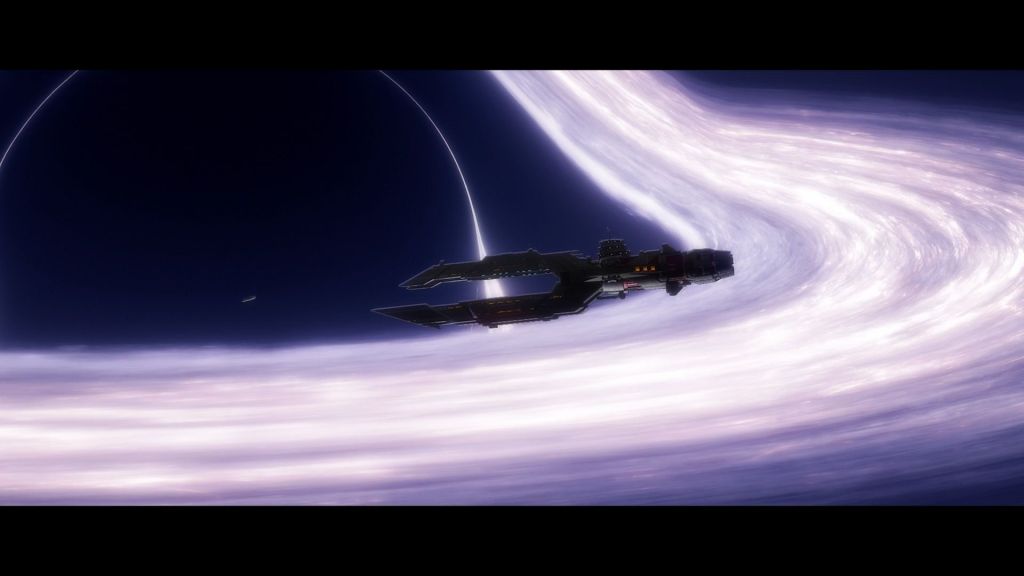
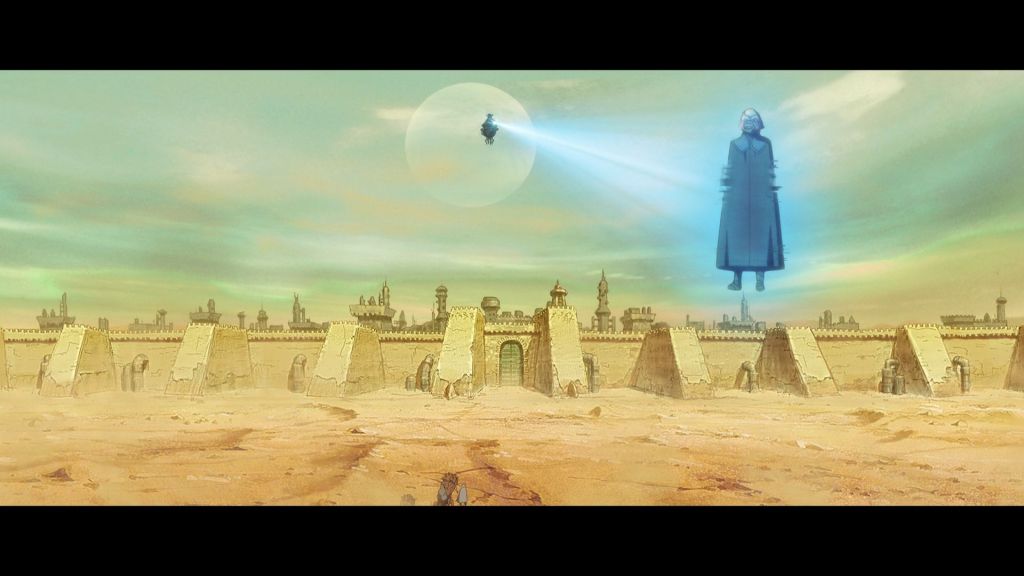
The Ninth Jedi isn’t the most exuberantly anime styled piece of the Star Wars canon, but it is one of the most robust, barring Igarashi’s genuinely too good Lop and Ocho. The planets and technology of this universe speak to the immense detail of the concept design of this anime, packed to bursting with wholly original spacecraft and planets that still feel authentically Star Wars, pulling from all eras too. The art direction is somewhat lessened by a weirdly gritty texture applied to basically every non mechanical component, possibly an attempt to reach the dirty look of the OG Trilogy but one I think is just kinda off looking. What is very impressive is the 3D work found all over this series, sure not upto Industrial Light and Magic snuff but firmly above anime’s normal standards which truly shine in the huge scale space battles which are universally sick.
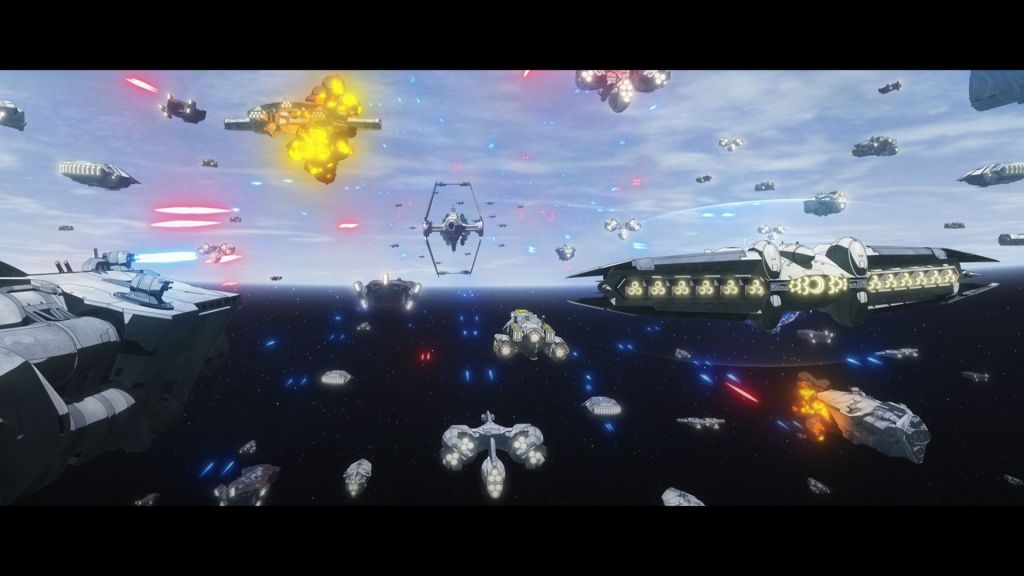
FOR THE LOVE OF LASER SWORDS
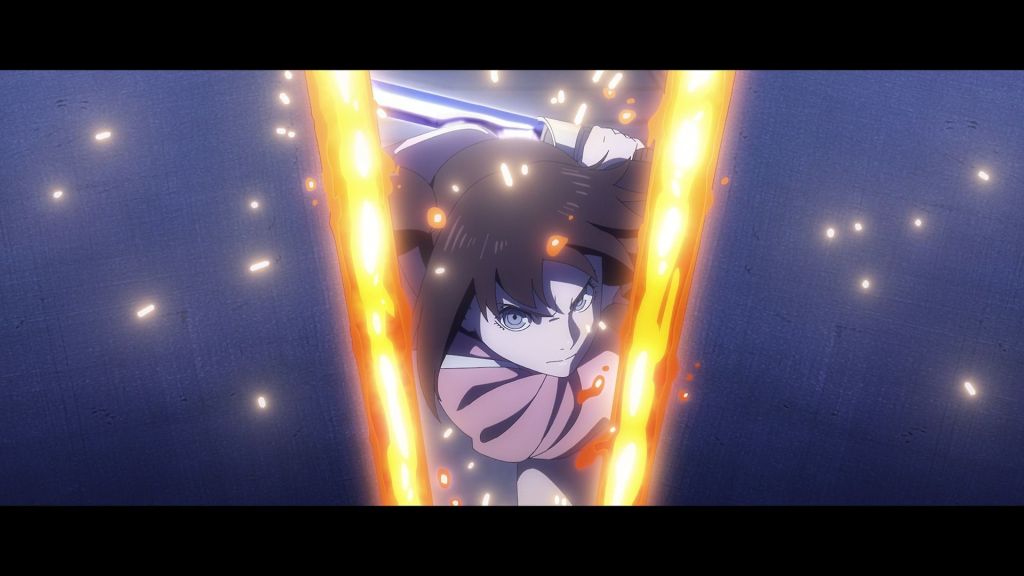
The stars of the entire show though are those shiny blades and their exceptionally executed choreography; this is probably the best sword fighting in anime this decade no matter which episode you tune into. Instead of having a sole Action Director appointed from the get-go this series adopts episodic expertise in the role, letting individuals design the action on the encounter-by-encounter basis. Episode 1 stands as the pinnacle for me, not of scale since it’s a short and contained encounter but in how cohesive its design is. Tomohiro “Yukina” Kosaka boarded this first encounter between Kara and Sith/Wannabe Grievous Gennoh with a big focus on flashy compositing, rim lighting and fast, smeary attacks that feel both weighty and skillful. His work was so good he returned for Episode 4 with an even more sparky shiny flair. His two episodes can honestly call themselves all timers when it comes to lightsaber action sequences, they’re that good but obviously he’s not the only star supervisor.
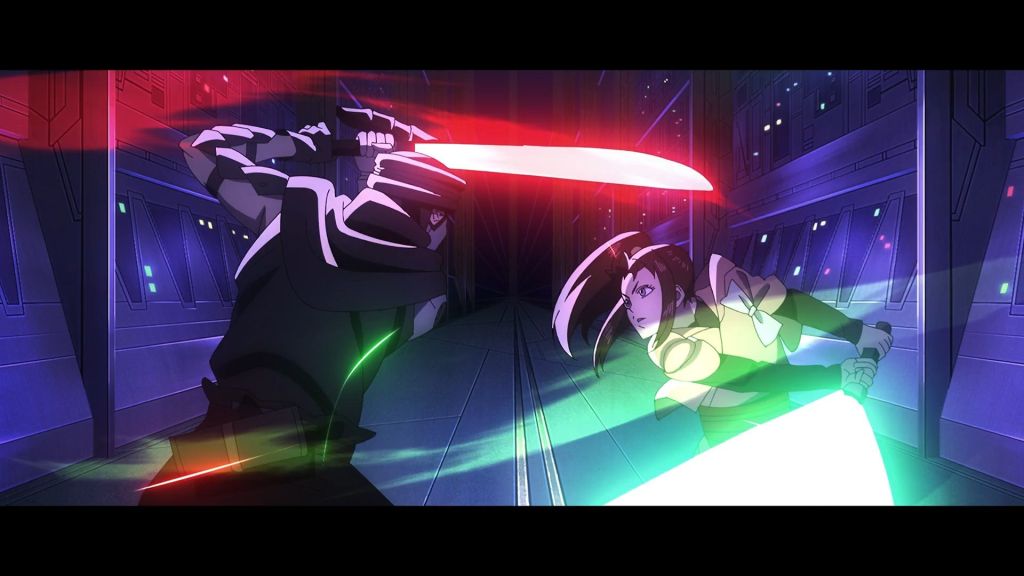
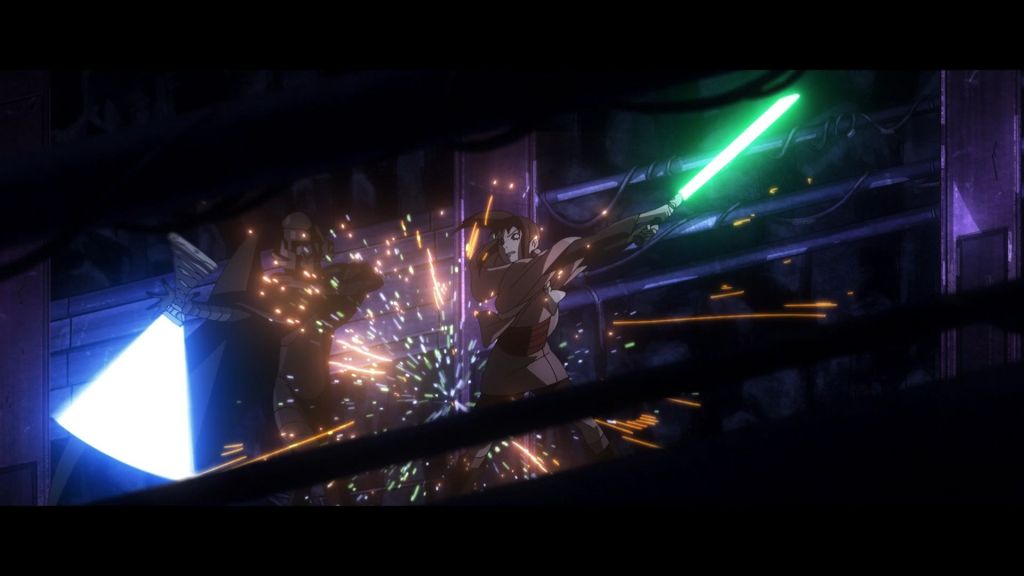
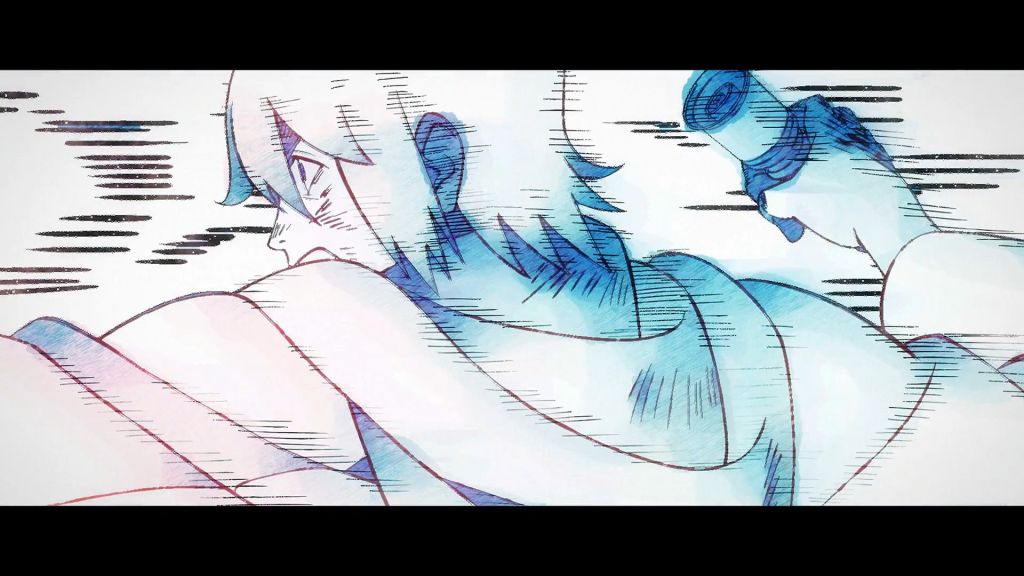
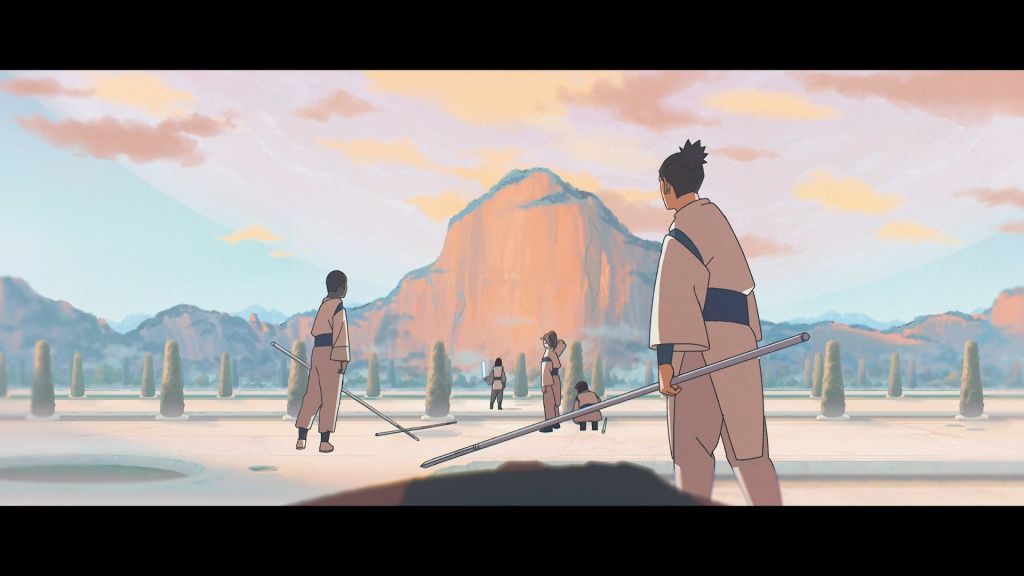
Episode 3 boasts a gorgeous flashback sequence where the main team handed off everything from the SB\ED and AD to the color design, compositing and even art direction to rising One Piece talent Jack-Amin Ibrahim and his close nit foreign fellows. To say his work pops is an understatement, it is simply a prettier aesthetic than the main teams and makes for a very memorable cutaway, give this guy a short in any future Visions entry says I.
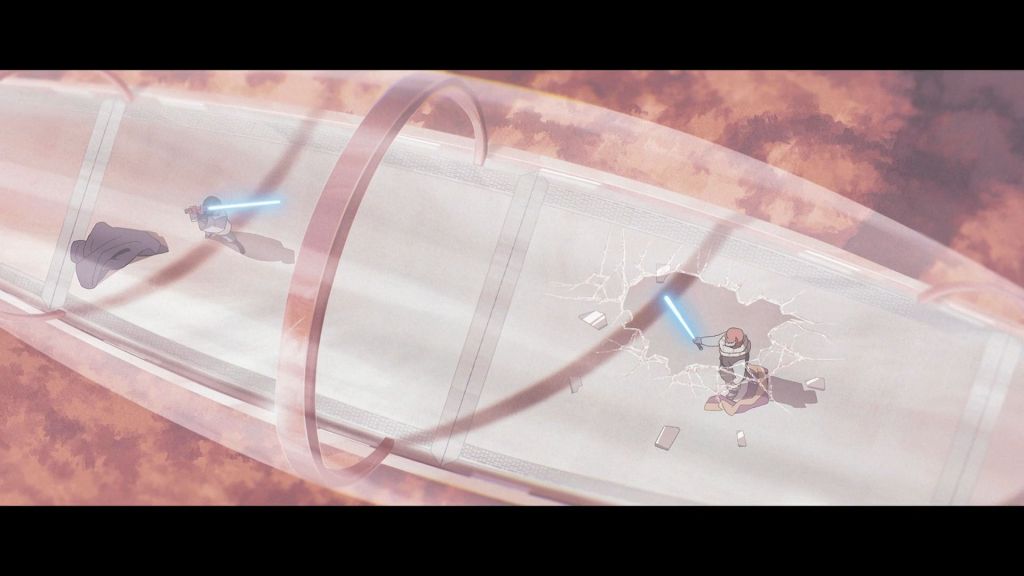
They saved the biggest name for last though as the finale’s action is lead by Tetsuya Takeuchi and yeah, Mr. Future Kagurabachi director can make one hell of a sword fight. With the strongest storm of KA talent available (Loup Bouchet MVP) and the biggest scale fight sequence he stormed all over a spaceship as Kara and Nawaam fight to the finish. Not as sexy as Kosaka’s work so not my favorite but I just know opinions will differ on which fight is yours, what won’t differ is the collective hell ya because they killed it.
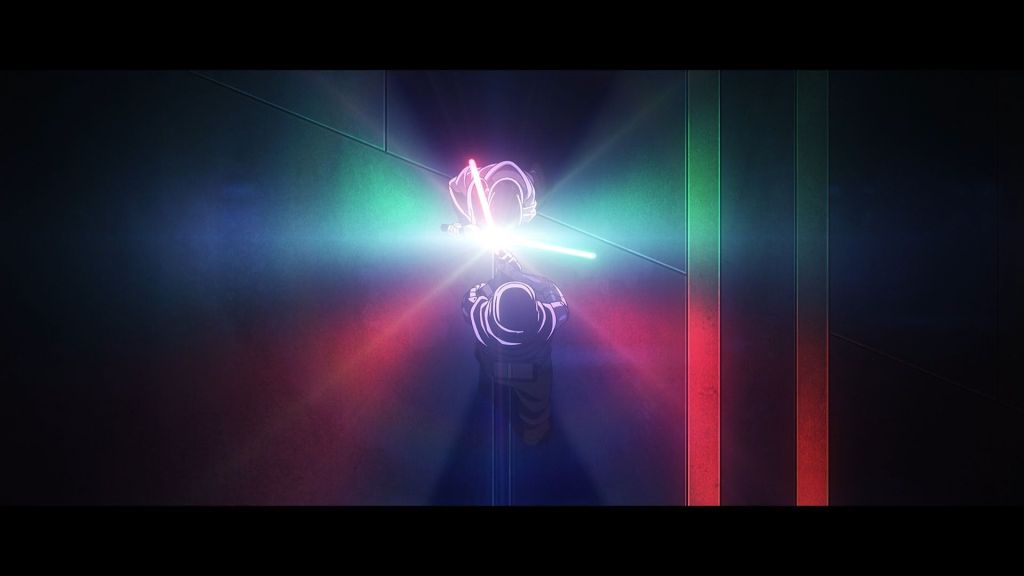
CREDITS I FORGOR
Star Wars isn’t all about Lightsaber fights but as the Prequals demonstrate having the best on offer is very important in nailing the Star Wars experience, heck Rise of Skywalker’s story is inherently a crime against this franchise but the lack of great glowstick action was maybe it’s most offensive non return. The Ninth Jedi proper carries over composers Nobuko Toda and Kazuma Jinnouchi from the original short to create more beautifully brassy music with no recognizable motifs and yet all the right sauce. Last notes, the dub is pretty damn bad maybe skip that and hey Kenji Kamiyama is only the chief director, gotta give credit in text to series director Shunsuke Tada for elevating everything visually and Mitsuyasu Sakai for penning the actual script and generally making Kamiyama’s story concept actually mostly good. Also, I don’t like non-Naruto Nishio character designs and that applies here.
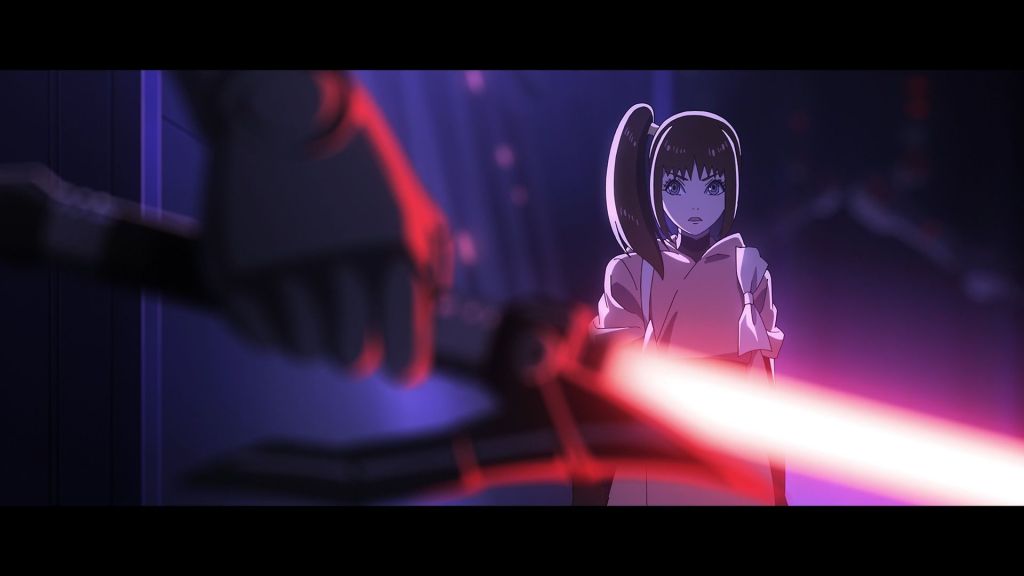
TIS THE END!
Star Wars: The Ninth Jedi is very much better than the sum of its parts, a uneven but intriguing lense on Star Wars, authentically told and rip roaringly paced with nonstop brilliant action. Its cast don’t overstay their welcome but could definitely have been fleshed out with more purpose. It’s a damn good anime, a pretty great Star Wars romp, just about as good as the first Star Wars anime could’ve conceivably been, definitely watch if you’re a fan!
FINAL RATING: 7.5/10
The Ninth Jedi (and Visions proper) can currently be streamed on Disney Plus.