THE RETURN OF NAOKO YAMADA
17 years ago a young woman was given her first opportunity to direct an entire anime series and with borderline worthless from a storytelling perspective source material to work with she would create one of the most iconic anime franchises of the millennium, K-ON!. With its sequel’s greater scope one Naoko Yamada would put herself at the forefront of the greatest anime studio of her day, leading more ambitious projects from the original Tamako Market to the sharper adaptation of Sound Euphonium. She was the best they had at directing television but she was borne for the big screen, it was the medium she loved the most and the one she could push herself to the max, making a point of (almost) solely storyboarding her entire features. She found her dream team in A Silent Voice with Reiko Yoshida as her screenwriter, Kensuke Ushio as her composer, Futoshi Nishiya as her character designer/CAD and finally Yoshiji Kigami as her ace animator, though he had occupied that position for her entire career at Kyoani. A Silent Voice would become the studio’s new artistic peak and while balancing series director duties on Eupho the dream team would assemble for Liz and the Blue Bird, another inspiring success. Naoko Yamada and her dream team were on top of the world. Naoko Yamada and her dream team would never get to make a third feature.
She would not return to Kyoto Animation following the arson and while I have never heard her comment on it I think the loss of Kigami, Nishiya, and dozens of her friends who she’d spent her entire professional career with made it impossible to return to that place, it’d be like returning to an empty home. But Naoko Yamada wouldn’t deprive the world of her art and in 2021 she would find a new home and a new story to tell. Heike Monogatari at Science Saru would be her first television series in 6 years and it was the show that cemented her and usual suspect Ushio as my favourite artists in the medium. She has 3 outright masterpieces to her name, K-On!!(S2), Tamako Love Story and Heike, she is firmly my favourite director of all time and as you can already tell, she’s back!
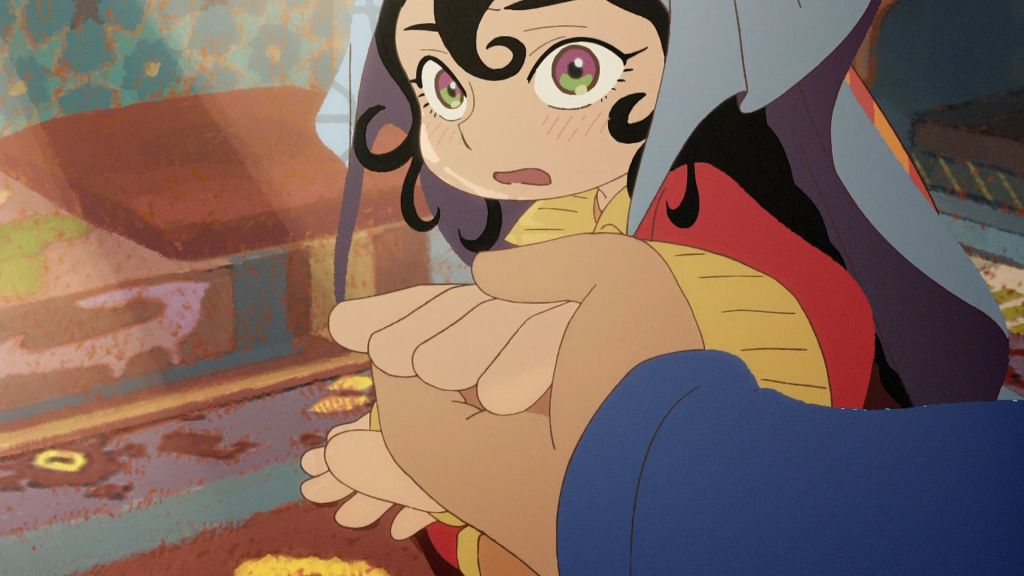
Jaadugar: A Witch in Mongolia is a natural followup to Heike, yet another story of historical fiction with a focus on the feminine perspective in a world ruled and ruined by men. Art and the pursuit of knowledge lie at the heart of our protagonists, be it the biwa hoshi(travelling performer) of Heike named… Biwa, an original character inserted into the drama of the fall of the Heike Clan or Sitara, a powerless slave girl brought up in a scholarly household who suddenly finds herself in the middle of the great Khan’s conquest of Asia. The visuals lexicon is familiar, richly detailed and colorful settings that oppose the more looser, cartoony shapes of the cast and their bouncy animation, a delightful medley of uncut violence and uncompromising animation. But, some key factors differ. Naoko Yamada is not the “director” specifically, she’s serving as chief director like Tatsuya Ishihara was for her on Eupho. Her usual crew, the dream team, the prose of Yoshida and the sound of Ushio are nowhere to be found
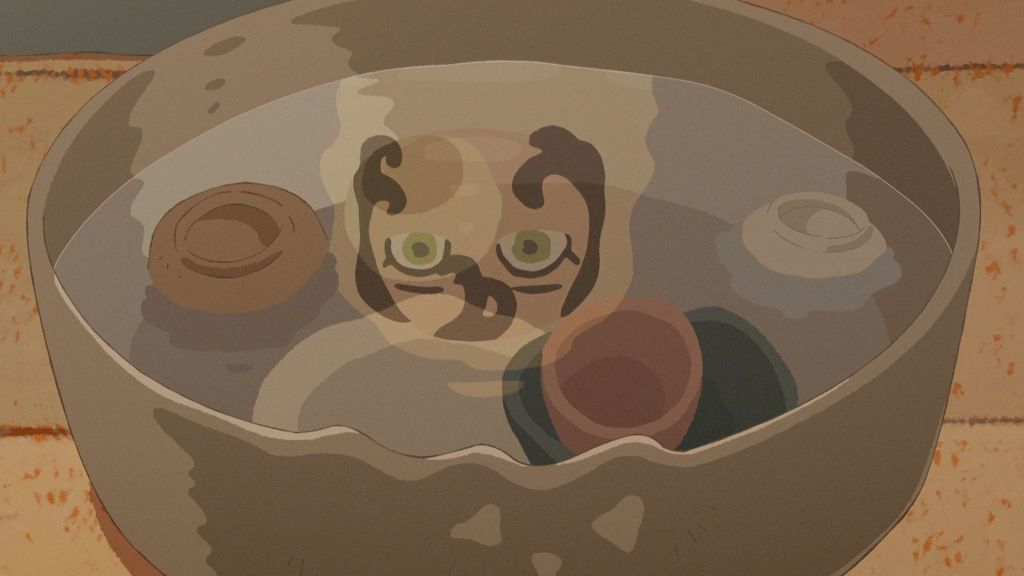
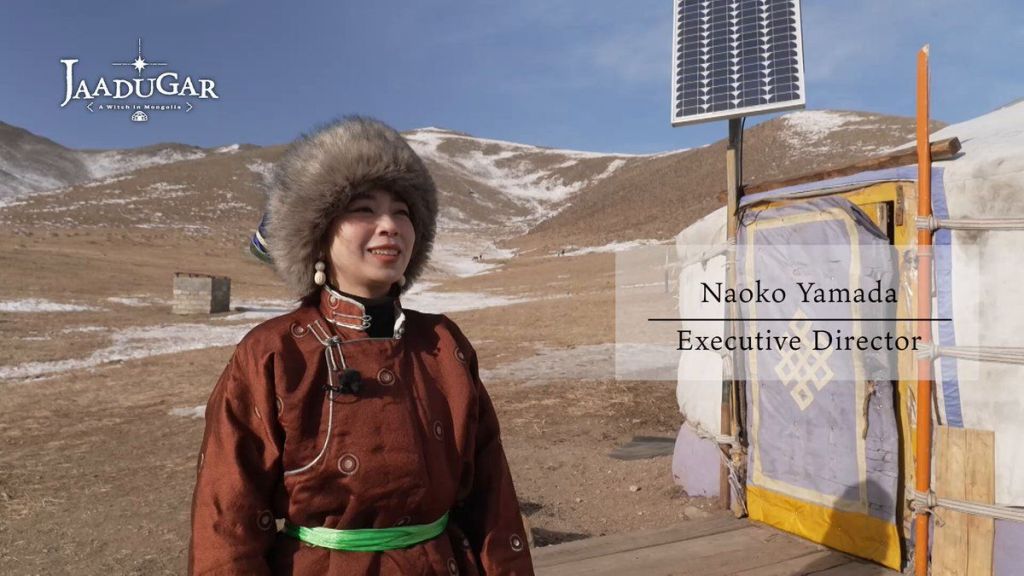
In that position instead we have Abel Góngora, a Spaniard a year her senior who followed Masaki Yuasa to become one of the first members of Science Saru. He’s appeared on basically everything they do in basically every animation role imaginable but his career really seems to have taken off with his series directorial debut of Scott Pilgrim Takes Off, an anime… I haven’t seen yet:( He did direct the wonderful first OP of Dandadan before helping direct the second season which given the shaky nature of its production was probably not originally intended but still a testament to his reliability that he was entrusted with it. This though, this is very much his baby with Yamada, both recently being in Mongolia for research purposes(Yamada adorably kitted out in traditional clothing just for fun) and with the powerhouse one two punch of the premiere 2 episodes they landed an extremely confident series.
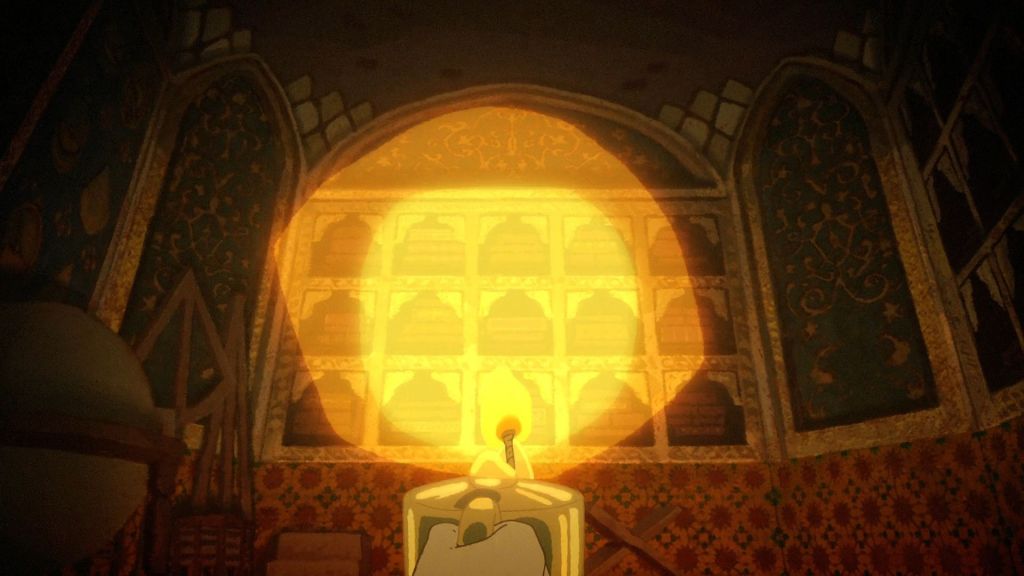
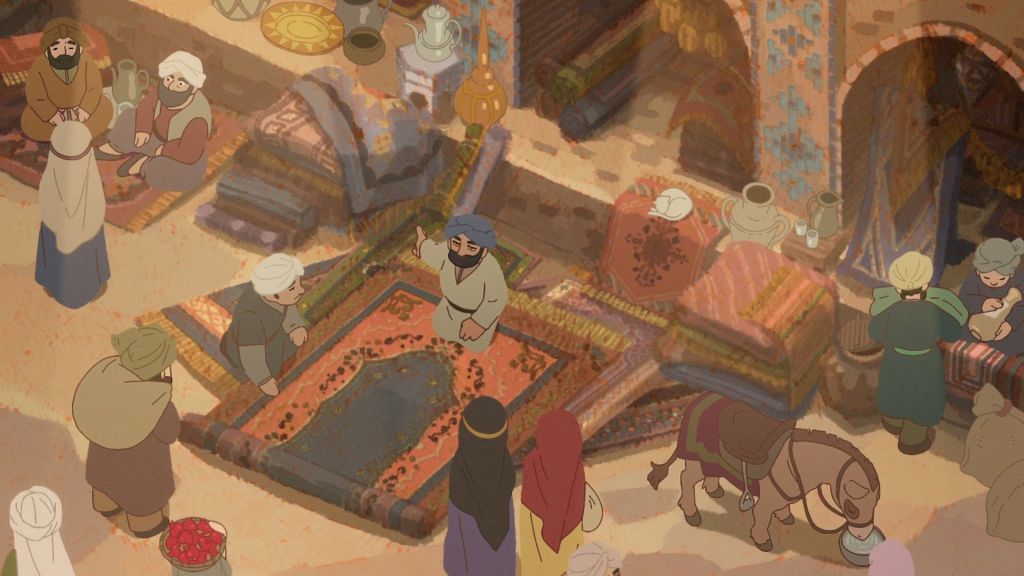
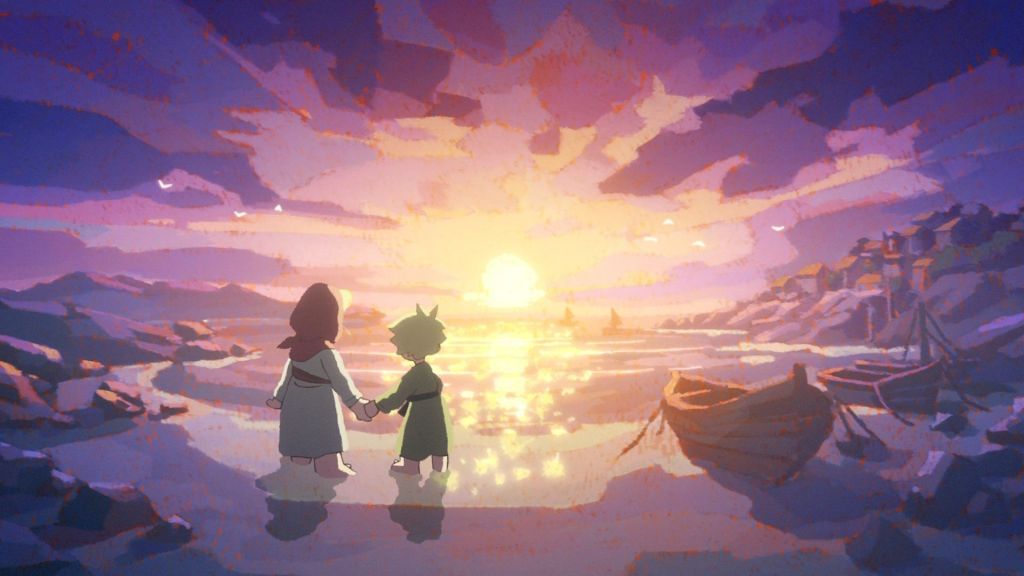
For all the glazing Yamada earns at every opportunity I’m gonna be honest, Abel’s episode 1 was my favorite. It’s the less weighty episode, softly setting the tables for Yamada’s sharpened sword to slash to pieces but it’s such an evocative piece of animation that I can’t help but prefer it. I traced the lineage back to Heike before but the best parts about this work is the stylings all it’s own, the careful balance of painterly texture and fluid linelessness that makes it feel so vibrant. The art direction is staggering, dense period detail that brings the vibrant lives of 13th century Persians to life. The design filters authentic architecture through a lens of flat geometric design, every painting flecked with veins of brown, like there’s a gritty sand that entrusts everything. Light and shadow are heavy, this world feels like a rock, ancient and unmovable.
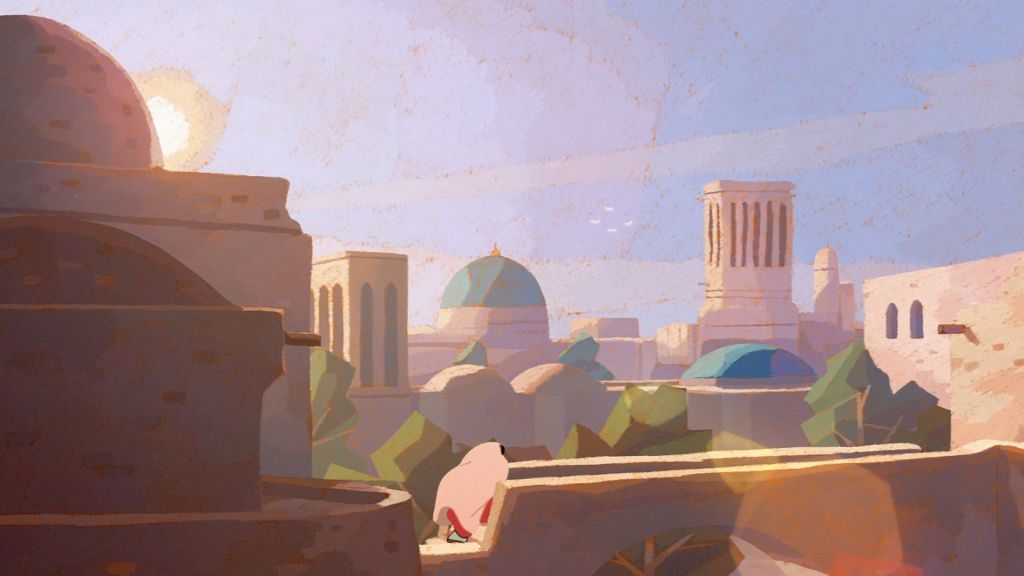
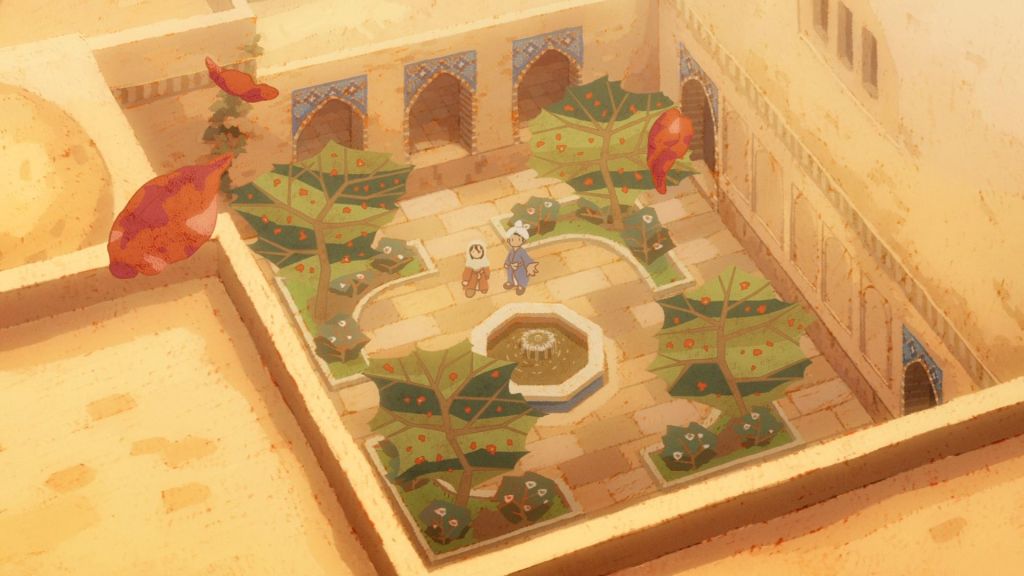
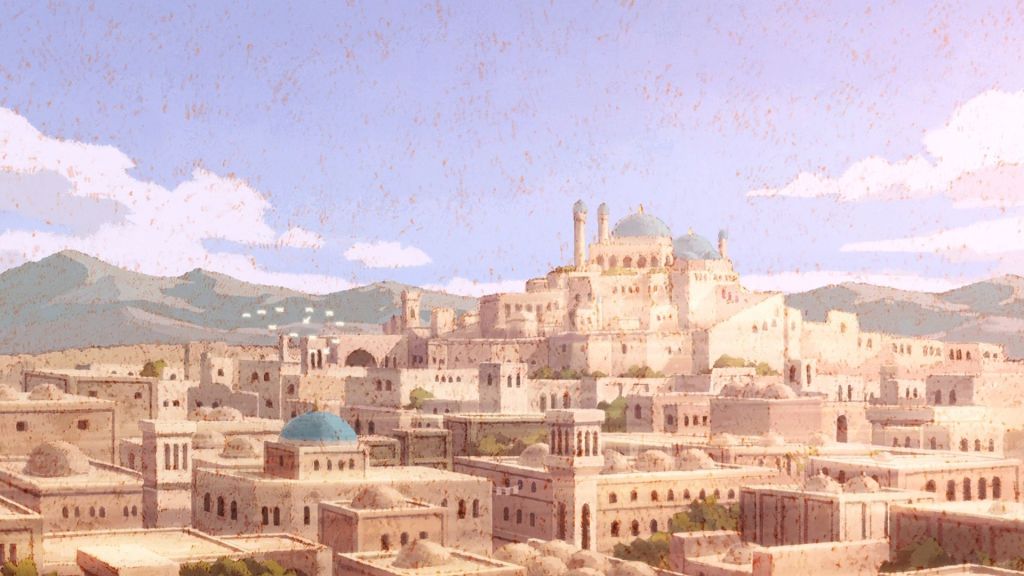
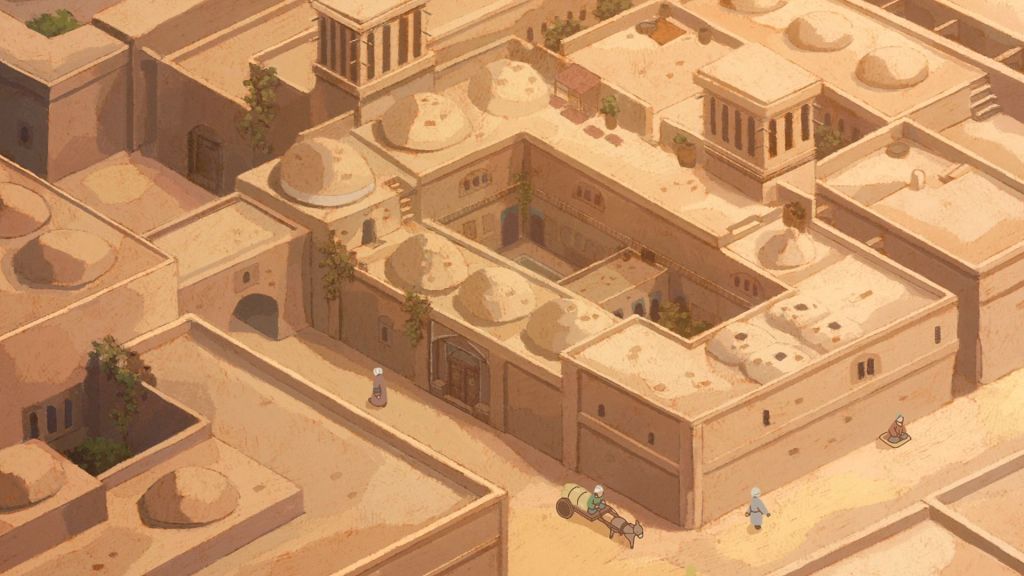
The static backgrounds contrast heavily with the character design and animation direction of the series brought to us by Kenichi Yoshida, an animator famous from Sunrise’s Gundam and Bones Eureka Seven. Characters are animated with extremely fluidity thanks in large part to his(and original creator Tomato Soup) simplistic designs, reminiscent of classic Tezuka. The relatively small number of lines they’re drawn with is further accentuated by… even less lines. The robed garb everyone wears specific to the Muslim world flows like liquid with lineless edges, a seemingly small stylistic flourish that looks transformative in motion. Sitara doesn’t walk through her world, she swims through it with delightful ease, melting into nooks and crannies as she tries and fails to evade notice.
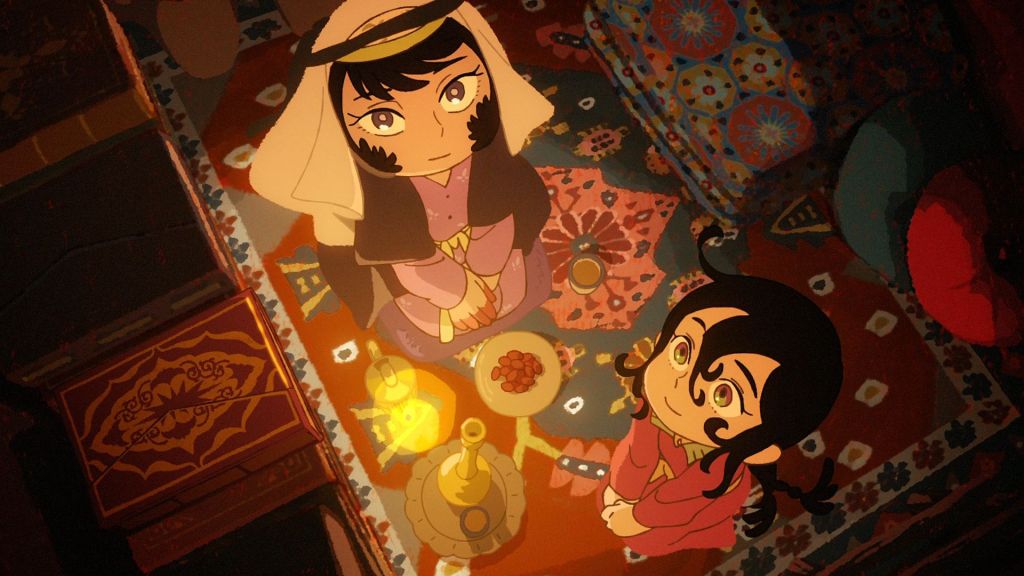
Sitara is a slave, her body not her own and while her masters are kindly folk(The trans Atlantic slave trade most familiar to westerners is not the standard for slavery, every culture throughout history has their own customs most decidedly the lesser evil) she still feels the loss of self keenly. Knowledge is what changed her fortunes and helped her self-actualize in her world. As a Muslim the foundation of her culture is submission to Allah through prayer and study and it’s that second aspect that defined Islam’s impact on the world in this era. Mathematics and astronomy were particularly advanced and in Sitara’s community it is her masters library that guides her path through life. Outside of chores and religious practice it’s learning that she commits too the most, their beautiful tome of Euclid’s Elements as the basis for everything. She goes from running away from her position in life to excelling within it, becoming like family with her fellow slaves and even her masters.
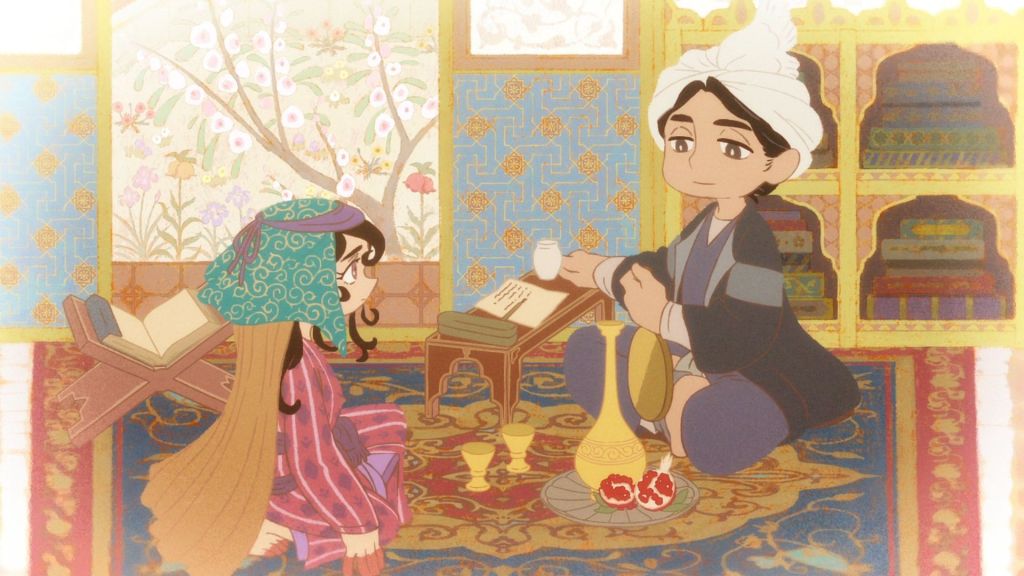
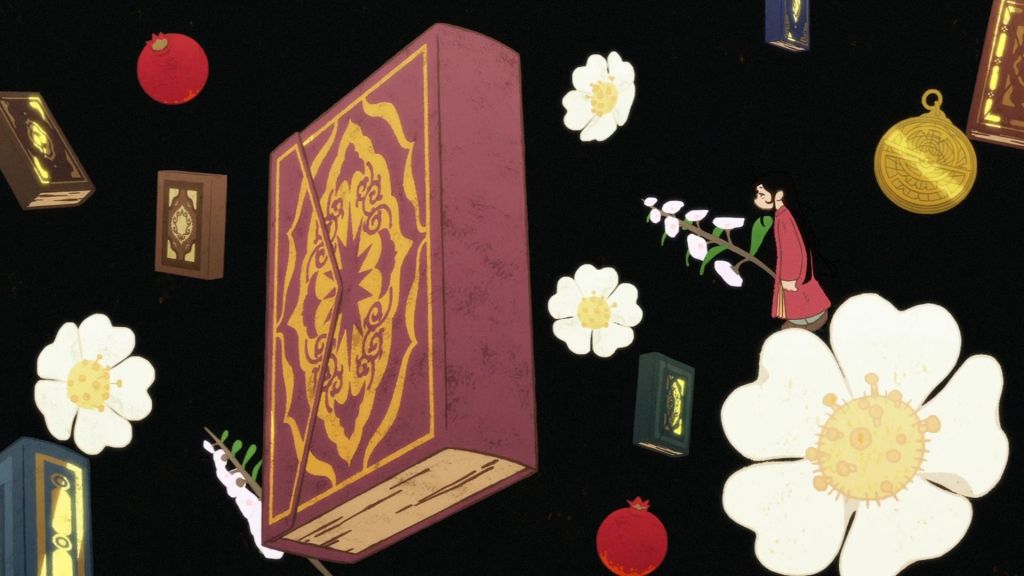
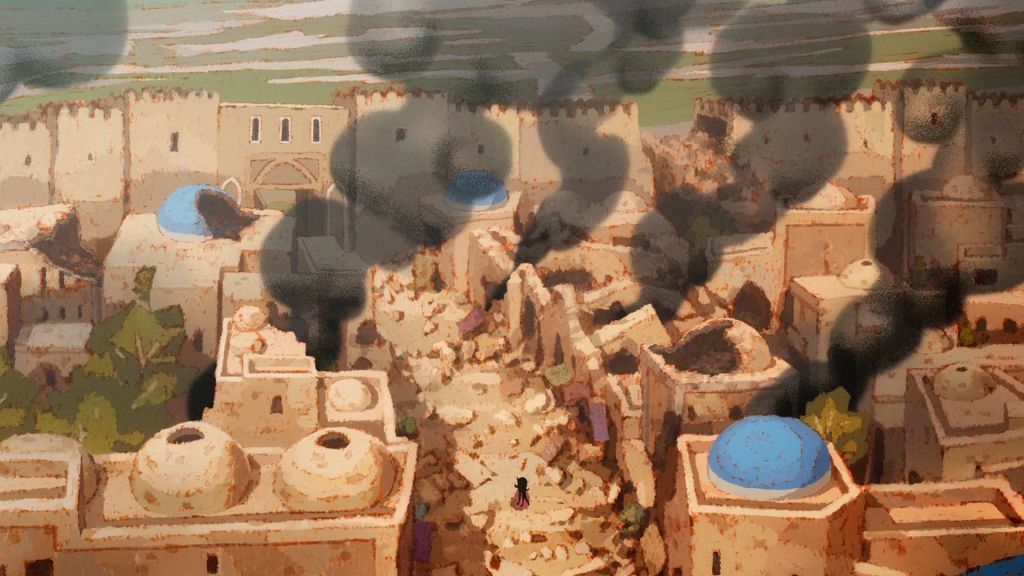
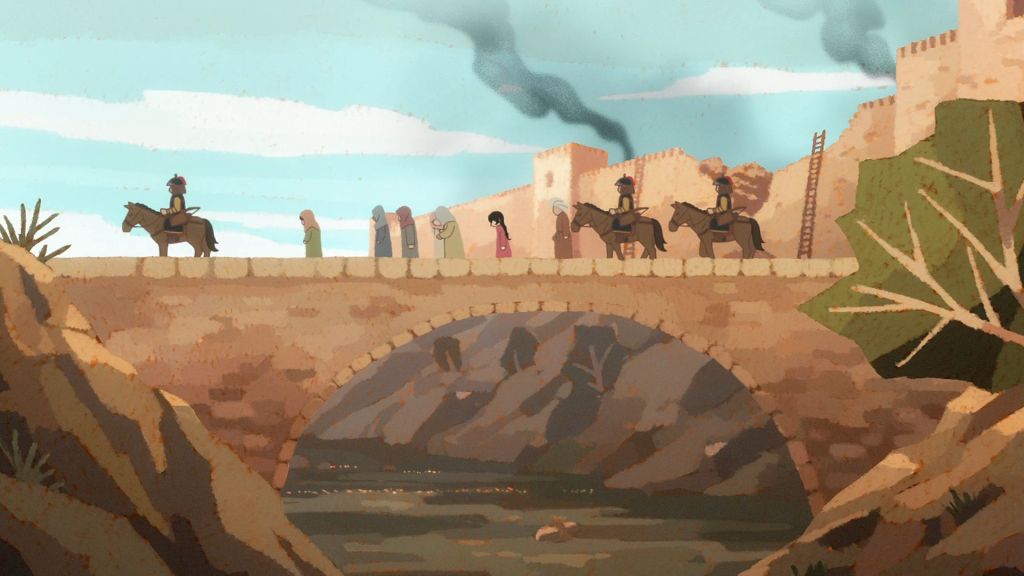
It’s an incredibly seductive episode that slowly but surely establishes the comfort and stability of Sitara’s life but then the stinger arrives and with it the Mongols. The urban Persians held no fear of the steppe people, they could never gain the strength to overcome their walls they assumed and so when the wave of horsemen finally washed over them it was a conquest like never before seen. Yamada takes the helm for episode 2 with a ruthless zeal, this is 20 minutes of wholesale slaughter of everything we just learned, everyone we just met, and it leaves Sitara with nothing. I mean it too, first it was her motherly master who sacrificed herself when none other than Tolui, son of Genghis, ordered Sitara dead. With her blood staining their home she steps out and sees the city sacked, demolished, rendered uninhabitable before she’s marched out to join the spoils column.
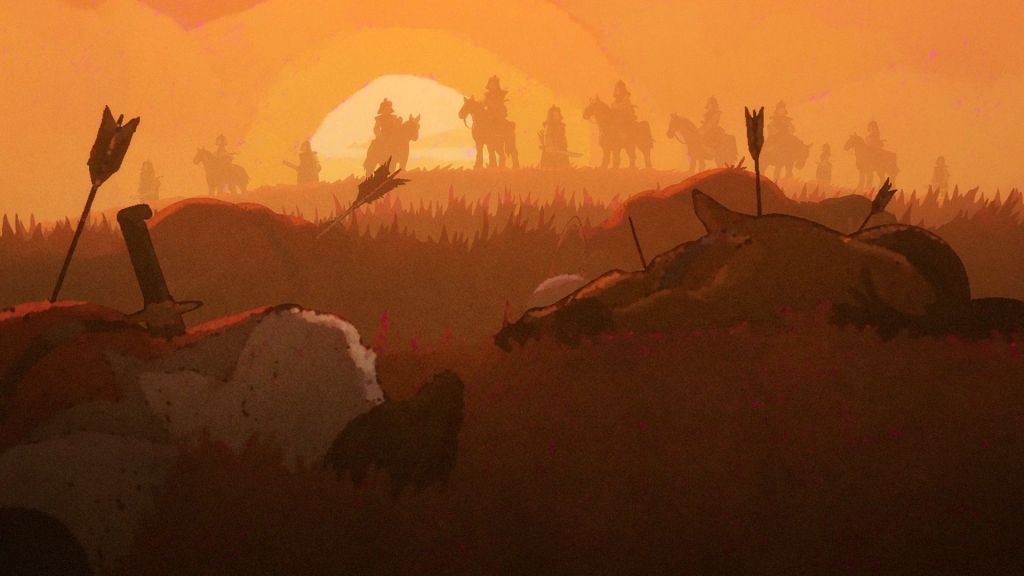
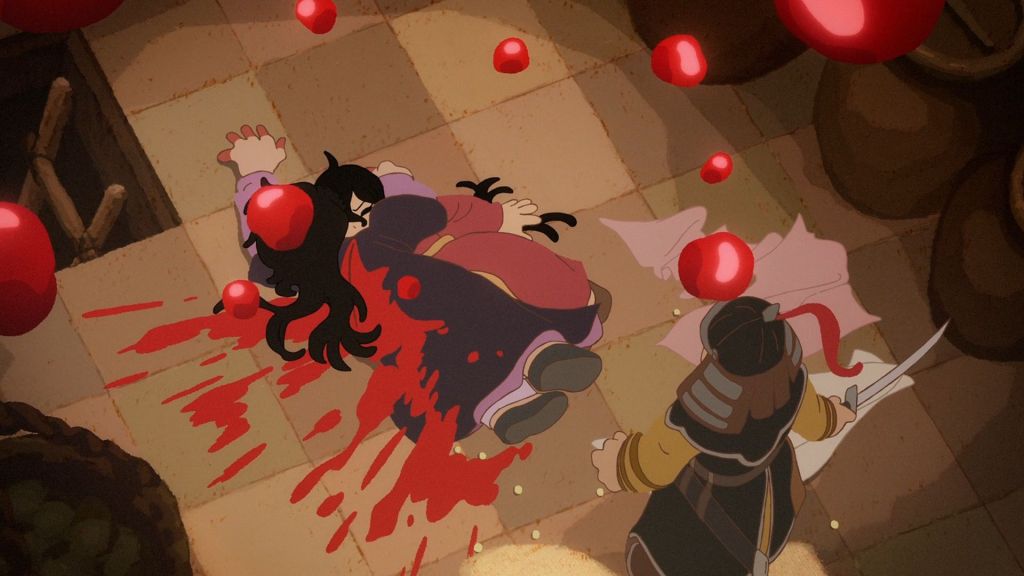
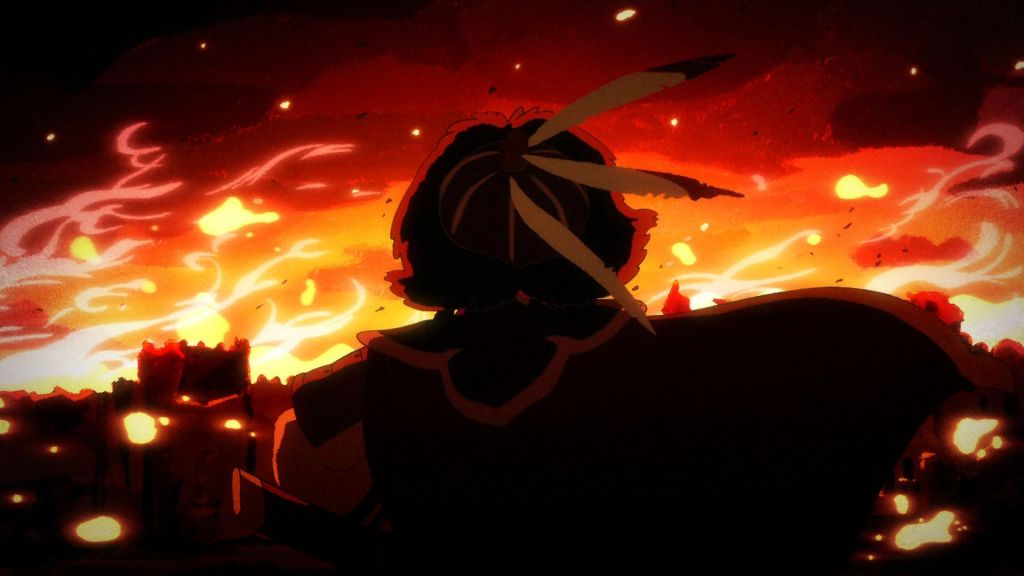
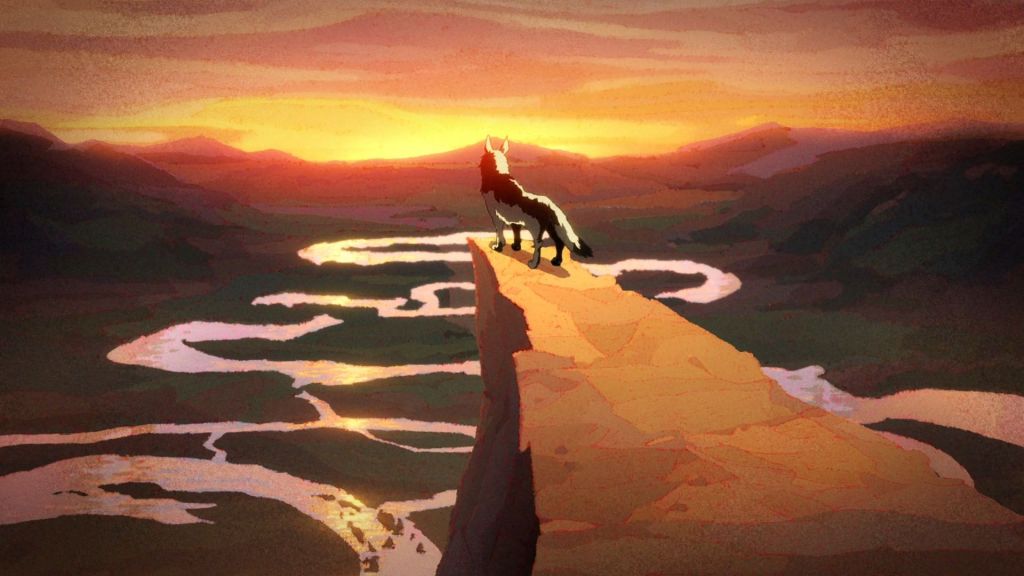
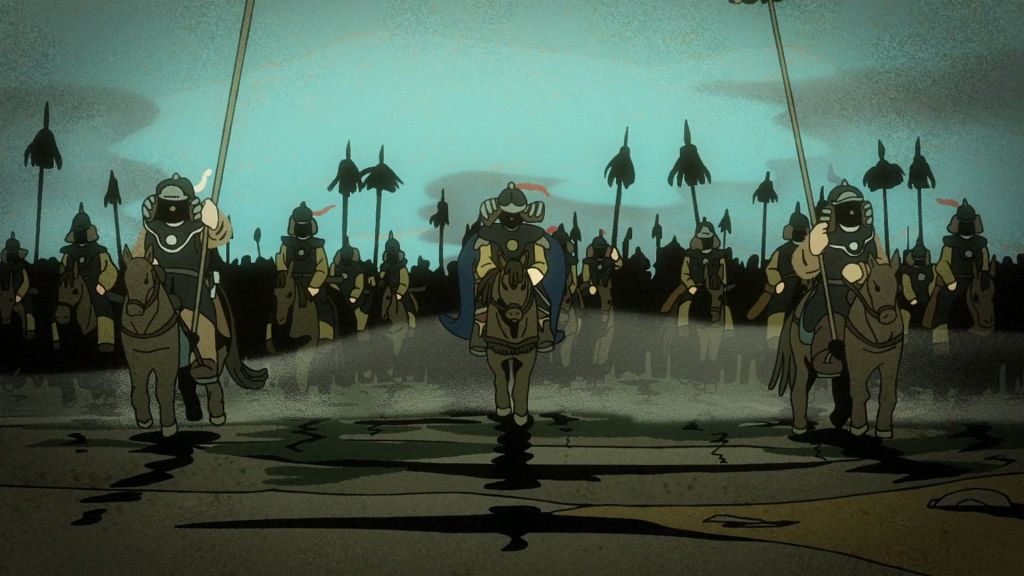
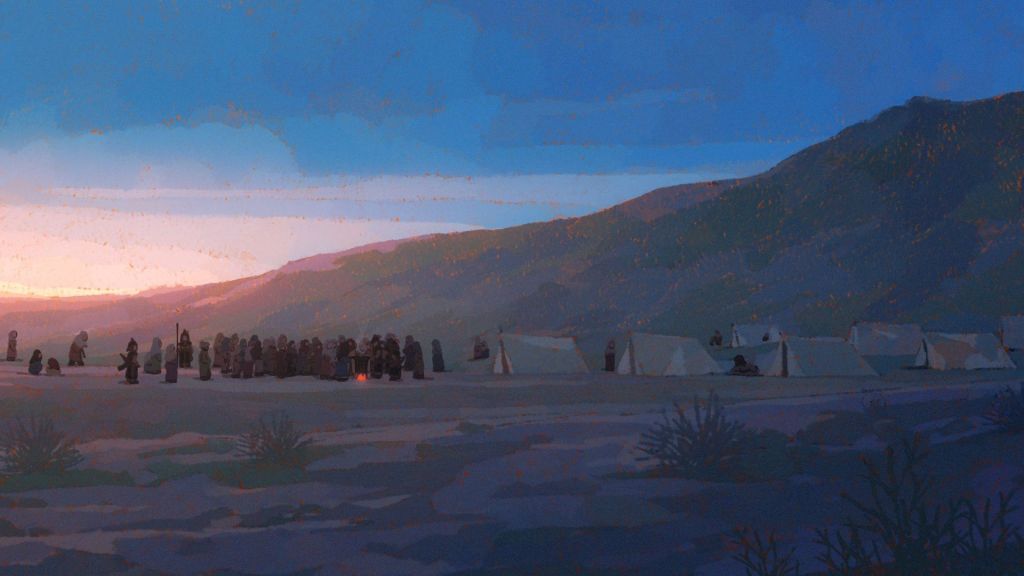
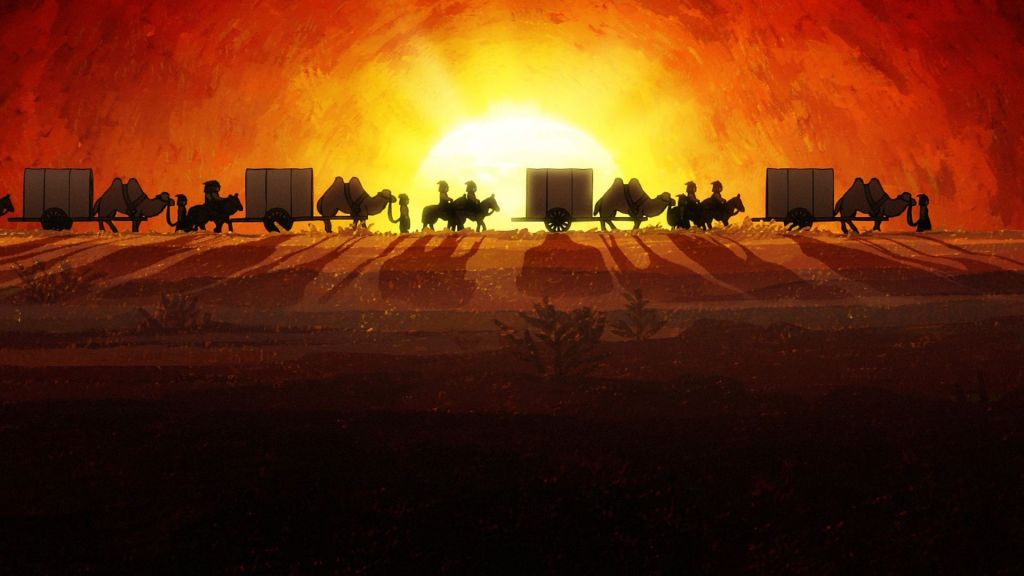
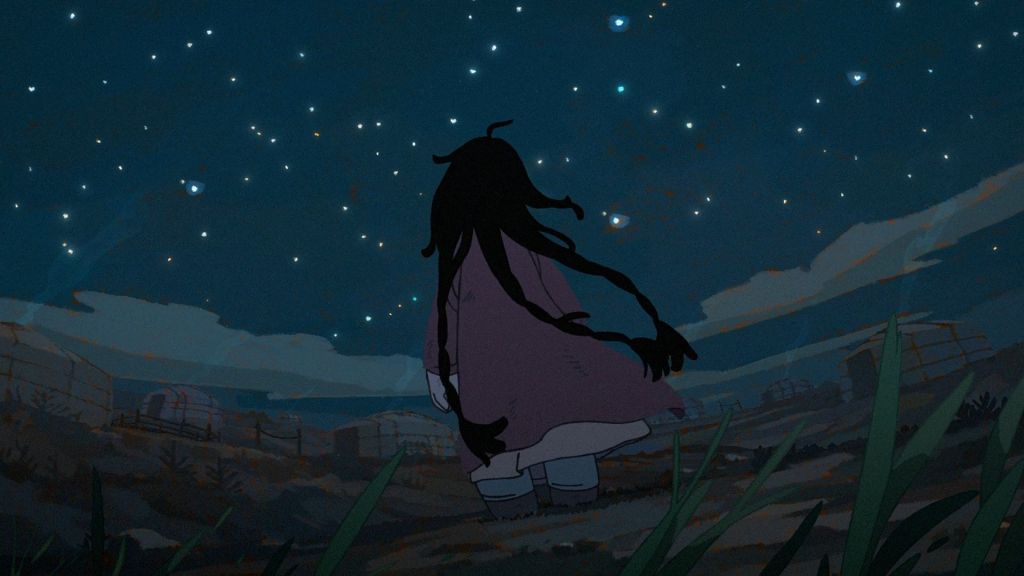
They march into the unknown, their numbers shrinking as the weak are shot by their captors. Eventually they arrive at a Mongol camp, a living space so fundamentally different to their own and here their doom becomes truly inescapable. The scholarly city of Nishapur has fallen, brutally destroyed in reprisal for the death of the Mongol forces leader and with it Sitara’s final hopes, her childhood friend was there and she always dreamed of joining him. The imagery is extremely sharp, a faceless horde marching, a city burning, a wolf overlooking the realm, it’s all elegantly composed for maximum impact. The animation is not as standout but Yamada’s storyboard and its focus on repetition reinforces the feeling of Sitara’s world ending, only a dark empty plain greets her now, plus neat edits like a sword slash come across almost as memorable storyboarding as Abel literally unravelling a street market just before. Where his episode unfolded in comforting rhythmic fashion hers is slow and steady, punctuated only by death and a day slowly fading into night.
Jaadugar begins with a charming depiction of Persian life before shockingly burning it all to the ground and now the question stands, what will arise from the ashes. A witch, mayhaps. Either way, first Naoko Yamada TV anime in almost 5 years yippee letsgooooooo!
Jaadugar can currently be streamed on Crunchyroll or purchased as a single volume from .